

























































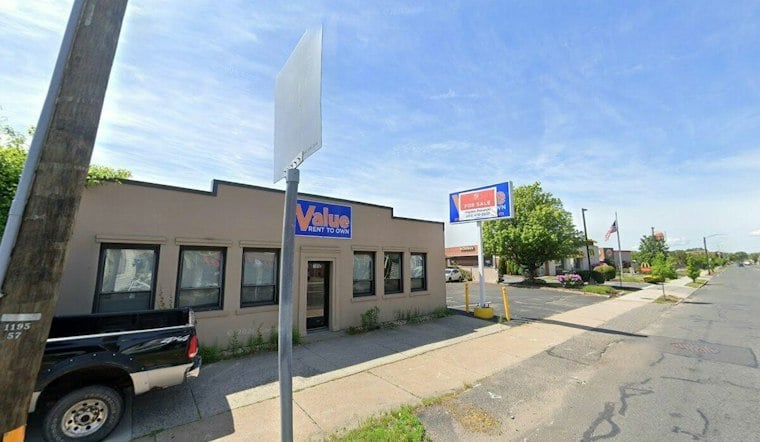
A vacant commercial building on Page Boulevard in Springfield could soon become a working poultry slaughterhouse and butcher shop, under a proposal that would process as many as 1,500 chickens a week for sale to restaurants, small businesses and walk-in customers. The plan, aimed at 785 Page Blvd., has already drawn at least one objection and a round of pointed questions from city health officials before the City Council pressed pause on a final decision.
What the Butcher Is Proposing
The business, backed by owner Adel Saeed, would slaughter and dress between 400 and 1,500 chickens per week, according to MassLive.com. Saeed is represented before the council by attorney Ryan O’Hara, who described the operation in comparatively modest terms. “It’s in some ways a neighborhood butcher shop,” O’Hara said, per the outlet’s reporting. The business is expected to sell its meat both at an on-site retail market and to restaurants and similar small businesses operating nearby.
Saeed is not new to the industry. He has run five similar facilities in New Jersey and has 14 years of experience operating comparable businesses in Connecticut and Pennsylvania, per the same MassLive account. The Page Boulevard location would employ three workers, who would process birds to order and also staff the retail counter, the outlet reports.
Inside the Proposed Market and Processing Space
Under the plan, the retail market portion of the business would sell meat, eggs and vegetables, with no more than seven customers allowed inside at any one time. Poultry would arrive by custom-built ventilated truck, with deliveries of 200 to 500 birds expected two to three times a week, and all processing would happen inside the building itself rather than outdoors.
The application states that birds would be inspected and humanely slaughtered, then cleaned, dressed and packaged within the building, with the business following U.S. Department of Agriculture rules alongside state and local health department requirements. The building is also described as having air-conditioning and ventilation systems meant to keep odors from escaping into the surrounding neighborhood.
Council Pushes Pause After Health Questions
The Springfield City Council first took up Saeed’s slaughterhouse permit request on September 28, but did not reach a final vote. Helen Caulton-Harris, the city’s commissioner of health and human services, pressed the applicant on how the business would identify and handle sick birds during processing. The application indicates the operation would be subject to regular and unannounced inspections, and that employees would follow health department guidelines and are experienced in poultry processing.
At least one person objected to the proposal during the hearing, though further detail on that objection was not reported. With the council’s meetings generally capped at three hours unless all members agree to extend them, the body ultimately continued the hearing to October 26 rather than ruling on the permit.
The Regulatory Hurdles Ahead
Any poultry operation of this kind faces layered oversight. Massachusetts law under General Laws Chapter 94, Section 120 bars anyone from slaughtering poultry or processing poultry products in an establishment without a license from the state. Federally, poultry processing is governed by the Poultry Products Inspection Act, with the USDA’s Food Safety and Inspection Service holding primary oversight of poultry products offered for sale, according to the National Agricultural Law Center. The same compilation notes that small processors slaughtering no more than 20,000 birds annually may qualify for exemptions, subject to sanitary standards and other limitations.
State guidance adds another layer: domesticated meat and poultry meant for sale generally must be slaughtered and processed in a USDA-FSIS-inspected facility, and those facilities are in turn subject to licensure by the Massachusetts Department of Public Health, per Mass.gov. Separately, farming guidance compiled by the Beginning Farmer Network of Massachusetts notes that licensed on-farm poultry processors must also secure a state slaughter license from the Department of Public Health along with local Board of Health approval, though that guidance addresses on-farm operations rather than a standalone commercial facility like the one proposed on Page Boulevard.
A Thin Supply Chain for Local Poultry
The Springfield proposal lands amid what regional agricultural groups describe as a supply gap. The Beginning Farmer Network of Massachusetts has said demand for locally raised poultry exceeds the available supply, with pasture-raised broilers able to fetch more than $30 a bird. The group also points to just two state-approved mobile poultry-processing units serving the state, one run by the New Entry Sustainable Farming Project in Eastern Massachusetts and another by the New England Small Farm Institute in the Pioneer Valley, with the Eastern unit charging roughly $1 per bird and a $150 minimum trip fee.
Western Massachusetts has its own limited options. Reed Farm Poultry describes itself as the only poultry-processing facility in the region holding a Small Enterprise Exemption License, with a facility it says is currently state-inspected. Whether the Page Boulevard proposal would ultimately secure USDA-FSIS inspection, a state license, or some other exemption has not been determined, and the council’s continued hearing means the permit itself remains unresolved until at least October 26.



