

























































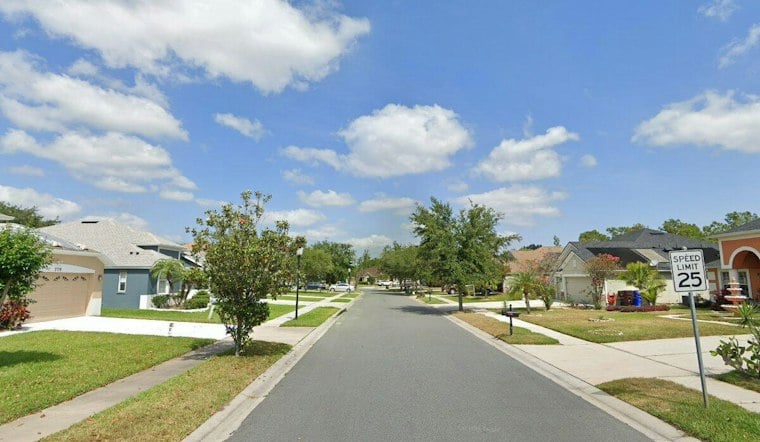
An infant was hospitalized Saturday morning after a house fire tore through the main living area of a home on Seneca Trail in St. Cloud, with two other children also suffering non-life-threatening injuries. Fire officials said crews were called to the scene just after 9 a.m. and knocked down the flames before paramedics rushed the infant to an area hospital for treatment.
Officials believe children playing with a lighter likely sparked the blaze, according to the St. Cloud Fire Department. Both the fire department and the Florida Department of Children and Families are now investigating the incident, examining how the fire started and whether the household environment played a role in the children's access to an open flame.
How a Lighter Becomes a Household Hazard
The scenario described by officials fits a well-documented national pattern. Research compiled by the National Fire Protection Association found that cigarette lighters are the heat source in 52% of home structure fires caused by children playing with fire, far outpacing matches, which account for 18%, per data cited in a study hosted by the National Institutes of Health. That same body of research found that 43% of home fires started by children playing with fire are set by a child under six years old, underscoring how young curiosity about flame can turn dangerous inside a home.
Federal regulators have tried to close that gap for decades. Under 16 CFR Part 1210, the U.S. Consumer Product Safety Commission requires disposable and novelty lighters sold in the United States to include child-resistant mechanisms capable of blocking activation by at least 85% of children under five, a standard detailed in the Electronic Code of Federal Regulations. That rule dates to 1993, adopted after estimates that lighter play by children was causing around 170 residential fire deaths annually nationwide.
Why the Living Room Location Mattered
The fire's location inside the home's main living area is itself significant. The National Fire Protection Association has found that while living room fires make up less than 11% of total home structure fires, they cause a disproportionate share of civilian fire deaths, since modern upholstered furnishings burn fast and produce dense smoke, with flashover possible in as little as five minutes. Separate federal fire statistics show that while 77% of child fire-play incidents happen outdoors, home structure fires account for 97% of deaths associated with fire-play fires and 93% of civilian injuries tied to youth fire-play, a gap that highlights why an indoor ignition carries so much more risk than the same spark outside.
State Investigation Could Take Weeks
The Florida Department of Children and Families may investigate reports involving child safety or neglect in the home. Under Section 39.301 of the Florida Statutes, those child protective investigations must generally wrap up within 60 days of the initial report, giving state workers a defined window to coordinate with local fire officials and evaluate the household.
A Busy Year for St. Cloud Fire Rescue
Saturday's blaze adds to a string of residential fire responses St. Cloud firefighters have handled recently. In September, an unattended candle sparked an apartment fire that displaced residents of 12 units.
No further details were available on whether the Florida Department of Children and Families or local fire investigators would identify any supervision concerns connected to Saturday's fire, nor on the specific type of lighter involved. Both agencies' investigations remain ongoing.




