

























































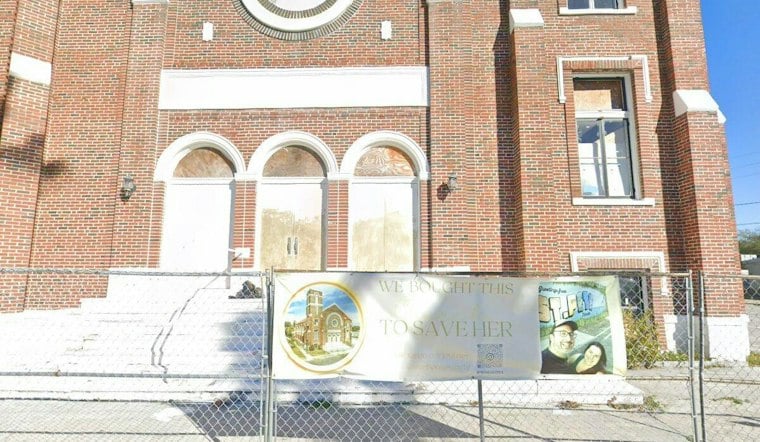
A St. Petersburg nonprofit that revived a long-vacant 1926 church is now suing the city that shut it back down. Treehouse Sanctuary, Inc. filed a federal lawsuit on October 12 accusing the City of St. Petersburg of blocking worship, weddings, faith-based gatherings and community events at its building on 919 10th Avenue North, after fire officials ordered the property closed last year.
The case, styled Treehouse Sanctuary, Inc. v. The City of St. Petersburg, Florida, was filed in the U.S. District Court for the Middle District of Florida and carries case number 8:26-cv-03106, according to natlawreview.com. The complaint seeks declaratory and injunctive relief that would let the sanctuary resume religious worship, ceremonies, weddings, faith-based gatherings and community events inside the historic building. Treehouse Sanctuary describes itself as a Florida nonprofit interfaith religious organization, and it is represented by Luke Lirot and Rachel Ricks of Luke Charles Lirot, P.A., a Clearwater law firm.
The dispute traces back to the building's reopening. Noam and Irene Krasniansky bought the long-vacant Euclid Methodist Church in 2023 for $1.1 million, as reported by St. Pete Rising. The church, built in 1926 as a place of religious assembly, had been added to the St. Petersburg Register of Historic Places in 2004.
Fire Code Fight Followed August 2025 Reopening
Treehouse Sanctuary opened its doors in August 2025, but the city's Fire Department ordered the property closed by that September, according to St. Pete Catalyst. The city determined that removing fixed seating, basement partitions and ceiling finishes amounted to significant modifications requiring a change-of-use review and additional fire-safety improvements, the outlet reported. Those requirements included an automatic sprinkler system and a voice alarm system.
The sanctuary's architect proposed alternative life-safety measures in February, but the city rejected the requested waiver the following month, per the same account. The lawsuit also names Mayor Ken Welch in his official capacity. The complaint points to other local churches — Allendale United Methodist Church, St. Pete First United Methodist Church and First Baptist Church — which it alleges have operated with flexible seating or hosted secular events without facing comparable requirements, though that claim comes from the complaint itself and has not been independently verified.
Religious Land Use Law at the Center of the Case
The federal Religious Land Use and Institutionalized Persons Act, often cited in disputes like this one, prohibits zoning and landmarking rules that substantially burden a religious institution's exercise unless the restriction is the least restrictive means of furthering a compelling government interest, according to the U.S. Department of Justice. That standard sits at the heart of Treehouse Sanctuary's complaint, which frames the city's sprinkler and alarm mandates as a burden on its ability to gather for worship.
Before the shutdown, the sanctuary's original worship space had been reimagined as a spiritual gathering spot, with plans for grief groups, breathwork, yoga, weddings and other healing-centered events, Fox 13 reported. The church had also been hosting an indoor farmers market on Sundays, with vendor fees funneled back into repairs, and neighbors had been pitching in with painting and plumbing to help restore the building. A first wedding had already been booked for September, and the owners had hoped to mark a full grand reopening on the church's 100th birthday — Thanksgiving Day 2026.
Treehouse Sanctuary's own site describes the organization as a nonprofit spiritual community dedicated to interfaith dialogue, offering its historic space for weddings and upscale events open to people of all traditions. A Newsfile press release published by StreetInsider describes the lawsuit as the latest turn in a year-long standoff between the church's new owners and the city over what it will take to let the nearly century-old building reopen its doors for good.





