

























































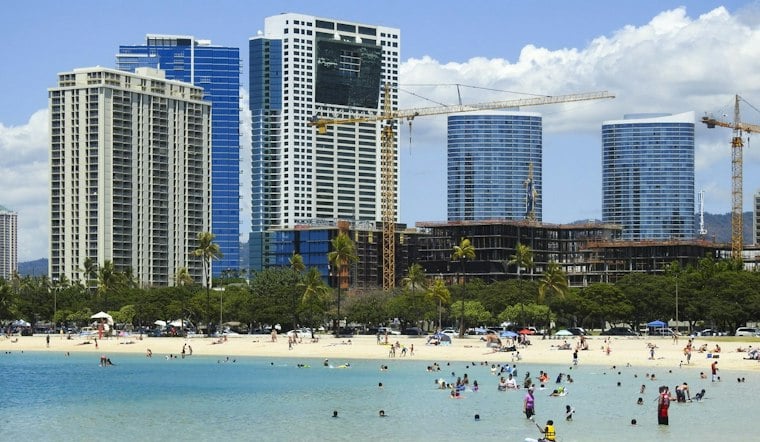
Ala Moana Beach Park, the stretch of shoreline that draws an estimated four million visitors a year, is finally getting its sand back. The state Board of Land and Natural Resources has approved a funding agreement giving Honolulu $7.44 million to replenish the beach, which has lost significant amounts of fine sand over the years, leaving more rocks and rubble and little beach exposed at high tide.
The money comes from Green Fee revenue, the state's new climate-focused tourism tax, and represents a partnership between the state and city, according to KHON2. Officials say the project could place up to 70,000 cubic yards of sand along the entire beach fronting the park. Michael Cain, administrator of the state Department of Land and Natural Resources' Office of Conservation and Coastal Lands, said wind and tides have gradually carried away the beach's fine sand.
A Man-Made Beach With No Way to Heal Itself
Ala Moana's shoreline is largely man-made, and that's a big part of the problem. An offshore swimming channel prevents sand from naturally returning to shore the way it might at other beaches, meaning the park can't replenish on its own. As Honolulu Civil Beat has reported, since Ala Moana has no natural way of replenishing, it will need repeated sand imports, with estimates ranging from 20 to 30 years between projects. The outlet also notes the work is expected to widen the shoreline once complete.
The city last replenished sand at Ala Moana Beach back in 2004, per Hawaii News Now, and waves have washed away sand at the man-made beach in the years since. Honolulu had actually set aside $10 million for sand replenishment around 2020-2021, but that funding was redirected to emergency equipment and response during the COVID-19 pandemic, delaying the work by several years.
Permits Cleared, Timeline Still Taking Shape
The city has now completed environmental review and permitting for the work, and an existing conservation district use permit allows the project to proceed through February 11, 2030. Officials say they will share additional project details, including timeline and costs, as planning continues. Work may take place at night, and crews plan to avoid major summer holidays to limit disruption at the heavily used park, which hosts more than 850 permitted activities each year.
Lessons From Waikīkī's Sand Projects
Ala Moana's redo follows a string of smaller nourishment efforts down the coast in Waikīkī. A 2012 DLNR project added 24,000 cubic yards of sand to that beach, and a 2021 follow-up dredged 20,000 cubic yards of sand from a channel 2,000 feet offshore and pumped it onto the beach, according to the Honolulu Star-Advertiser. That $4 million effort was a collaboration between DLNR's Office of Conservation and Coastal Lands and the Waikīkī Beach Special Improvement District Association, which contributed $1 million, and it took three to four months with partial closures of the beach and swim basin.
Research on the 2012 Waikīkī project found no statistically significant differences in counts of corals, sea urchins, sea cucumbers or other invertebrates, though total species diversity significantly decreased in the impacted area compared with a control area. Civil Beat also cited a study of eight San Diego County beaches that found invertebrate numbers remained about 50% lower roughly 15 months after sand nourishment was completed, underscoring the ecological tradeoffs that can come with these projects.
Funding Fight Over Green Fee Dollars
The Ala Moana project is one of the costlier items funded under Hawaiʻi's Green Fee, which took effect January 1 through an expanded and increased transient accommodations tax rate. The state Department of Taxation projected the tax expansion would generate $87 million annually in additional revenue, per the Star-Advertiser, while Gov. Josh Green has estimated the hotel tax hike and a new cruise-ship levy together could bring in about $100 million a year, though that figure could shrink depending on the outcome of a legal challenge filed by the cruise industry, according to Civil Beat. Green Fee dollars are also funding other Oʻahu beach work, including the largest single request on record: $7 million for beach groin stabilization and sand nourishment fronting the Halekulani Hotel in Waikīkī.
For now, the focus at Ala Moana is on getting sand back onto a beach that city and state officials say they want to restore for residents and visitors alike while keeping the popular Oʻahu destination accessible throughout construction.





