

























































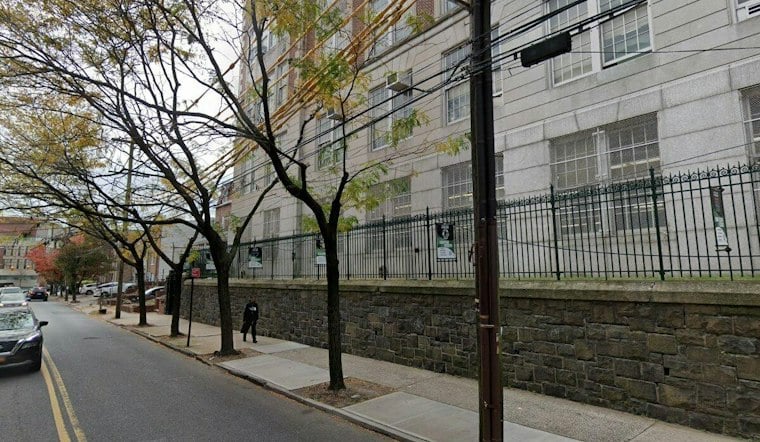
A Staten Island high school is about to open a nearly $500,000 student wellness studio that uses a life-sized, three-dimensional holographic device to connect teenagers with therapists who could be miles away. Ralph R. McKee Career and Technical Education High School built the space after three years of planning and construction, and it's expected to open in the coming weeks as a new front line against rising rates of teen anxiety and depression.
The studio was created in partnership with S.I.C. Film School, which is based in Hillside, New Jersey, according to Chalkbeat. About two dozen students got an early look at the space earlier this month, getting a preview of a concept that school leaders say has been years in the making. Principal Gregory Bowen, who is listed as McKee's school leader by the New York City Department of Education, said the idea for a dedicated wellness space dates back several years before finally coming together.
Four Rooms, One Goal: Accessible Mental Health Support
The studio is split into four distinct sections, per the Chalkbeat report: a private room for one-on-one sessions with remote therapists, a relaxation area with a U-shaped screen displaying scenes like beaches or forests, a podcast area where students can record discussions about teen mental health, and a stage for producing holograms that share positive messages. The goal, the outlet reports, is to make mental health services more accessible to students while encouraging creative uses of technology rather than passive screen time.
The centerpiece is the private therapy room, where students will sit with a device built by Proto Hologram Inc. that projects a life-sized, three-dimensional image of a therapist who could be based elsewhere entirely. That device is already in use at more than 40 universities around the world, the company has said, and McKee is expected to be its first K-12 school customer. Bowen said the technology could help students deescalate and refocus during the school day, as reported by Healthbeat, which first detailed the studio's opening.
Who Pays for It, and Who Will Staff It
Bowen said the school received what he called “big support” from Staten Island Borough President Vito Fossella to help cover the studio's cost, though Fossella's office did not respond to inquiries about the size or form of its contribution. Bowen was blunt about why outside help was necessary: “There's not a school out there that can do this straight from their budget,” he said, according to Chalkbeat, adding that projects like this require elected officials to step in with funding.
Key details remain unsettled. Bowen said it was too early to identify which agencies would provide the remote therapists who will staff the private room, though he noted those therapists will be vetted by the Department of Education. Separately, Proto Hologram engineers have worked to ensure the device and its operating system received cybersecurity and patient privacy approval, the same report notes.
A School Already Stretched Thin on Counselors
The push for new technology comes against a backdrop of strained staffing. McKee enrolled nearly 570 students last year, more than 82% of them from low-income families, with roughly 36% having disabilities compared with 22% of students citywide, according to education department data cited by the outlet. The school currently employs four full-time guidance counselors, including one bilingual counselor, and one social worker — a ratio of roughly one counselor or social worker for every 114 students, compared with one for every 125 students across New York City high schools overall.
Bowen said McKee's studio could serve as a model for other city schools, if they're able to secure similar funding. The broader numbers help explain the urgency: in 2021, 38% of the city's high school students reported feeling sad or depressed in the past year, up from 27% a decade earlier, per the city's health department. A 2024 Health Department report also found that teens who use social media experience anxiety and depression at higher rates than those who do not.
Students Ask: What Makes a Hologram Different From a Phone Call?
Not everyone at McKee is convinced the technology is a leap forward. Jade Saavedra, a 16-year-old junior, questioned how holographic therapy differs from a regular phone call, since most remote therapy today is delivered through video calls or text messaging. David Nussbaum, the Los Angeles-based inventor of Proto's holographic technology who demonstrated the device to students during the studio tour, argued it creates “a feeling of presence” that a phone or video call cannot replicate. Nussbaum also said communications with a doctor, therapist or family member should be private and safe.
Fellow junior Josias Alarcon, also 16, offered a more optimistic read, saying technology that can harm teenagers when misused can also help them when used appropriately. Nicholas Lanzieri, a clinical professor at NYU's Silver School of Social Work, struck a more cautious tone, saying schools should carefully consider how educational technology is implemented and be intentional about what they're trying to create.
The studio arrives as the city's education department has introduced new limits on artificial intelligence and screen time, though high schools retain more flexibility than schools serving younger students. New York City separately launched its free Teenspace online therapy service in November 2023, offering interactive exercises and short lessons to any city resident ages 13 to 17 regardless of school, income or insurance status. McKee's hologram studio isn't the first of its kind in the region — S.I.C. Film School previously opened a hologram studio in Yonkers dedicated to youth and education, described as one of two such studios on the East Coast and the only one in the Hudson Valley, where officials gave away more than 1,000 free holograms at its grand opening, according to News 12 Hudson Valley.



