

























































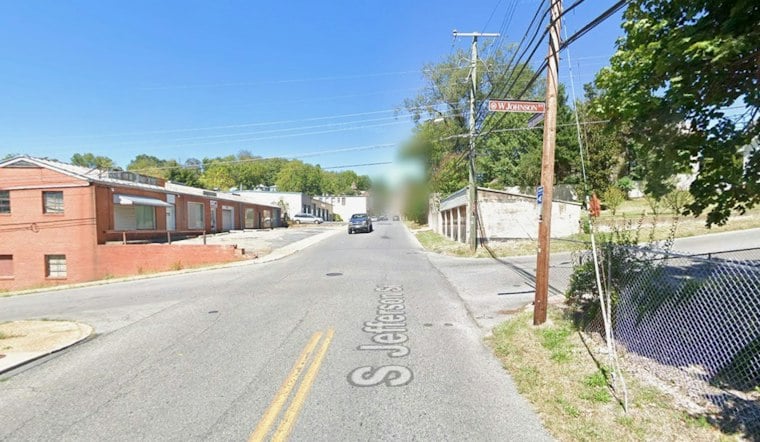
Construction crews working on Staunton's $4.6 million downtown tunnel repair project have shifted operations to West Johnson Street, closing the road in front of the parking garage while reopening Byers Street as a one-way eastbound detour. The change marks the start of a new phase in a years-long effort to shore up the aging stormwater culverts running beneath the historic Wharf District.
The traffic shift took effect the week of September 28, according to WVLT, which reported on the project entering its second phase. As detailed by Augusta Free Press, the prior phase had focused on Byers Street from February through late September, meaning the newly reopened one-way route and the freshly closed stretch of West Johnson Street essentially trade places as work progresses through downtown.
A Sole Bid and a Tax Hike Fund the Repairs
The $4,618,000 construction contract went to Virginia Infrastructure, Inc., a Lexington-based firm that submitted the only bid when it opened in November 2025, with that lone bid coming in roughly $400,000 above the city's original budget estimate, per the same outlet's reporting. Staunton City Council covered the gap by financing the project through a newly established infrastructure capital improvement fund, fueled by a two-cent real estate tax rate increase along with proceeds from selling three city-owned parcels at Staunton Crossing, a 160-acre economic development property along Interstate 81.
The work itself relies on what the City of Staunton describes as “top-down” construction, a method used to remove and replace the aging roofs and walls of the underground stormwater culverts that support roadways across Byers Street, West Johnson Street, and South New Street. Once West Johnson Street work wraps up, repairs are expected to move to South New Street in spring 2027, according to the city.
Why the Tunnels Needed Fixing in the First Place
The urgency behind the project traces back to August 2020, when two catastrophic storms, each classified as a 500-year event, flooded downtown Staunton and prompted structural evaluations that found the aging tunnel walls could no longer safely carry heavy traffic loads, Augusta Free Press reported. Historic downtown and the Wharf District sit at the lowest point of a 12-square-mile, highly impervious drainage basin. Lewis Creek and other streams converge beneath downtown, according to WMRA. Lewis Creek eventually flows into the Middle River and on into the Chesapeake Bay Watershed.
City leaders had considered a more dramatic fix: daylighting the Wharf District tunnels by opening up the covered streams entirely. But a municipal flood study found that removing the tunnel covers offered minimal flood mitigation benefit relative to its high cost, WMRA reported, steering the city back toward restoring the existing tunnel structures instead.
State Approval Opens Door to Future Grants
That broader strategy crystallized on August 27, 2026, when Staunton City Council officially adopted a five-year Flood Resilience Plan after receiving approval from the Virginia Department of Conservation and Recreation. The adopted plan qualifies the city for up to 95% construction grant funding through the Virginia Community Flood Preparedness Fund, positioning Staunton to tackle further flood mitigation work without leaning solely on local tax dollars.
Merchants Navigate a Long Construction Timeline
The extended closures have real consequences for the shops and restaurants that line Beverley Street and the Wharf, where merchants have faced altered pedestrian and vehicular access throughout construction. To soften the blow, the Staunton Economic Development Authority partnered with the Small Business Development Center and the Staunton Downtown Development Association starting in December 2025 to coordinate merchant communications and referral services during the long-term disruption.
Downtown's infrastructure overhaul isn't stopping at stormwater tunnels. The city is also moving forward with a $2.18 million, VDOT-funded Downtown Intersection Improvements Project slated for summer 2027, which will upgrade pedestrian curb extensions, ADA accessibility, and traffic controls across nine downtown intersections, including converting two signaled intersections along Central Avenue and New Street into all-way stops.


