

























































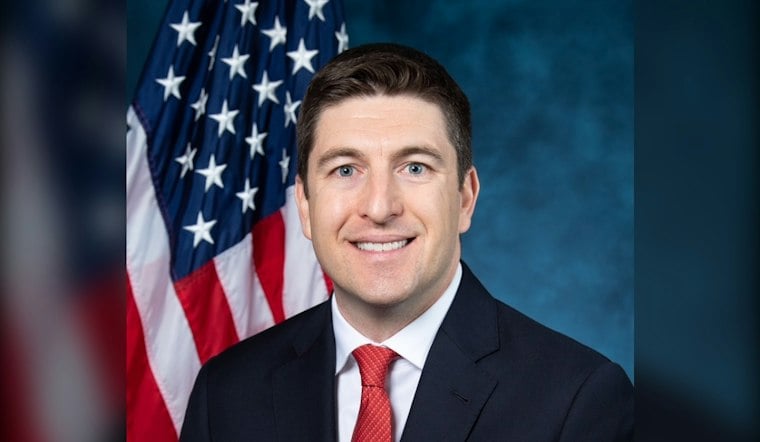
Republican U.S. Rep. Bryan Steil and Democratic challenger Mitchell Berman traded sharp accusations over Medicaid, tariffs and taxes during an hourlong debate broadcast from Janesville, with Berman branding the incumbent a rubber stamp for the Trump administration and Steil accusing his opponent of fearmongering. The clash, aired on Janesville's WCLO radio station and moderated by station operations manager Tim Bremel, marked the two candidates' first and only scheduled face-off ahead of the November election for Wisconsin's 1st Congressional District.
A Rematch-Style Fight Over the Reconciliation Bill
Berman spent much of the debate hammering Steil over his vote for the Republican reconciliation law, which Berman said would cut spending for safety-net programs, increase the national debt and lower taxes for wealthy Americans, according to WisPolitics. Berman cited an estimate that the One Big Beautiful Bill Act is set to cut $1 trillion from Medicaid spending over the next decade and that roughly 270,000 Wisconsinites could lose coverage as a result, the outlet reported. A separate fact-check from Racine County Eye put the projected national reduction in federal Medicaid spending at about $911 billion over a decade, while a Congressional Research Service summary of a Congressional Budget Office estimate found the Medicaid provisions would reduce federal outlays by $840.2 billion and revenues by $21.1 billion from fiscal years 2025 through 2034, per Congress.gov.
Steil pushed back directly, saying the law's Medicaid changes targeted undocumented immigrants and employable, childless young adults rather than vulnerable residents, and accused Berman of fear-mongering, the WisPolitics report said. He also pointed to a change in Wisconsin's Medicaid reimbursement formula that he said was expected to boost federal health care funding by $1 billion a year, though the same report noted another estimate putting the annual bump in federal matching funds for hospitals closer to $1.22 billion. As Wisconsin Public Radio reported, Steil broadly supports work requirements for federal programs like Medicaid and backs removing undocumented immigrants from taxpayer-funded health care access, while Berman has said he would work to fully fund Medicaid, restore Affordable Care Act subsidies and offer a government insurance option to expand coverage and lower costs.
Immigration, Taxes and Tariffs Also Take Center Stage
On immigration, Steil said both the legal and illegal immigration systems are broken and argued that U.S. immigration policy should be tied to workforce needs, while supporting the arrest and removal of violent criminal undocumented immigrants, according to the WPR account. Berman countered that immigrants benefit communities and should be treated with dignity and respect, calling for comprehensive immigration reform with a path to citizenship for those who have not committed crimes and saying immigrants should receive green cards in a timely manner.
The candidates also split on tariffs and taxes. Berman called for repealing the blanket tariffs imposed by the Trump administration, according to Urban Milwaukee, while Steil argued that tax relief for hardworking families in southeast Wisconsin and continued efforts to expand domestic energy production were the better path to easing affordability pressures. Berman has also said the tax code should be reformed so the wealthiest Americans do not pay a lower effective rate than teachers, and he has called for passing a budget that does not add to the national debt. Steil, for his part, backs a debt commission and a biennial federal budget cycle, saying Congress should vote on reforms aimed at a bipartisan solution.
A PAC Dispute and a Fundraising Surprise
The debate also turned personal over campaign finance. Berman said his campaign takes no corporate PAC money, per Urban Milwaukee's report, while Steil's campaign accused him of benefiting from a DCCC-funded advertisement. The Democratic Congressional Campaign Committee is not classified as a corporate political action committee under campaign-finance rules, according to the Beloit Daily News.
That committee added Berman's campaign to its Red to Blue program last month, aimed at flipping Republican-held seats, and the financial numbers behind that move turned heads. Berman raised around $897,000 between July 23 and Sept. 30, outraising Steil's roughly $784,000 over the same period, according to Wisconsin Public Radio's reporting on campaign-finance filings. Steil still held a commanding financial edge overall, spending close to $3 million during the period and ending it with about $4 million in cash on hand, compared with Berman's roughly $711,000 in spending and $338,000 in cash at the end of September.
A District That Hasn't Elected a Democrat Since the 1990s
Berman, an emergency room nurse who lives in Racine County, is seeking to become the first Democrat to represent the 1st Congressional District since the 1990s. The district stretches along Wisconsin's southeastern corner and includes Kenosha and Racine counties, most of Walworth County, and parts of Rock and Milwaukee counties — territory once represented by former House Speaker Paul Ryan for 20 years. Steil, a Janesville native who worked in manufacturing before entering politics, has held the seat since first winning election in 2018 and defeated Democrat Peter Barca by more than 10 percentage points in 2024, taking 54 percent of the vote to Barca's 43.8 percent.
Outside forecasters have taken notice of the shifting dynamics. The Cook Political Report and the University of Virginia's Crystal Ball both moved their ratings of the race from likely Republican to leans Republican, Fox6 Now reported, even as other polling has continued to describe the district as leaning Republican, per The Guardian. University of Wisconsin-Milwaukee political science professor Mordecai Lee told Wisconsin Public Radio that the surge in Democratic money flowing to Berman suggests internal polling may be showing movement in the district.
Manufacturing Losses and Tariff Costs Loom Over the Race
Berman has made rising costs, including health care costs, a central theme of his campaign, according to Urban Milwaukee, and a Marquette University Law School poll has identified health insurance as one of the top issues for voters in the race. The backdrop includes a long decline in Wisconsin manufacturing employment, which fell from 560,000 jobs in 2001 to 460,000 in 2025, The Guardian reported, with the state shedding another 9,500 manufacturing jobs between January 2025 and January 2026 alone.
A July report cited by the same outlet found that tariffs had already cost Wisconsin 3,910 jobs and were adding roughly $1,095 a year in costs for state households — figures that help explain why both candidates spent so much of their debate time arguing over who has the better answer for affordability. With no other debates currently scheduled before Election Day, Tuesday's exchange may be the only time Steil and Berman face off directly in front of voters.





