

























































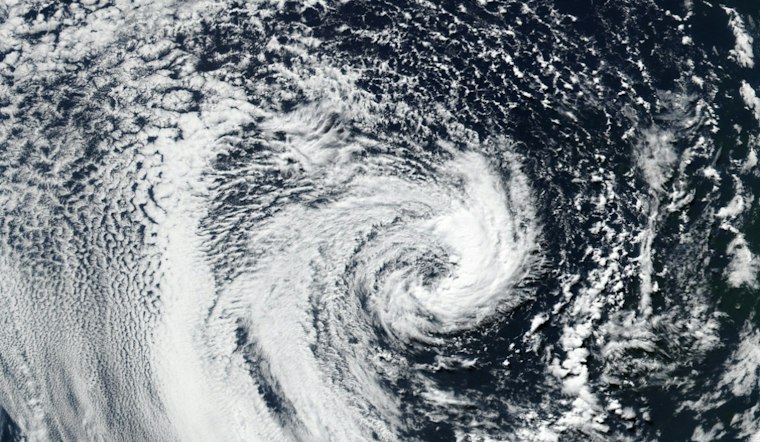
A new subtropical storm has churned to life in the Atlantic, and even though it's forecast to stay far out at sea, its reach is already being felt on East Coast beaches. Subtropical Storm Josephine formed in the western Atlantic Ocean with maximum sustained winds of 65 mph, and as of Wednesday it was located about 265 miles south of Nantucket, Massachusetts, moving north at 6 mph.
Josephine is the 10th named storm of the 2026 Atlantic hurricane season, according to CNN. The storm is expected to remain well offshore while tracking northeast Thursday, before dissipating this weekend, per the same report. Forecasters say some strengthening is likely over the next 36 hours, with hurricane-force winds possible by late Thursday as Josephine transitions into a post-tropical system, CNN reports. A separate advisory from the National Hurricane Center noted there were no coastal watches or warnings in effect as of that update, though that detail carries lower confidence given the snippet nature of the advisory text.
Even while staying offshore, Josephine is a big storm. Tropical-storm-force winds extend up to 415 miles from its center, and the system's large swells are affecting much of the U.S. East Coast and portions of Atlantic Canada, as reported by 10 Tampa Bay. Those swells are creating potentially life-threatening surf and rip current conditions along the coastline, the station's report notes.
Flooding and Gale-Force Gusts Expected Through the Week
Minor to locally moderate coastal flooding is already ongoing along portions of the Mid-Atlantic coast, particularly around high tide, and those concerns are expected to continue through the rest of the week, according to 10 Tampa Bay's reporting. Wind gusts may reach gale force along portions of the northeastern U.S. coastline through Thursday, the outlet adds. CNN similarly reports that coastal flooding is possible around high tide from the Mid-Atlantic to Cape Cod through Friday.
Further south, FOX 5 DC reports that prolonged wind gusts over 40 mph are the primary concern for the coastline, with water levels in Ocean City, Maryland, and the Chesapeake Bay expected to climb more than two feet above normal during high tide. Coastal flood alerts are currently active across coastal Virginia and North Carolina, per that same report. Meanwhile, WESH reports that high winds, coastal flooding and dangerous surf are expected along portions of the U.S. East Coast during the next few days, and that Josephine should move away from the United States and remain south of Nova Scotia and Newfoundland.
No Threat to Florida, but Beachgoers Urged to Stay Alert
10 Tampa Bay's reporting makes clear that Josephine poses no direct threat to Tampa Bay or Florida. Still, residents and visitors along affected East Coast beaches should monitor local National Weather Service advisories and heed warnings about dangerous ocean conditions, according to the station.
A Season Running Behind — With Conflicting Forecasts
Josephine's arrival comes during a season that has been running behind schedule. A powerful El Niño has helped suppress storm activity in the Atlantic this year, CNN reports. At the time of publication, CNN reported that the 2026 Atlantic season had produced 10 named storms, with Hurricane Isaias the only one to reach hurricane strength; WESH reported that the season had seen nine named storms so far. Isaias made landfall near Destin, Florida, on Oct. 9 as a Category 2 hurricane, per WESH.
Seasonal forecasts have shifted dramatically over the year. NOAA had projected 8 to 14 named storms with a 55% chance of a below-normal season in one outlook, while the agency's late-May forecast instead called for an above-average season of 13 to 19 named storms, according to the New York Times. NOAA had planned an early-August update to its forecast. By comparison, the 2025 Atlantic season produced 13 named storms, including five hurricanes and four major hurricanes, per the same Times report.
The stakes of a single strong storm remain high regardless of seasonal totals. Hurricanes Helene and Milton combined caused about $113 billion in damages and more than 250 deaths in the United States in 2024, the Times notes. Climate experts have warned that rapid intensification is more likely to occur in a warming world, and researchers have also found that storms have slowed down, staying over areas for more extended periods, according to the same report.




