

























































Joshua Ward says his family has lived on the same hillside property off Sunland and Wornom avenues for two generations, and he says he has never seen a water bill anywhere close to $10,000 — until this year. The charge landed early in 2026 for usage during the winter months, right around the time a damaged fire hydrant near his home was repaired and relocated farther up the street.
Ward, who works as a homeowner and plumber, told FOX 11 that after the hydrant work, every faucet and hose on his property began blowing “more air than water” for a stretch of time. Neighbors confirmed that the water was shut off a couple of times while crews carried out the repairs. Ward believes the crews never fully purged air from the line afterward, and he suspects that trapped air may have spun his meter as though it were measuring water rather than air.
A Bill That Dwarfed Every Prior Month
The numbers make the spike hard to ignore. Ward's water bill had run between roughly $600 and $850 this year even through record summer heat, and the station's report notes his average bill during the previous year's hot season topped out around $1,400. Then came the bill tied to the winter usage period: about $10,000, a jump Ward says he simply cannot explain through normal household use.
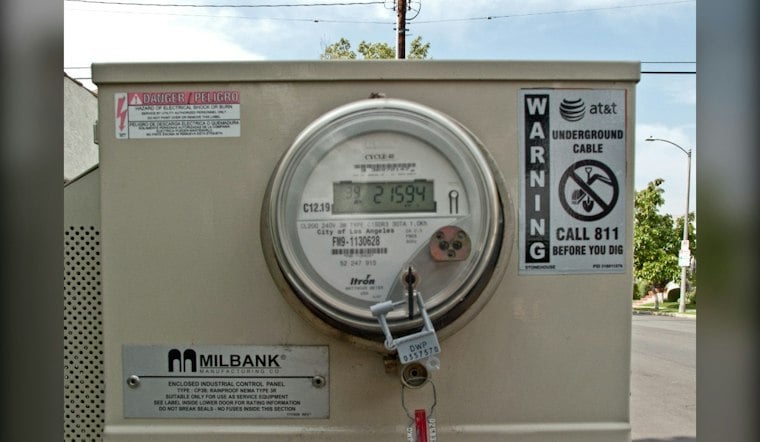
Water meters track usage by volume, and air is known to spin a meter more rapidly than water does — the mechanism behind Ward's suspicion that the hydrant repairs are connected to his bill. The Los Angeles Department of Water and Power, for its part, told FOX 11 only that the meter was working properly and that the unusually high charge could have been the result of a leak. The utility added that it wants to look into the matter further, though the outcome of any such review has not been reported.
Neighbors See Smaller Spikes, Too
Ward isn't the only one on the block who noticed something off. Other residents nearby reported higher-than-usual water bills after the hydrant work, though none came anywhere near Ward's total — per the same FOX 11 account, their increases were real but far smaller.
LADWP's own billing guidance offers a few possible explanations for an outsized bill, including a billing cycle that covers more than one period or a meter reading that is inconsistent with a customer's historical usage. The utility bills residential customers on a bimonthly cycle, according to its billing FAQ, which also states that customers may qualify for a billing adjustment after an underground leak is repaired, subject to review by the department's Field Investigations Unit.
Ward's Bill Fits a Wider Pattern of Sky-High Charges
Ward's case lands amid a run of eye-popping Los Angeles utility bills that have drawn scrutiny in recent weeks. An elderly Los Angeles couple received a water bill exceeding $9,200 after LADWP told them their meter had been broken for three years, according to NBC Los Angeles. Canter's Deli made headlines of its own when its owner received a combined water and power bill of $35,700, almost $11,000 higher than the bill it received four months earlier, as reported by the Los Angeles Times.
Other recent bills blend water, power and sanitation charges rather than water alone. Former UCLA football player Micah Reed reported a $3,300 bill covering two months of electricity, water and sanitation service, including a $2,100 electricity charge, according to ABC7. Studio City resident Patrice Berlin told the same outlet her utility bill reached $2,700, with $2,000 of that attributed to water alone compared with just $103 a year earlier.
What's Driving the Citywide Spike
The Los Angeles Times reports that LADWP has pointed to record summer heat and heavier air-conditioning use as the primary drivers of recent high bills, pushing more customers into pricier electricity tiers rather than blaming rate hikes outright. The paper notes that LADWP's Tier 1 electricity rate climbed from 22 cents to 27 cents per kilowatt-hour between January 2025 and this October, a 23 percent increase in under two years. Ratepayer advocate Timothy O'Connor told the Times that high temperatures were a major factor pushing more households into the costlier Tier 2 and Tier 3 brackets.
Rising sewer and trash fees, along with steadily climbing water rates and heavier summer water use, have also contributed to the broader run-up in bills, per the same Times report. The utility says it offers payment plans to smooth out high and low bills, assistance programs for customers struggling to pay, and energy-efficiency incentives aimed at lowering usage over time.
For now, Ward is left waiting to see whether LADWP's promised review turns up an explanation — or an adjustment — for a bill that dwarfs anything his family has paid in two generations on that hillside property.


