

























































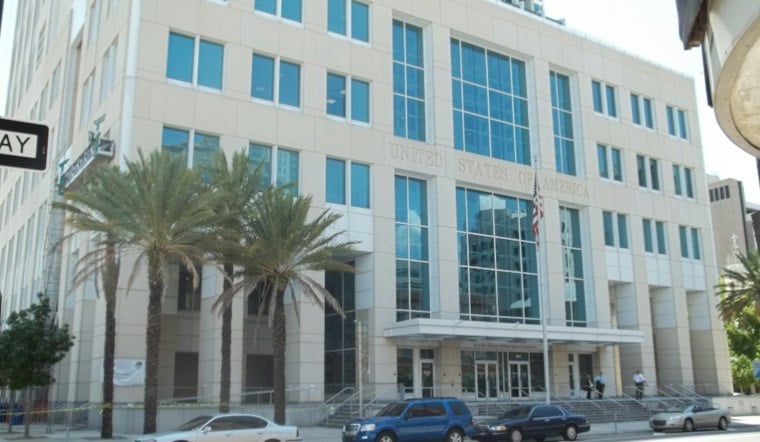
A Tampa man has been sentenced to three years and ten months in federal prison after prosecutors said he ran a years-long scheme that used fabricated gambling winnings and losses to trick the IRS into paying out refunds no one was entitled to. Mahmoud Mehdi was sentenced by U.S. District Judge Virginia M. Hernandez Covington for conspiracy to commit wire fraud and making and subscribing a false tax return, and a judge also ordered him to forfeit $137,931.33 and pay $732,521.18 in restitution.
A Scheme Built on Fake Casino Numbers
According to West Orlando News, Mehdi conspired with others to commit wire fraud by knowingly causing fraudulent tax forms to be electronically submitted to the IRS between January 2019 and December 2022. Those returns allegedly contained fabricated gambling winnings and losses, along with false federal tax withholding amounts based on those fake numbers, as Accounting Today reports. The fraudulent paperwork was designed to request refunds that the taxpayers involved were never legally entitled to receive.
The scale of the attempted fraud was significant: Mehdi's conduct is said to have caused an intended tax loss of $1,401,587.88, though the actual loss came in lower, at $732,521.18. Per the same account, the IRS ultimately paid out that actual loss amount to taxpayers in the form of refunds or credits applied against prior debts, with some of that money reportedly flowing to Mehdi himself.
Officials Frame the Case as a Warning
The Internal Revenue Service – Criminal Investigation unit investigated the case against Mehdi, with Assistant United States Attorneys Samantha Newman, Brooke Padgett, and Jennifer Peresie prosecuting, and Assistant United States Attorney Suzanne C. Nebesky handling the forfeiture. United States Attorney Gregory W. Kehoe announced the sentencing.
Charles Miller framed the outcome as a message to would-be tax cheats, stating that tax fraud isn't just a numbers game — it is a crime that harms every honest taxpayer. He added that the sentencing reinforces that people who cheat the system will be held accountable.
It's worth noting that the dossier record contains conflicting sentencing dates from justice.gov press materials — one citing September 3, 2026, and another citing February 26, 2024 — and that discrepancy has not been independently resolved.
Part of a Broader Federal Crackdown
Mehdi's case lands amid what federal watchdogs describe as a persistent, costly problem. IRS Criminal Investigation identified $10.59 billion in financial crimes in fiscal year 2025, a 15.7% jump from the prior year, with $4.5 billion of that tied specifically to tax fraud — a 111.8% increase, according to the IRS. Separately, the Government Accountability Office has noted that IRS auditors protect an annual average of $3.7 billion in invalid refund payments, underscoring just how much fraudulent refund activity the agency is up against each year, per the GAO.
Florida has seen a string of similar prosecutions in recent years. A Lakeland tax preparer was sentenced to 57 months in federal prison after preparing or assisting in 458 false and fraudulent returns for 319 taxpayers across tax years 2018 through 2022, according to the Department of Justice. Elsewhere, a San Antonio tax preparer received 53 months for aiding in the filing of false returns, while a former New York-based tax preparer was sentenced to four years for a nearly $11 million fraud scheme involving wire fraud and false return preparation, per Law360 Tax Authority.





