

























































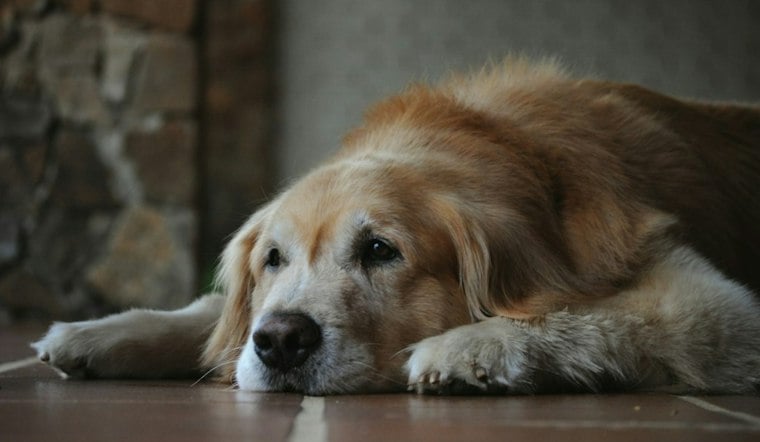
A team of University of South Florida researchers in Tampa is working on a gene therapy designed to treat canine cognitive decline directly, rather than just manage its symptoms. The proposed treatment would be delivered as a single injection, administered by veterinarians, and is meant to help a dog's body produce a molecule with anti-inflammatory, protective and regenerative effects.
USF Health research associate Dr. Aurelie Joly-Amado is leading the effort, according to USF Health, which describes her as working to advance a gene therapy to treat canine cognitive decline, a condition that shares some similarities with human Alzheimer's disease. The approach relies on a modified, non-disease-causing virus used as a delivery vehicle to carry genetic instructions into brain cells, according to the same USF Health account. Once inside, those cells are intended to continuously produce a beneficial protein after a single treatment, with that protein reducing oxidative stress and protecting cells from damage, per USF Health.
Joly-Amado described the injection as one that prompts the body to produce a molecule with anti-inflammatory, microbiome-protective, and regenerative effects, and she said one injection may be very helpful for dogs, according to FOX 13 Tampa Bay. USF researchers have worked on the underlying project since 2019, per the station's reporting, and current canine cognitive decline treatments focus mainly on managing symptoms rather than the disease itself, Joly-Amado told the outlet.
A Tampa Pug's Decline Helped Drive the Research
The project's human motivation traces back to a 12-year-old pug named Ivy, owned by Kate Heath. Ivy experienced staring at walls, changes in affection, and disrupted sleep before she was diagnosed with canine cognitive decline, FOX 13 Tampa Bay reports. Heath ultimately faced the difficult decision to put Ivy down, and the dog passed away in February 2024, according to USF Health, which notes that Ivy's experience helped motivate the research team's effort to find a better treatment for the condition.
Existing treatments for dogs primarily address symptoms such as anxiety and behavioral changes rather than the underlying disease, USF Health reports. That gap reflects a broader pattern described by the University of Illinois College of Veterinary Medicine, which notes that management of canine cognitive dysfunction currently relies on dietary adjustments and supplementation, certain medications, and cognitive enrichment. The same source identifies selegiline, marketed as Anipryl, as the only FDA-approved drug for the condition.
A Condition That's Becoming More Common
Canine cognitive dysfunction is described by Frontiers in Veterinary Science as a common age-associated neurodegenerative disorder marked by progressive changes in memory, learning, spatial orientation, social interaction and awareness. The University of Illinois veterinary program estimates it occurs in 45% to 67% of dogs older than 13. North Carolina State University researcher Natasha Olby has said diagnoses of the syndrome are increasing in frequency, according to NC State News.
Multiple research groups worldwide are studying diagnostic and treatment options for cognitive dysfunction in dogs and other species, per the American Animal Hospital Association, which also notes that Olby's group has been studying biomarkers for the condition since at least 2019, though commercially available biomarker tests do not yet exist. Other experimental approaches have been tested elsewhere: a preliminary study randomized 17 dogs with canine cognitive dysfunction to receive a butyrylcholinesterase inhibitor or no treatment over six months, according to research published in Nature. A separate randomized controlled trial enrolled 70 dogs with mild to moderate cognitive impairment to test a senolytic and NAD+ precursor combination, per a different Nature study. A small case series also suggested transcranial photobiomodulation might improve cognitive scores in dogs with moderate to severe dysfunction, though researchers said further studies were needed, according to a report in PMC.
Funding and Next Steps for the USF Project
The USF project is being advanced through Blue Zone Therapeutics, a company Joly-Amado co-founded with colleagues to help move the technology toward veterinary use, according to Mirage News. The same report notes that while the therapy has shown promise in previous animal studies, moving it to canine studies will require significantly larger amounts of the treatment and new ways to measure its effectiveness in dogs. The project recently received support through the Florida High Tech Corridor's Early-Stage Innovation Fund, which provides up to $25,000 in seed funding to advance technologies toward market readiness, according to USF's research and innovation office. That funding will be used to scale up production of the therapy and create tests to monitor its effectiveness, the university says.
USF researchers are also seeking additional funding from the National Institutes of Health and private foundations, FOX 13 Tampa Bay reports. Beyond dogs, the research team hopes to eventually adapt the technology for cats and to explore potential applications for human Alzheimer's disease, according to the station's reporting. The USF effort echoes other experimental gene therapy work in dogs, including a pilot study launched by Rejuvenate Bio, a company founded in 2018 that began testing an experimental gene therapy in dogs after earlier trials in mice targeting four age-related diseases, according to Chemical & Engineering News.




