

























































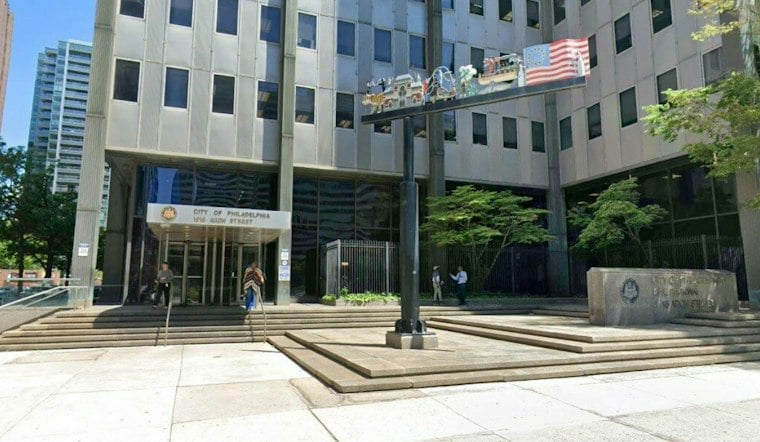
A mansion that has sat empty on North Broad Street for more than three decades is getting new life. Temple University announced plans for a $30 million restoration of the historic Burk Mansion, aiming to reopen the three-story, 27-room building at the corner of Broad and Jefferson streets in early 2028 as a community engagement center.
The university unveiled the plan at an event held at the mansion itself, as reported by The Philadelphia Inquirer. Temple's Finance and Investment Committee had already recommended authorizing the Phase 1 project at a cost not to exceed $30 million, inclusive of $2.5 million previously approved, according to meeting minutes from Temple's governing board. The Pennsylvania state government will contribute $15 million toward the project, per the Inquirer's reporting, and Temple received a major gift from lawyer Michael Spolan through the Philadelphia-based Spolan Family Fund to cover most of the remaining cost. Temple declined to disclose the amount of Spolan's gift, though Temple President John Fry called the donation the university's largest-ever gift for civic efforts and one of its most important gifts by scale and impact, per the Inquirer. Spolan himself did not attend Temple, but his father did, and he has expressed interest in helping the university with its civic endeavors, the Inquirer reported.
A Mansion With a Complicated Past
Built in the early 1900s for leather manufacturer Alfred E. Burk, the mansion was designed in late-Victorian Italian Renaissance style, according to the Inquirer. Temple's own account, found in its application to the Philadelphia Historical Commission, places the construction date at 1907, while Hidden City Philadelphia reports the mansion and its rear conservatory were built in 1909 in that same style by architects Simon and Bassett. The building later served as headquarters for the Upholsterers International Union of North America, per the Inquirer.
Temple's timeline for acquiring the property is similarly split across sources. The Inquirer and Temple's own historical-commission application both place the acquisition in 1971, the same year the Historical Commission designated the mansion a historic site. A Temple News account also states that Temple acquired the Burk residence in 1971. The building is listed on the Philadelphia Register of Historic Places.
Once in Temple's hands, the mansion became a daycare for faculty, staff, and students and home to the university's former School of Social Administration, according to the Inquirer. Temple's application materials add that, beginning in the late 1960s, the site hosted community education, workforce development, violence prevention, child welfare training, and childcare programs. A fire in 1993 caused considerable damage, and the building has been vacant since 1995 -- more than 30 years, per the Inquirer's reporting. Temple invested in stabilizing the mansion and its conservatory in 2012, according to the university's application.
What the Restoration Will Involve
The Philadelphia Historical Commission gave Temple permission to proceed with the renovations, which call for restoring the mansion's facade and gut-rehabilitating its interior, the Inquirer reported. Temple's application describes the goal as preserving and restoring significant historic exterior features while modernizing the structure for accessibility and code compliance. A bid listing for the project describes work spanning the mansion, its detached conservatory, and the surrounding property, including structural, mechanical, electrical, plumbing, fire-protection, exterior, civil, and site work, according to a posting on LightRFP, which lists a 12-month contract duration. Hidden City Philadelphia reports the repair work includes restoring a stone balustrade along the site's perimeter, replacing windows and doors, and rehabilitating the landscaping and walkways.
Preservationist Paul Steinke described Burk Mansion as an architectural and historical landmark on the North Broad Street corridor, per the Inquirer. Temple President John Fry, who became president in 2024, said he viewed the mansion as an underutilized resource in a prime location for community programming. Fry said neighbors find it difficult to understand and navigate Temple's existing community offerings, and that the university must strengthen its commitment to the residents around it, according to the Inquirer.
A Front Door for Temple's Neighbors
Temple plans for the renamed Spolan Community Engagement Center to serve as a welcoming front door and hub for the university's community offerings, the Inquirer reported. The center is intended to serve the five ZIP codes that surround Temple's Main and Health Sciences Center campuses -- home to more than 175,000 people, according to Temple's application to the Historical Commission. That mission echoes the work of Temple's existing Community Gateway, which connects neighborhood residents with services from Temple and its community and government partners through both in-person guidance and virtual appointments.
David W. Brown, who is involved in planning the center, said it will use flexible open space for varied programming and that Temple is discussing programs with its schools, colleges, and community partners, per the Inquirer. The university envisions offering legal services through its law school and is in discussions about potential Columbia North YMCA occupancy of space within the center. Fry said he hopes a significant amount of the center's efforts will be student-led under Brown's guidance. Temple also plans to conduct a listening tour to learn what services and programs residents actually want, and staff plan to visit similar centers at the University of Pittsburgh for ideas, the Inquirer reported.
A Model Borrowed From West Philadelphia
Temple's plans are patterned partly after the Dornsife Center for Neighborhood Partnerships at Drexel University, according to the Inquirer, and Fry led that center for 14 years before joining Temple. Located on 1.3 acres in the heart of the West Philadelphia Promise Zone, the Dornsife Center is a neighborhood hub that opened on June 12, 2014, according to Drexel University. The center offers stakeholder-driven programming meant to support the health, wellness, and stability of surrounding neighborhoods, and relies on stakeholder planning to coordinate academic resources from across Drexel with nonprofit program partners, per the Social Innovations Journal.
Fry credited Governor Josh Shapiro for the state funding supporting the project, according to the Inquirer. Fry also said Temple is largely there with fundraising, though the university is still working to close the remaining funding gap. Beyond the mansion itself, Fry said he wants to create an innovation corridor stretching from Terra Hall at Broad and Walnut streets -- which Temple acquired from the University of the Arts -- to Temple's Health Campus, located a little more than a mile north of the main campus on Broad Street, the Inquirer reported. Photos of the mansion and Temple's community engagement staff were credited to Tom Gralish.



