

























































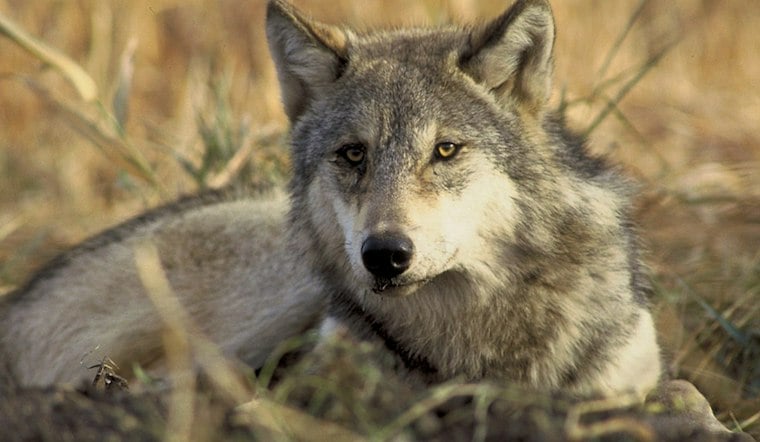
Ten critically endangered American red wolves swapped homes between New York and North Carolina this week, part of a carefully choreographed exchange meant to keep one of the world's rarest canines from slipping further toward extinction. Three wolves flew south from the Wolf Conservation Center in South Salem, New York, while a breeding pair and their five pups flew north to take their place.
The exchange happened Tuesday between the Wolf Conservation Center and the Museum of Life and Science in Durham, North Carolina, according to Fox Weather. The nonprofit Pilots to the Rescue handled the logistics, flying three wolves — a breeding pair and a lone female — from South Salem to Raleigh Regional Airport, according to NC Newsline. From Raleigh, the trio completed their journey by car to the Durham museum.
Two of those three wolves, named Mac and Sabine, were the ones who ended up at the Museum of Life and Science, per the same NC Newsline report. A third wolf, Sassafras, also made the trip south as part of the group. Meanwhile, a family of first-time parents named Carolina and Jacques, along with their five pups, traveled in the opposite direction toward New York.
Five Pups Named to Honor the Hurricanes’ 2026 Stanley Cup Championship
The pups — born in May and now roughly 7 or 8 months old — were named Cane, Champ, Puck, Stormy and Whaler, according to WUNC. Rebecca Bose, curator of the Wolf Conservation Center, and her team flew the family to New Jersey before driving them the rest of the way to South Salem, according to the New York Post. Bose said the center's team was excited to work with Pilots to the Rescue again and that animal well-being remains the top priority during any flight.
Catching the wolves before a flight is no small feat. Staff at the Wolf Conservation Center form a human chain to corral the animals into a corner and crate them for transport, the center's report notes. Bose explained that the wolves' innate fear of humans actually works in the handlers' favor: “We use their fear of us as a tool to catch them,” she said, adding that the biggest challenge is “catching wolves quickly enough to make the plane.”
A Population Still Teetering on the Edge
That fear isn't incidental — it's by design. Bose noted that the wolves “live a very wild existence” at the center, and that keeping their distance from people matters because some of them could eventually be released into the wild. Maintaining that wariness is considered essential if red wolves are ever going to survive outside captivity again.
Just how few red wolves remain in the wild depends on who's counting. Fox Weather reported fewer than 30 left in the wild population, while the Wolf Conservation Center put the number at fewer than 21 in the wild and 295 in captivity across nearly 40 facilities, according to its own announcement. The U.S. Fish and Wildlife Service, for its part, estimates 22 to 23 wild adults and subadults plus 14 to 15 pups. Eastern North Carolina remains the only place on Earth with a wild red wolf population, per NC Newsline.
The numbers mark a steep fall from 2006, when the red wolf population peaked at more than 130 individuals, according to the Wolf Conservation Center's background on the species. The exchange this week is part of a breeding program designed to maintain genetic diversity among red wolves in human care, NC Newsline reported, with transfers between captive facilities happening annually as part of the U.S. Fish and Wildlife Service's recovery plan. Each year, the agency reviews breeding and transfer plans and evaluates genetic priorities for the species, according to the Wolf Conservation Center.
One of Many Moves Across the Country
This wasn't an isolated trip. More than 50 facilities take part in the broader red-wolf conservation effort, Bose has said, and similar transfers have happened elsewhere this year. In April, personnel from the Saint Louis Zoo flew three pups to Alligator River National Wildlife Refuge while four wild-born pups went the other way to the zoo for fostering, according to the U.S. Fish and Wildlife Service.
This week's swap was actually the sixth such transfer between the Wolf Conservation Center and the Durham museum, according to the 9th Street Journal. The Museum of Life and Science has cared for more than 70 red wolves since launching its rehabilitation program, the Journal reported, and the five pups born there in May marked the museum's third consecutive successful breeding season, according to a release from the museum.
The red wolf is currently listed as an endangered species under the Endangered Species Act of 1973, per the U.S. Fish and Wildlife Service, which runs the Red Wolf Recovery Program; the American Red Wolf SAFE program is operated by the Association of Zoos and Aquariums. The agency describes captive breeding as an essential piece of the species' recovery. Pilots to the Rescue, the nonprofit that flew this week's wolves, typically transports at-risk animals from under-resourced shelters to rescue groups and adoption centers for medical care, fostering and eventual adoption — work Bose said is “helping safely transport red wolves and connect them with facilities important to the species' future.”





