

























































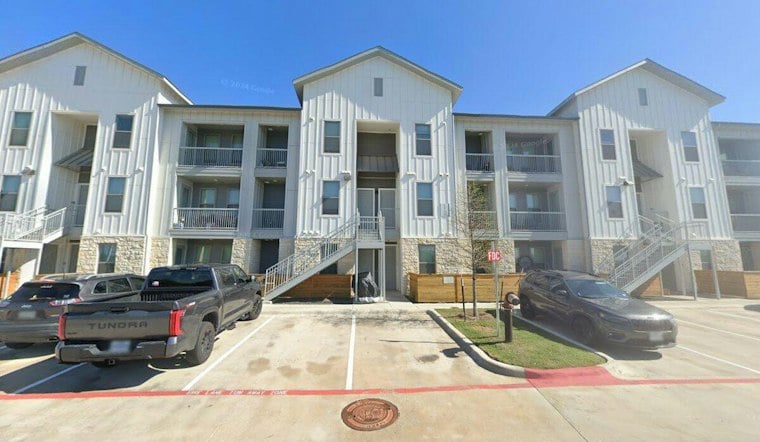
Three Class A apartment communities spread across Georgetown, Leander and Aubrey just landed a combined $117.3 million in refinancing, covering 960 units and roughly 922,623 rentable square feet in two of Texas's fastest-growing metro areas. The deal arrives as Austin's rental market shows its clearest signs yet of climbing out of a multi-year supply glut.
Walker & Dunlop, Inc. arranged the financing, with the firm's Capital Markets Institutional Advisory Group serving as exclusive advisor to the institutional property owner, according to citybiz. The refinancing was provided by Benefit Street Partners, a subsidiary of Franklin Templeton that reported $97 billion in assets under management as of August 31, and the loans were structured as floating-rate, interest-only notes designed to support the owner's long-term investment strategy, per the same report.
The portfolio includes Austin Avenue in Georgetown, which contains 312 apartments across roughly 298,788 rentable square feet and offers studio through three-bedroom residences with amenities like a resort-style pool, outdoor kitchen, 24-hour fitness center, dog park and community garden. Aven Ridge in Leander, also with 312 units spanning about 299,835 square feet, features one-, two- and three-bedroom layouts alongside a pool, a fitness center with a dedicated spin room, a business center and outdoor gathering spaces. Latitude Magnolia in Aubrey rounds out the trio with 336 units across roughly 324,000 square feet, offering one- and two-bedroom floor plans with a pool, fitness center, dog park and resident clubhouse. All three properties were completed between 2021 and 2022, the article notes.
A Market Finally Turning the Corner
The financing lands at a moment when both metro areas are pulling out of years of oversupply. Austin multifamily rents began recovering in the second quarter of 2026, ending a three-year stretch of declines, as quarterly absorption hit a new high even as deliveries fell sharply from the peaks recorded in 2024 and 2025, according to Northmarq. Class A properties posted the largest vacancy improvement of any asset class during that stretch, and deliveries are projected to decline 24% from their 2024-2025 peak.
Separate figures from Matthews show Austin multifamily vacancy fell 289 basis points year over year to 12.29% in the second quarter, while quarterly completions dropped 56.4% to 2,898 units. Investment volume in the market reached $557.5 million that quarter, roughly 194% higher than a year earlier — a sign that capital is flowing back into Austin apartments even as construction cools. Class A units still account for roughly 72% of the 14,610 apartments currently under construction in the metro, per the same report.
Dallas-Fort Worth's Parallel Rebound
Dallas-Fort Worth is telling a similar story. Net absorption totaled approximately 8,500 units in the first quarter of 2026, about 1,000 more than were delivered, while new supply held relatively flat at roughly 7,500 units and the construction pipeline contracted to about 43% below its 2023 peak, Northmarq reported in a separate analysis. Class A rents in the metro rose 3.2% year over year by the end of the first quarter, marking five consecutive quarters of annual growth, and deliveries are forecast to hit their lowest level since 2022, which could push vacancy down roughly 30 basis points by year-end.
Walker & Dunlop managing director of Capital Markets Institutional Advisory Jordan Casella tied the refinancing directly to those dynamics. Casella said Austin and Dallas-Fort Worth were seeing improving multifamily fundamentals, with slowing new construction helping bring supply and demand into a better balance, per citybiz. The loan structure, the firm noted, gives the institutional owner flexibility while supporting its strategy across all three recently constructed properties.
Population Growth Driving Demand
Behind the numbers are demographic shifts the lenders are betting on. Georgetown's population has grown 58.5% since 2020, while Leander's has climbed 53.8% over the same period, according to U.S. Census Bureau figures cited in the citybiz report. Both cities benefit from proximity to the broader Austin job market along with access to transportation, shopping and recreational amenities, the report states. Dallas-Fort Worth, meanwhile, included four of the nation's five fastest-growing cities in 2025 — a trend the article frames as providing a foundation for continued rental housing demand.
Benefit Street Partners framed the deal as a chance to put real estate credit capital to work in newer multifamily assets located in markets with staying power. “The financing reflects a focus on recently developed multifamily communities in markets with long-term housing demand,” said David Elgart, according to citybiz. Benefit Street manages credit investments spanning direct lending, real estate debt, structured credit, liquid loans and asset-backed finance.
Part of a Broader Texas Lending Wave
This transaction fits a pattern of recent Texas multifamily refinancing activity. Benefit Street Partners separately provided $103 million in bridge debt in August to refinance a three-property, 864-unit portfolio for Vantage Communities, structured as a floating-rate, interest-only loan with a three-year term, according to Commercial Observer. That deal covered Vantage at Hutto, Vantage at McKinney Falls and Vantage at Fair Oaks, each a 288-unit complex.
Walker & Dunlop has also been active elsewhere in the region, having arranged a $46.5 million refinancing loan for River Junction, a 329-unit Class A community in Leander that includes 17 townhomes across 15 residential buildings, according to YieldPRO. That loan, provided by Bridge Investment Group on behalf of an institutional client, was likewise structured as a floating-rate, interest-only bridge loan. Across the Dallas-Fort Worth market, the median sale price for multifamily transactions with available pricing reached $175,300 per unit in the first quarter of 2026, with average cap rates around 5.25%, Northmarq reported.
The Walker & Dunlop advisory team on the Georgetown-Leander-Aubrey deal included Casella, Aaron Appel, Adam Schwartz, Jonathan Schwartz, Keith Kurland, Christopher de Raet and Nicholas Gilhooley. The firm's broader capital markets team sourced more than $13.9 billion from non-agency capital providers during the first half of 2026, including nearly $9.6 billion specifically for multifamily properties, per citybiz. For now, the new financing supports continued ownership of all three communities, even as apartment deliveries remain a factor lenders and owners are watching closely heading into next year.





