

























































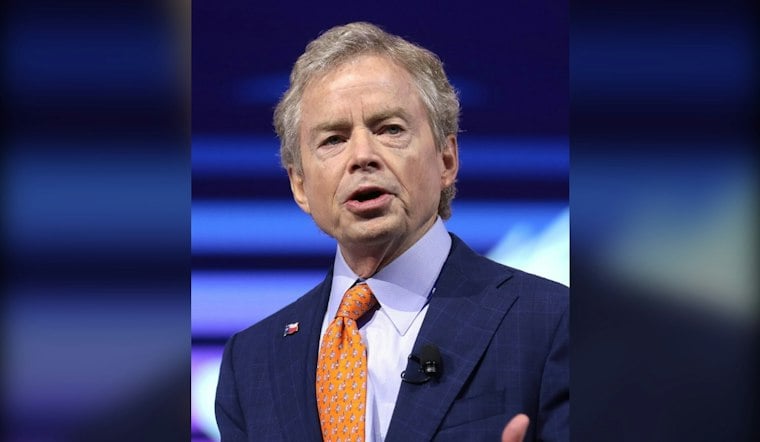
Texas Comptroller Don Huffines has launched a review of the costs and health effects of fluoride added to public drinking water. The inquiry raises questions about what the comptroller’s office will examine and how its work fits alongside decisions made by local governments and the responsibilities of state agencies. Huffines says the review will consider taxpayer and ratepayer costs, scientific evidence on health effects, and possible alternatives for improving dental care.
According to a release detailed by einpresswire.com, roughly 9.7 million Texans are served by 105 public water systems that add fluoride, amounting to an estimated $6.3 million in annual costs statewide. The Texas Department of State Health Services estimates fluoridation costs about 64 cents per person each year, a figure the comptroller's office is now scrutinizing as part of its broader look at government spending. Huffines framed the effort simply: his job, he said, is “to follow the money and ask hard questions.”
The review will also examine how other states and countries have approached fluoridation and which have moved away from it, per the same release. That comparison lands amid a genuinely split national picture. Utah and Florida became the first states to enact statewide bans on community water fluoridation in 2025, according to multistate.us, with Utah's law prohibiting cities from adding fluoride to their water and allowing pharmacists to prescribe it instead, and Florida Governor Ron DeSantis signing SB 700 that May to restrict local governments from doing the same.
A Democratic Rival Cries Foul
Sarah Eckhardt, the Democratic candidate challenging Huffines for comptroller, has questioned the review’s scope and the comptroller’s office taking it on without involving agencies with relevant expertise, according to Yahoo News. She argues the inquiry advances a political agenda and reflects confusion about the comptroller’s role and other agencies’ jurisdictions.
It is not the first time Eckhardt has leveled that kind of charge. She has previously accused Huffines of weaponizing the comptroller's office, and this time said the fluoride review falls outside the office's traditional role and diverts state resources from its core functions. Huffines, for his part, has defended his broader restructuring of the agency as necessary to eliminate redundancy and improve efficiency, saying he is flattening the management structure and bringing a private-sector approach to a government office.
What The Office Hasn't Said
The office has not disclosed the review’s cost, how much staff time it will require, who is conducting it, what statutory authority Huffines is relying on to examine health effects, or when the work might be completed. Without those details, it is difficult to assess the inquiry’s scope or how it will be carried out—concerns that underpin Eckhardt’s criticism of the project.
Adding to the questions, a Texas Commission on Environmental Quality spokeswoman, Laura Lopez, said the comptroller's office had still not contacted TCEQ about the review. That agency is the one that actually monitors fluoride levels in Texas water systems to ensure they remain at safe levels and provides technical assistance to the public water systems that use it, per the same report from yahoo.com.
No Mandate, But A Real Policy Debate
Texas does not mandate water fluoridation in the first place, leaving the decision up to individual local governments, a structural fact that underscores just how much authority over the issue already sits outside the comptroller's office. Huffines has questioned whether a mandatory, one-size-fits-all approach is the best way to promote dental health, suggesting families might be better served by targeted, voluntary solutions, and he has called fluoridation itself a waste of taxpayer money.
Regulatory Limits and State Policy
Federal drinking-water limits serve a different purpose from decisions about whether to add fluoride. The Environmental Protection Agency sets a secondary fluoride level of 2.0 milligrams per liter that is not federally enforceable, and a primary maximum contaminant level of 4.0 milligrams per liter. Water systems exceeding the secondary level but not the primary limit must provide public notice. The Utah and Florida measures discussed above are state policy actions, not comptroller reviews. KCRA reported that Utah Gov. Spencer Cox signed a law specifically aimed at fluoride on March 27. Utah’s law bars cities from adding fluoride and allows pharmacists to prescribe it, while Florida’s 2025 law restricts local governments from doing so.
Medical experts and scientific studies cited in reporting on the dispute say water fluoridation replenishes minerals in teeth and helps prevent cavities by reducing the acid bacteria produce on tooth surfaces. The stakes of that scientific consensus carry a dollar figure attached: a dental association review found that removing fluoride from community water systems would increase Texans' dental care costs by about $4.4 billion over five years. That figure diverges from a separate estimate the American Dental Association released in a statement calling eighty years of community water fluoridation “safe and effective,” which pegged the cost of a nationwide fluoride removal at $9.8 billion over five years alongside a 7.5% rise in cavities, according to ada.org. The two estimates use different assumptions and have not been independently reconciled.
Nationally, the political fight over fluoride has produced a patchwork rather than a trend. No additional statewide bans or restrictions were enacted in 2026 after Utah and Florida's 2025 moves, according to the CareQuest Institute, and proposed bans or repeals — including one in Texas — stalled or died during the 2025–2026 legislative cycle. Some states have moved the opposite direction: Connecticut codified a recommended fluoride concentration directly into state law in 2025, while New York passed a 2026 law requiring municipalities that want to discontinue fluoridation to give residents 90 days' notice and allow public comment first.
A Broader Pattern At The Agency
The fluoride review is one piece of a larger shake-up Huffines has pushed since taking over the comptroller's office in the summer, a tenure that has seen the departure or ouster of dozens of employees. Huffines, a former state senator from Dallas, was appointed to the post in July and is now seeking a full term in the November election. The comptroller's office has said it will also examine other state-supported public health programs that it describes as medicalizing Texans without individual choice, signaling the fluoride inquiry may be the first of several similar reviews.
Public opinion on fluoridation itself remains far from settled. An April 2026 survey from the Annenberg Public Policy Center found 43% of U.S. adults favored fluoride in public drinking water, 26% opposed it, and 30% neither favored nor opposed it, with more respondents overall viewing its public health effect positively than negatively. As the comptroller's race heads toward November, that national split is now playing out directly between two candidates fighting over what, exactly, the job of comptroller is supposed to cover.



