

























































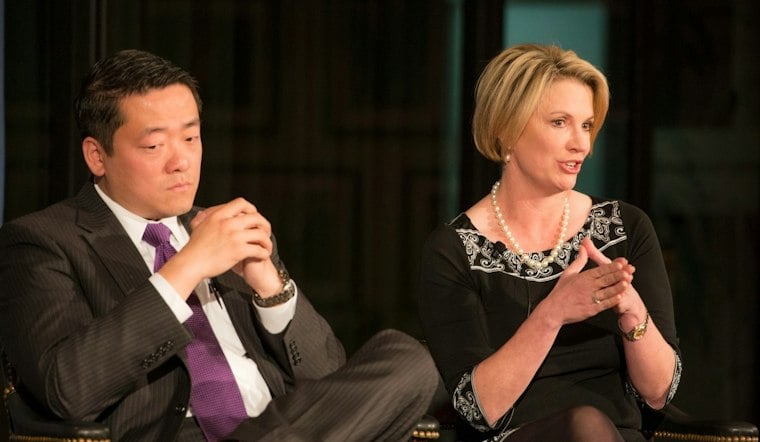
A statewide office that most Texans rarely think about is suddenly drawing close poll numbers. The race for Texas land commissioner, pitting Republican incumbent Dawn Buckingham against Democratic challenger Benjamin Flores and Libertarian Neill Snider, has tightened in multiple surveys even as Buckingham maintains an overwhelming financial advantage heading into the final stretch of voting.
A University of Houston survey conducted from October 10 through October 14 found Buckingham leading Flores 47% to 40%, with 2% backing Snider and 11% still undecided, according to Texas Votes 2026. That seven-point spread looked comfortable next to a separate poll released days later. A Texas Public Opinion Research survey of 969 likely voters, fielded October 15 through 18 with a margin of error of plus or minus 3.9 percentage points, put Buckingham ahead by just one point, 49% to 48%, according to Texas Public Opinion Research. A third poll, from ActiVote, found Buckingham leading by 3.8 percentage points. Because the three polls used different samples, field dates and methodologies, the results should not be read as a single consistent trend line.
The office itself carries more weight than its low profile suggests. As KWTX reports, the Texas General Land Office is the oldest state agency in Texas, established in 1836, and manages roughly 13 million acres of state-owned land and natural resources. Revenue from those lands and mineral leases flows into the Permanent School Fund, created in 1876, which pays out to public schools statewide. The commissioner also chairs the Veterans Land Board, overseeing low-cost land and home loans for Texas veterans along with veterans homes and cemeteries, and the office handles disaster recovery, federal flood protection funds, coastal protection and the Alamo.
Two Very Different Paths to the Ballot
Buckingham, who has served as land commissioner since 2023, won the 2022 statewide election to become the first woman to lead the land office, according to the Texas Tribune. Per Houston Public Media, she is a ninth-generation Texan and former eye-focused plastic surgeon who attended UT-Galveston medical school. Houston Public Media also reports that she oversaw a makeover of the Alamo grounds costing more than half a billion dollars, an overhaul aimed at giving visitors a larger and more educational experience, while the Alamo Trust handles the site's day-to-day operations. The 1836 Battle of the Alamo in San Antonio helped lead to Texas independence from Mexico, cementing the site's status as the state's top tourist draw under General Land Office management.
Flores, a former Bay City councilman and newcomer to statewide politics, was born in Mexico and came to the United States in 1996, according to the Texas Tribune. Houston Public Media reports he earned citizenship, built a cybersecurity career, now lives on a small ranch in Bay City and operates a family pig farm there. Jon Taylor, UT-San Antonio's political science chair, has said the land commissioner's office can serve as a springboard to higher office, including governor, per Houston Public Media's reporting.
Harvey Funds, Civil Rights and a Border Land Offer
One of the sharpest points of contention traces back to Hurricane Harvey, which struck in 2017. Houston Public Media reports that critics said the General Land Office under former commissioner George P. Bush discriminated against communities of color in distributing federal disaster mitigation funds, and that the Biden administration agreed the office had discriminated. Buckingham has called the allegations politically motivated, according to that same reporting, and Flores has said he would work to get federal relief funds back to Houston hurricane victims.
The matter has since moved through federal review. The U.S. Department of Housing and Urban Development's Office of Fair Housing and Equal Opportunity said the earlier allegations, based on a disparate-impact theory, were baseless and unfounded. The Texas Tribune reported in January that HUD formally closed the civil-rights investigation after reviewing more than 80,000 pages of documents and finding no evidence the Land Office acted with discriminatory intent.
Border security has also surfaced in the campaign. Buckingham supports Operation Lone Star, the state-funded border security initiative, and in 2024 offered President Trump use of 1,400 acres in Starr County for a deportation processing and detention facility, according to Houston Public Media. She has also identified Rio Grande areas belonging to Texas that she says give law enforcement better border access. Flores has countered that immigration enforcement falls outside the land commissioner's role.
A Massive Money Gap Heading Into Election Day
Whatever the polls show, the campaign-finance picture is lopsided. Buckingham reported $3.73 million in cash after the latest filing period, while Flores reported just $20,080 along with $100,000 in outstanding loans, giving Buckingham more than 180 times as much cash on hand, according to a review by Chris Tackett's newsletter. That imbalance tracks a broader statewide pattern: across seven statewide races, Republican candidates spent $60.6 million in the preceding 30 days compared with $23.5 million spent by Democrats, the same report found.
Affordability has dominated voters' minds more than any single statewide contest. Texas Public Opinion Research found that 28% of voters named affordability and cost of living as their top priority for elected officials, a finding highlighted by USA Today. The land commissioner race was also notably closer than the governor's contest in the University of Houston survey, which showed Republican incumbent Greg Abbott leading Democrat Gina Hinojosa by three points, 49% to 46%, compared to the seven-point gap that same poll found between Buckingham and Flores.
Early voting runs through Friday, October 30, with Election Day set for Tuesday, November 3, according to KWTX. Breakdowns within the University of Houston poll show the coalitions each candidate is relying on: Flores led Buckingham 42% to 31% among independent likely voters, while Buckingham posted her strongest non-party leads among rural voters, voters 55 and older, and White voters. ActiVote's survey found a similar urban-rural divide, with Buckingham ahead among rural voters and Flores leading among urban voters.





