

























































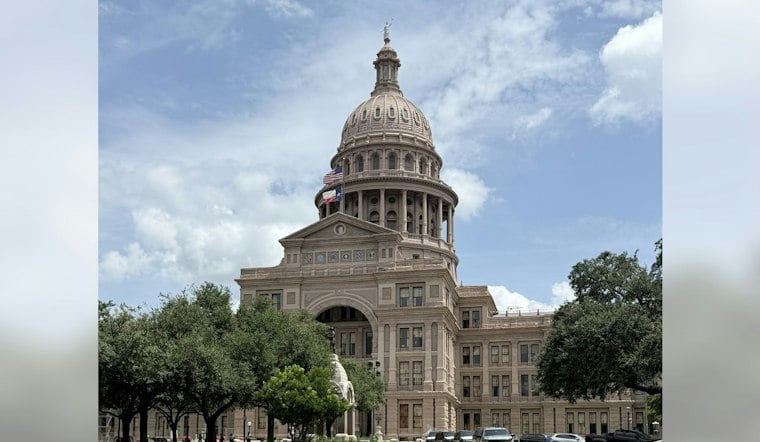
Texas senators spent a hearing grilling superintendents and researchers over whether the state should rein in four-day school weeks, a scheduling model that has exploded from 62 districts in the 2022-23 school year to 181 districts covering 572 campuses just two years later. The Senate Education Committee's hearing, held Tuesday, comes as lawmakers weigh whether to restore a minimum number of required school days ahead of the 2027 legislative session.
The debate centers on a 2015 change that let Texas schools count instructional minutes rather than days — a shift legislators passed unanimously, according to Community Impact, specifically to give districts flexibility when extreme weather or other disruptions eat into classroom time. Under that framework, schools must hit 75,600 instructional minutes per year rather than a fixed 180-day calendar, opening the door for districts to compress the week into four longer days. Senator Donna Campbell pushed back hard on the trend, telling the committee, “At least 180 days is the minimum,” and later adding that she sees no benefit of a four-day school week for children, per the same report. Senator Brent Hagenbuch went further, asking whether the legislature should simply mandate five-day school weeks statewide.
A Model That Spread Fast, With Mixed Results
The growth numbers are stark: the Texas Tribune reported that four-day districts climbed from just eight in 2019-20 to 181 in the most recent school years, encompassing more than 500 campuses, as detailed by the Texas Tribune. Most of these districts close on either Mondays or Fridays and stretch out the remaining four days, the committee heard. Senator José Menéndez said the surge in four-day adoption concerns him primarily because of the children affected.
A Texas Education Agency study of the 2022-23 school year found that students attending school four days per week had lower performance in certain subjects than their five-day peers, with five-day schools scoring at least five percentage points higher on grade 6-8 reading and grade 4-6 math exams. University of Houston researchers told the committee that four-day school weeks have not been established as a practice proven to improve student, teacher, or school outcomes. Separately, a 2021 study cited at the hearing found that students in four-day schedules spend an average of 85 fewer classroom hours annually than students on traditional schedules — though a RAND research brief on a different multi-state analysis put the gap at 58 fewer hours in a year, drawing on data from 36 districts in Idaho, New Mexico, and Oklahoma, according to RAND.
Small Districts Defend the Schedule
Not every lawmaker or administrator wants the model curtailed. Woodson ISD switched to a four-day week in 2019-20 specifically to recruit more teachers while working with limited financial resources, and the district's superintendent told the committee its calendar still delivers 77,836 instructional minutes — more than 2,200 minutes above the state requirement — spread across 151 classroom days. Paul Ryan argued the decision to run a four-day calendar should remain a local one rather than a statewide mandate, the report notes. James Mosteller told the committee that districts adopting four-day weeks are typically chasing solutions to staffing shortages and budget pressure rather than academic gains.
Other small Texas districts run notably compressed calendars: Pewitt Consolidated ISD meets for 142 days, Lone Oak ISD for 144 days, and both Alto ISD and Slaton ISD for 145 days. By comparison, Texas school districts overall operate an average of about 169 days per year, according to Senator Royce West's figures cited at the hearing — well short of South Korea's requirement that students spend 220 days in the classroom each year.
Liberty Hill's Calendar Reversal
Liberty Hill ISD has become something of a cautionary tale in the debate. The district used a hybrid schedule with fewer than five school days in 73% of its weeks during the 2025-26 school year, but shifted back to a traditional calendar for 2026-27 after the Texas Education Agency denied a waiver tied to professional-development days, Community Impact reported. That account lines up with a separate report from KXAN, which similarly found the district moving to mostly five-day weeks for 2026-27 — though a separate CBS Austin report had earlier described Liberty Hill as preparing to expand toward a majority four-day week for the coming year, an account that conflicts with the district's reported reversal.
Researchers Call For Guardrails, Not a Ban
Rather than an outright prohibition, researcher Emily Morton recommended that if Texas continues allowing four-day weeks, the state should put guardrails in place to maximize instructional time. She also suggested tracking academic growth in four-day districts and comparing it against demographically similar five-day schools to get a clearer picture of the trade-offs. Two Texas school districts first moved to four-day weeks back in the 2017-18 school year, well before the recent surge, underscoring how long the debate over the model's costs and benefits has simmered in the state.
The pattern isn't unique to Texas. In Missouri, more than 30% of districts have adopted four-day weeks, serving about 11% of that state's students, yet a Missouri study found no statistically significant effect on academic achievement or building growth, according to the Missouri Independent. Nationally, the typical K-12 public school is in session for 1,231 hours a year, based on roughly seven-hour days across 179 days, per data from EducationNext, which also found students in states with the longest school schedules spend an average of 133 more hours in school each year than those in states with the shortest ones. With the 2027 legislative session approaching, Texas senators signaled they are not done weighing whether local flexibility or a statewide floor on school days should prevail.



