

























































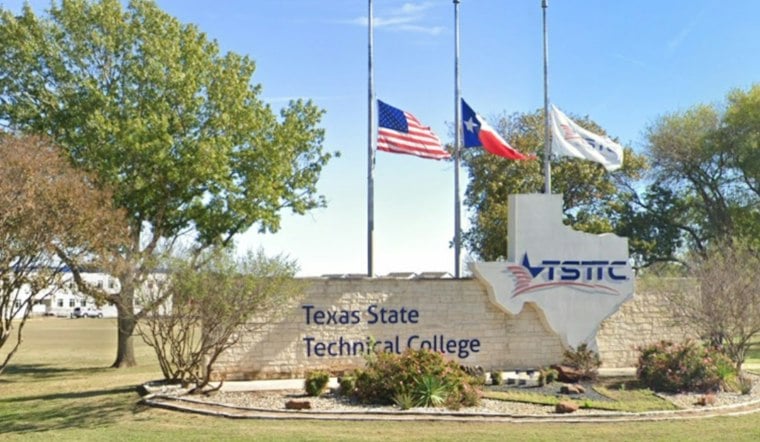
Texas State Technical College has formalized a partnership with the Manufacturing Institute to bring free artificial intelligence training to manufacturing students across the state, as factories increasingly adopt AI tools faster than they can train workers to use them. The deal, finalized Thursday, will give TSTC students access to the institute's AI Skills for Manufacturing Training Suite, covering everything from foundational concepts to practical shop-floor applications.
The two organizations have partnered on a new program that will help educate students on ways artificial intelligence can be integrated into manufacturing, according to Community Impact. The program will provide manufacturing students at TSTC with instructional materials designed to help them understand how AI can be woven into safety protocols, quality control and daily operations on the production floor. TSTC Chancellor Mike Reeser framed the moment in stark terms, saying AI has already launched the next industrial revolution and that the program will help prepare both the incumbent and the future workforce for jobs in the new economy.
A Skills Gap Manufacturers Can't Ignore
The timing reflects a widening gap between how fast manufacturers are adopting AI and how little formal training exists to support it. More than 50% of manufacturers already use AI in their operations, according to data cited by the Manufacturing Institute, yet just 19% currently offer any AI-related training to their workforce. Research from the institute and PwC found that 82% of manufacturers say their employees lack the skills to use AI tools effectively, a gap that has only grown more urgent as adoption accelerates, according to the National Association of Manufacturers.
Generative AI tools such as ChatGPT and Microsoft Copilot have already found their way onto factory floors, with more than 70% of manufacturers surveyed saying they currently use such products, per the Manufacturing Leadership Council. Nearly 90% of respondents to that same survey said they planned to increase generative AI usage over the next two years, even though more than 75% rated their companies below five out of 10 on AI maturity. Separate research from PwC found integration rates for AI remain in the single digits — just 2% for frontline leaders and 8% for frontline workers — meaning the tools are spreading faster than workers' comfort with them.
What the Training Actually Covers
The AI Skills for Manufacturing Training Suite is built for the people who power manufacturing, offering free instruction aimed at frontline production workers, students and the organizations that prepare them for the industry. The initiative aims to equip more than 40,000 current and future manufacturing workers and students with practical AI skills at no cost to learners or employers, according to the institute. Coursework is meant to teach how AI supports safety, quality and productivity while emphasizing responsible use and the continued need for human judgment on the floor.
Carolyn Lee, speaking on behalf of the Manufacturing Institute, said AI awareness can help employees understand the systems they are working with, interact with them more effectively, and recognize when human intervention is still needed. She added that AI will change every job much the way computers once did, and that understanding how it works will matter regardless of how any individual job evolves. Lee said a fundamental awareness of AI will be key for workers even amid uncertainty about exactly which jobs will look like in the years ahead.
Why Manufacturers Are Racing the Clock
The skills gap carries real stakes for the broader labor market. A joint study from Deloitte and the Manufacturing Institute estimated that manufacturing technician employment could grow six times faster than production occupations in manufacturing between 2025 and 2030. The same research found employers may need to fill 2.3 million job openings across manufacturing and adjacent-industry technician roles during that same stretch.
Manufacturers have already been ramping up training investment generally — average training time for existing employees rose from 42.9 hours in 2019 to 47.6 hours, according to a survey reported by Manufacturing Dive. But the same survey found real obstacles standing in the way: about 69% of manufacturers said training could interrupt work hours, 65% cited scheduling conflicts and roughly 48% pointed to costs as major barriers.
Texas Follows Alabama's Lead
Texas isn't the first state to adopt the institute's training suite. The Manufacturing Institute and the Alabama Community College System signed a memorandum of understanding in September to bring the same AI Skills for Manufacturing Training Suite to community colleges across that state, according to the Huntsville Business Journal. That statewide rollout introduces no-cost, shop-floor-focused instruction, including newly launched AI Fundamentals for Manufacturing courses. The Manufacturing Institute's broader roadshow for the training suite also included a stop in New Braunfels in partnership with TSTC, part of a multistate effort that began with free, online courses meant to help current and future workers acquire the skills manufacturers say they need.
A Separate Boost for Hands-On Training
Alongside the AI partnership, the Texas Federation for Advanced Manufacturing Education Lone Star Chapter announced its own job-training partnership with TSTC at the Central Texas Technology Center in New Braunfels. Under that arrangement, TSTC will provide advanced manufacturing technician training for students sponsored by area companies, giving students hands-on experience tied directly to local employers. The Manufacturing Institute presented a $50,000 check to the Lone Star chapter as part of the announcement.
Jason Dinscore, representing the FAME Lone Star chapter, said the donation will help the chapter invest in marketing to grow its ranks. He described the chapter as strong, doing well and innovative, pointing to the partnership with TSTC as evidence of its momentum in preparing students for advanced manufacturing careers.


