

























































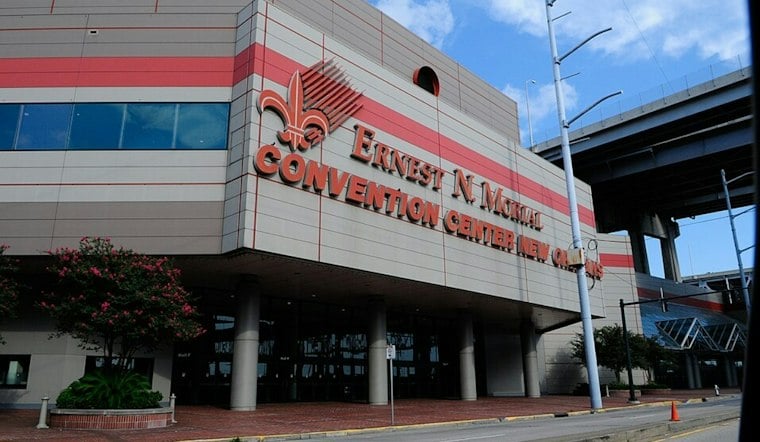
Thousands of pharmaceutical scientists, biotechnology executives and industry leaders are converging on New Orleans later this month for AAPS PharmSci 360, a four-day international conference examining advances in drug development, artificial intelligence and pharmaceutical manufacturing. The gathering runs October 25-28 at the Ernest N. Morial Convention Center, bringing a slice of the global biopharmaceutical industry to the city's riverfront exhibit halls.
The conference is organized by the American Association of Pharmaceutical Scientists, as reported by Biz New Orleans. Founded in 1986 and headquartered in Arlington, Virginia, AAPS represents roughly 7,000 individual members and more than 10,000 participating stakeholders across pharmaceutical science worldwide, according to the American Association of Pharmaceutical Scientists. That global footprint is part of why PharmSci 360 carries weight well beyond the convention floor — it functions as one of the field's primary annual meeting points for industry and academic researchers alike.
This year's programming reflects some of the most urgent conversations inside the drug-development world. Drug Discovery Trends reported in September that the 2026 edition added two new Innovator-Curated tracks, one focused on scientific research integrity in an AI era and another on post-animal drug development technologies, according to Drug Discovery Trends. Those additions track with broader industry anxieties over how artificial intelligence should be used, and trusted, inside scientific research.
USP Brings Manufacturing Standards Into the Exhibit Hall
The conference's technical scope is also expanding thanks to a partnership between AAPS and the United States Pharmacopeia. Healthcare Packaging reported in August that USP will stage a dedicated two-and-a-half-day workshop inside the exhibit hall covering complex generics, excipient quality, inhalation standards and novel excipients, per Healthcare Packaging. USP sets public quality standards that are enforceable by the U.S. Food and Drug Administration, giving the workshop regulatory stakes beyond academic interest.
Hosting that kind of programming requires serious floor space, and the Morial Convention Center has plenty of it. The venue features 1.1 million square feet of single-level exhibit space, ranking among the top 10 largest convention centers in the country and drawing more than 800,000 annual visitors, according to the Ernest N. Morial Convention Center. Since opening in 1985, the center has generated $93.2 billion in total economic impact for New Orleans and Louisiana, the facility's own records show.
A Decades-Long Push to Build a Life Sciences Hub
PharmSci 360's arrival lands squarely within New Orleans' long-running effort to position itself as more than a tourism and convention town. State and local officials established BioDistrict New Orleans in 2005, a 1,500-acre economic development district spanning downtown and Mid-City, according to the New Orleans Medical District. The district operates with dedicated bonding and taxing authority aimed at spurring commercial research.
Inside that district sits the New Orleans BioInnovation Center, a 66,000-square-foot wet-lab business incubator that has supported more than 225 startup companies, per Louisiana Economic Development. The incubator supports innovators, giving visiting biotech leaders a potential on-ramp to regional partnerships during their stay.
Convention Infrastructure Keeps Climbing
More convention infrastructure is on the way. In May, convention center authority officials launched a public resource website for a planned 1,000-room Omni New Orleans hotel, projected to generate about $280 million in annual economic impact once it opens. It would be the city's first large-scale new hotel since 1984, per the Ernest N. Morial Convention Center.
For now, the immediate story is a four-day gathering that will fill the Morial Convention Center's halls with pharmaceutical scientists debating AI's role in drug formulation, post-animal testing methods and manufacturing standards that touch everyday medicines. Whether that scientific traffic translates into the kind of long-term biotech investment New Orleans has spent two decades building toward remains the open question local economic leaders are watching closely.





