

























































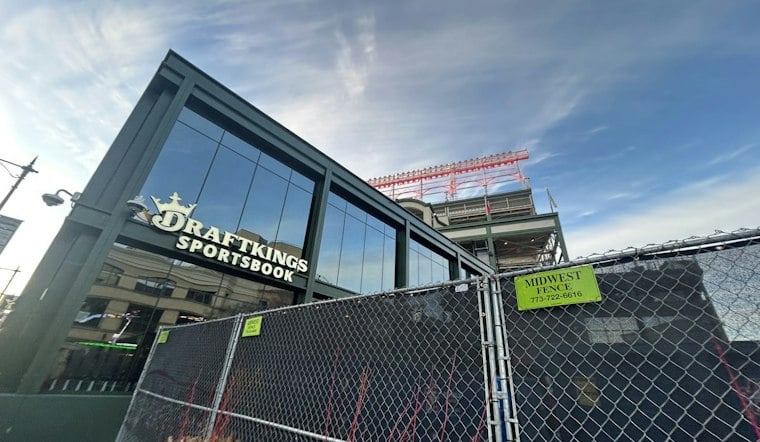
Three New Orleans residents have filed a class action lawsuit against FanDuel and DraftKings, alleging the companies’ apps encouraged continued betting despite mounting losses. Adrian Payton, Toi Smith and Yolanda Perkins each say they wagered more than $20,000 on one or both platforms; that figure describes their wagers, not their losses. They seek refunds, damages and coverage for mental health treatment tied to what they describe as gambling disorders.
The Louisiana complaint alleges that FanDuel and DraftKings designed and marketed their apps to encourage harmful gambling behavior, according to KLFY. It also names Amelia Belle Casino and Bally's Baton Rouge, identifying them as the casino licensees whose state licenses anchor the apps' operation in Louisiana. WGNO reported that the proposed class includes Louisiana residents who opened accounts, deposited money and used the defendants' mobile sports wagering apps.
Payton, Smith and Perkins are named as individual plaintiffs. The complaint alleges that the companies used customer data to identify and target vulnerable or compulsive gamblers, and argues that the apps' design made them unreasonably dangerous. Those are claims in the lawsuit, not findings by a court.
Promotions, AI and Interfaces Built to Keep the Bets Coming
The complaint argues that DraftKings and FanDuel use promotions, artificial intelligence and interface design to encourage customers to keep betting as losses accumulate and to attract new users. It alleges that the companies seek to prevent customers from abandoning the apps after losing money. The suit presents that alleged business incentive as a reason the companies designed the apps as they did.
Online sports betting launched in Louisiana in January 2022, after voters approved it parish by parish in a 2020 referendum and lawmakers established a regulatory framework the following year. The complaint says FanDuel and DraftKings together held 75% of the state's mobile betting market in 2023: 44% for FanDuel and 31% for DraftKings. It also cites a claim that 96% of sports betting customers lose money overall.
What the Plaintiffs Are Asking For
The plaintiffs seek refunds of their net deposits to the platforms, calculated as total deposits minus withdrawn winnings. They also seek compensatory damages for alleged mental anguish, emotional distress and disruption to family and domestic relationships, as well as payment for mental health care related to clinically diagnosed gambling disorders.
Louisiana's mobile betting market continues to generate substantially more wagering than retail sportsbooks. Bettors wagered $384.5 million through mobile sports betting apps in September, up 4.6% year over year, while retail sportsbooks handled $20.6 million, down 39%, according to legalsportsbetting.com. The state's mobile hold fell from 12% to 10.3% over that period, reducing net proceeds by 10.6% to $39.6 million; parlays generated $24.9 million, or 63% of mobile net proceeds. Louisiana collected $8.88 million in sports betting taxes in September, with mobile operators primarily taxed at 21.5%. Since the January 2022 launch, legal apps have handled $14.8 billion in wagers and paid $297.3 million in taxes. As a separate official snapshot, the Louisiana Gaming Control Board's 2024 annual report says mobile sports wagering generated $2,216,845,201 in wagers, $206,819,945 in net proceeds and $35,104,617 in taxes from July 2022 through June 2023.
DraftKings Already Under State Scrutiny Over AI Use
The lawsuit comes as DraftKings faces a separate regulatory review in Louisiana. State regulators declined to fully renew the company's gambling license but granted a conditional extension while examining its business practices, use of artificial intelligence and responsible-gaming measures, according to gamblingnews.com. On October 15, the Louisiana Gaming Control Board voted unanimously to impose additional requirements, giving DraftKings 30 days to submit remaining shareholder suitability findings and seven days to appoint a senior executive as a liaison with the board.
The extension runs through February 19, 2027, with a full renewal hearing scheduled for February 18, according to Yogonet. Regulators are investigating allegations that DraftKings used artificial intelligence to target losing bettors, along with broader concerns about its responsible-gambling practices. DraftKings also faces a separate lawsuit from West Virginia resident Daniel Vest, who alleges the company used customer data and automated marketing to target vulnerable bettors.
Other lawsuits have raised related allegations. In March, the Public Health Advocacy Institute announced a product-liability case in Philadelphia against DraftKings, FanDuel, Genius Sports and the NFL, alleging their online sports betting products were designed to maximize betting behavior that can lead to addiction, according to a release carried by PR Newswire. The case invokes Pennsylvania consumer-protection law and theories including design defects, failure to warn, negligence and intentional infliction of emotional distress. The release also says a Massachusetts judge rejected most of DraftKings' motion for summary judgment in a separate case in February, allowing it to proceed toward class certification, discovery and trial. It reports that U.S. sports-related gambling revenue rose from $430 million in 2018 to a record $16.96 billion in 2025.
Related cases and what the evidence shows
The available comparison is another lawsuit, not a court finding on whether betting apps or marketing caused gambling harm. The Boston Globe reported on March 26, 2026, that Pennsylvania residents Christopher Sage and Terry Thompson sued DraftKings, FanDuel, the NFL and its official statistics distributor, alleging the apps and their marketing contributed to their gambling addictions. Those claims, like the allegations in the Louisiana case, remain allegations in the reporting cited here. Research on betting patterns also does not establish that a particular product causes harm. The National Council on Problem Gambling's NGAGE 3.0 report found that the share of sports bettors who made parlay bets rose from 17% in 2018 to 30% in 2024.
Under Louisiana law, a player attempting to place a sports wager through a website or mobile app must have a wagering account established with the operator, according to the Louisiana State Legislature. State statute also requires procedures designed to prevent employees from willfully permitting a person on a self-exclusion list from gambling at a licensed establishment or electronically on a sports wagering platform, per the legislature's compulsive and problem gambling program.





