

























































Voters in south-central Orange County head to the polls Tuesday to settle a runoff that will seat the county's first-ever District 8 commissioner, pitting a 79-year-old Democrat with a dozen years in the Florida Legislature against a Republican first-time candidate who spent years working for U.S. Senator Marco Rubio. Victor Torres and Jeannette Quiñones-Hernandez emerged from an August primary that drew six candidates, with neither crossing the 50% threshold needed to avoid a second round.
Torres led that initial field with roughly 33% of the vote, while Quiñones-Hernandez finished second with about 20%, according to the Orlando Sentinel. District 8 is a brand-new seat, created as Orange County expanded its commission following redistricting approved by voters, according to Florida Politics. The outlet reports that eighteen candidates appeared on the ballot for the two newly drawn District 7 and District 8 seats in August, and no winners emerged in either.
Torres brings a long résumé to the race: a Democrat and Marine Corps veteran, he served four years in the Florida House and eight in the Florida Senate, and has also worked as a New York City detective and a LYNX bus driver, per the Sentinel's reporting. He has described his candidacy as rooted in grassroots concerns and better communication between officials and residents, the paper reports. Torres has picked up endorsements from outgoing Orange County Mayor Jerry Demings, Commissioners Kelly Semrad-Martinez and Tom Keen, the Democratic Hispanic Caucus of Florida, and various labor unions and lawmakers, according to the Sentinel.
A First-Time Candidate With Deep GOP Ties
Quiñones-Hernandez, a Republican making her first run for public office, spent years in party and campaign roles before entering the race. She served as Hispanic Outreach Coordinator for Rubio from October 2017 through January 2025, according to a biography published by LegiStorm, a tenure that ended around the time Rubio was tapped by the Trump administration to serve as Secretary of State, per the Sentinel. Earlier in her career, from 2012 to 2015, she worked as a field director for Hispanic outreach with the Republican Party of Florida and the Republican National Committee, the LegiStorm bio states.
She has said her priorities center on faith, family, fiscal responsibility and putting Orange County families first, and that she brings experience balancing budgets, meeting payroll and solving problems, according to the Sentinel's reporting. Quiñones-Hernandez is backed by the Orange County Republican Party and the Florida State Hispanic Chamber of Commerce, the paper reports, and the ClickOrlando voters guide notes she is also endorsed by the Orange County Republican Party.
Transit Expansion Versus Road Fixes
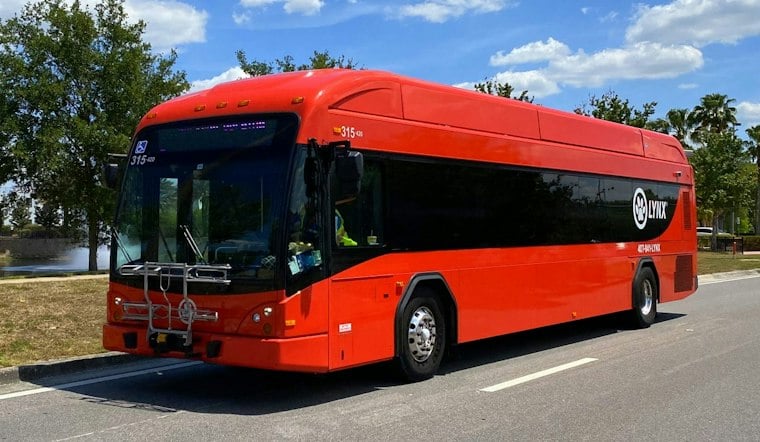
The candidates' visions for fixing the district's traffic and growth pressures diverge sharply. Torres favors expanding public transportation and has said funding for transit expansion could come from Tallahassee or federal sources without raising local taxes, per the Sentinel. He has pointed to the Orange County Commission's move this past September to direct staff to study the feasibility of the STAR Plan, a proposal that aims to create and connect rapid transit lines across the county to ease road congestion by combining light rail, commuter trains and LYNX buses.
The STAR Plan follows Orange County's 2022 penny sales tax referendum for transportation, which voters rejected, according to Central Florida Public Media. The plan envisions eight priority transit corridors, and officials have said the forthcoming study will examine demand, route feasibility and finances for each one. The Sunshine Corridor, a multi-phase, multimodal passenger rail program aimed at improving mobility and connectivity in Central Florida, is included in the STAR Plan and seeks to expand SunRail from Orlando International Airport to the city's tourist hubs, per the Sentinel's reporting; a related state study is evaluating an extension west to the Orange County Convention Center, South International Drive and the Disney Springs area, according to project documentation from CFLRoads.
Torres has also said Central Florida's tourism economy, which draws 75 million visitors, depends on workers who need child care and affordable housing, and he hopes to prioritize improving stormwater infrastructure while working with developers to curb growth costs, according to the Sentinel. In his voters guide responses, he named making Orange County more affordable his top issue and said he would push for workforce and affordable housing, expanded LYNX service and continued SunRail investment, per the ClickOrlando guide. He added that he would require new growth to pay its fair share for infrastructure and prioritize stormwater improvements.
Quiñones-Hernandez Focuses on Roads and Fees
Quiñones-Hernandez has staked her campaign on relieving traffic congestion, which she named as her top issue in the ClickOrlando voters guide, saying she would work to lower impact fees, cut unnecessary regulations that drive up housing costs and promote what she called smart, responsible development. She has called for widening Narcoossee Road, improving Lake Nona Boulevard and building better connectivity to State Road 417 and the Florida Turnpike, according to the Sentinel, a priority she reiterated in a separate Sentinel voters guide entry that quoted her pledging to complete those projects and improve connections to I-417 and the Turnpike.
She has also said she supports preserving wetlands and demanding better stormwater management from developers to address flooding in south Orange County, per that same voters guide entry. On infrastructure funding more broadly, she has said she would push for public-private partnerships, less red tape and more efficient use of impact fees, according to the Sentinel. The Sentinel's October 31 report notes that Quiñones-Hernandez did not comment on Torres's transit and stormwater plans.
Spending Gap and Final Stretch
Campaign spending has diverged almost as sharply as the candidates' platforms. By Friday afternoon, Torres had spent $148,339 in the race, compared with $36,907 spent by Quiñones-Hernandez, according to the Sentinel's October 31 report. Earlier in the campaign, the Sentinel had reported Torres raised about $73,000, by far the most among the original six-candidate field at that point; a separate campaign-finance listing from Orange County's elections site showed Quiñones-Hernandez with $44,074.27 in monetary contributions and $36,907.89 in expenditures, though that figure was not independently dated against the Sentinel's later spending total.
District 8 stretches across part of south-central Orange County, encompassing Lake Nona and Hunter's Creek, according to the ClickOrlando guide; the Sentinel's reporting also lists Williamsburg, Southchase and Meadow Woods among the communities within the district's boundaries. Whoever wins will take on a district grappling with affordable housing shortages, limited public transit and the strain of balancing population growth against finite resources, per the Sentinel. Orange County's commission races remain nonpartisan under state law, even though both candidates have run with clear party backing.
Early voting ends Sunday, and Election Day falls on Tuesday, November 3, according to the Sentinel's reporting. The outcome will determine who represents the district as officials weigh transit plans and continued development pressure across the region.





