

























































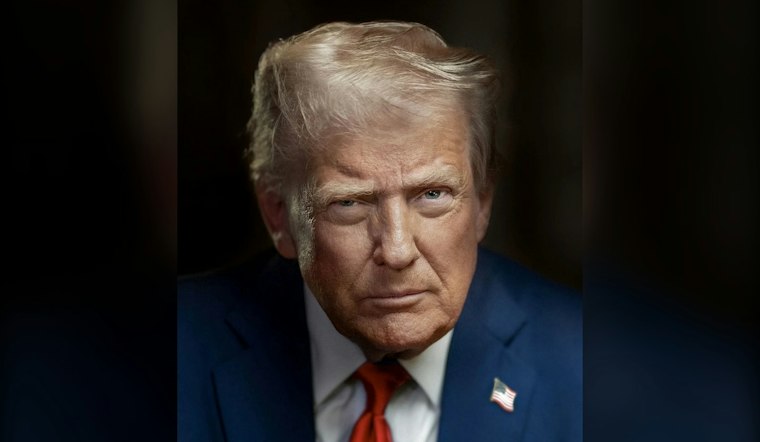
President Donald Trump's approval rating has slipped to 37%, the lowest mark for any president heading into a midterm election in Wall Street Journal polling dating back to 1990, according to a survey released in late September 2026. The poll, conducted September 16 to 21 among 1,500 registered voters with a margin of error of plus or minus 2.5 percentage points, lands just weeks before voters head to the polls in the fall midterms.
The findings, first detailed by El Paso Times, show the discontent runs deep on the economy specifically. Sixty-five percent of registered voters in the Wall Street Journal survey rated the U.S. economy negatively, while 60% said Trump's policies had made economic conditions worse, compared with just 25% who said conditions had improved, according to Unusual Whales.
Those numbers come against a backdrop of real financial strain. U.S. mortgage rates have remained above 7% through September, and national average diesel prices climbed to $6.23 per gallon following disruptions around the Strait of Hormuz, per the same report from Unusual Whales. For many households, those figures translate directly into higher borrowing costs and pricier goods on store shelves.
Cracks in Trump's Own Base
The erosion isn't limited to independents or opposition voters. The Wall Street Journal survey found that 11% of voters who backed Trump in the 2024 presidential election now say they regret that vote, while another 11% of non-MAGA Republicans say they plan to vote for a Democratic congressional candidate this fall, according to Newsweek.
Newsweek also noted that the previous lowest pre-midterm approval rating in Wall Street Journal polling since 1990 was George W. Bush's 39% in 2006 — an election cycle in which Democrats went on to gain 31 House seats and five Senate seats, sweeping control of both chambers of Congress. Trump's 37% now sits below that historical floor.
The slide also shows up in polling averages beyond any single survey. On September 28, polling aggregator Silver Bulletin calculated Trump's net approval average at minus 22.4 points, with 37.4% approval against 60.1% disapproval — a figure analyst Nate Silver said was lower than at any point during Trump's first term, per Newsweek's reporting.
Generic Ballot and Enthusiasm Gap Widen
Silver Bulletin's average also showed Democratic congressional candidates holding an 8.9 percentage point lead over Republicans on the generic ballot in late September, according to Forbes. That lead was paired with a notable enthusiasm gap: 78% of Democrats said they were very excited to vote, compared with 66% of Republicans.
Nonpartisan forecasters have already begun adjusting their expectations. On September 28, the Cook Political Report shifted 15 House race ratings toward Democrats, citing Trump's declining popularity and voter economic anxiety as the main drivers, Forbes reported separately.
Not every poll tells an identical story, but several point in the same direction. A separate national survey conducted September 16-20 by the American Research Group placed Trump's overall approval at a career-low 29%, with economic approval at just 26% — the first time his rating has dropped below 30% in either term, according to Newsweek's earlier reporting.
Legal Fight Over Voter Rolls Looms
Separately, in late September, the U.S. Supreme Court issued a 6-3 decision allowing the Trump administration to expand state access to a federal Department of Homeland Security database used to screen voter registration records for noncitizens ahead of the midterms, according to Big News Network. The ruling arrives as both parties brace for a contentious final stretch before Election Day.
The 37% figure fits a pattern Hoodline has tracked for weeks. In a prior Reuters/Ipsos poll, Trump's approval sank to a career-low 32% amid Iran war concerns and diesel price spikes, while an earlier NBC News poll put his approval at 36% as GOP enthusiasm cooled. Not all surveys agree on the trajectory, however — AP/KFF polling found Trump's approval holding at 48% among rural voters even as cost-of-living frustration grew in that group, a reminder that the national slide is not uniform across every demographic.



