

























































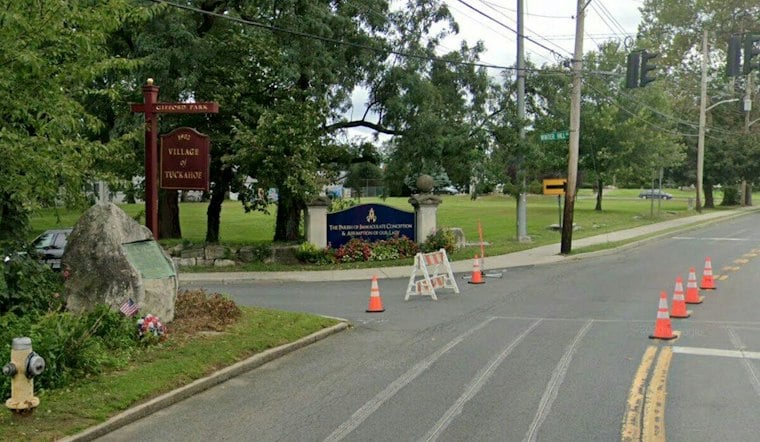
Westchester County has spent $2.55 million to buy the Ward House, a nearly 300-year-old Tuckahoe landmark, clearing the way for it to become both the county's 54th park and a permanent new home for the Manhattan-based Lenape Center. The deal closed in June, turning a building that once hosted stagecoaches, a sitting president and generations of college students into the anchor of a plan to bring a Lenape institutional presence back to the land where the tribe once lived.
The purchase, funded through the county's capital budget, places the property under the Westchester County Department of Parks, Recreation and Conservation, according to News 12 Westchester. The outlet reports that the acquisition folds the Ward House's acreage directly into the county's municipal park network, giving the site long-term public oversight after decades of private and institutional ownership.
The house carries a name tied directly to its origin story. It belonged to the Ward family, who according to 6abc Philadelphia acquired the entirety of Eastchester from the Lenape around 1700 in exchange for guns, coats, kettles, cider, axes and woodworking tools. The station reports the house has since served as a dwelling, post office, tavern, community center and college dormitory over more than 250 years — a run of uses that makes its newest chapter, as a Lenape cultural center, land differently.
A Colonial Crossroads With Revolutionary Scars
Long before it became a parks department asset, the Ward House sat at the center of regional commerce and conflict. In 1762, British Postmaster General Benjamin Franklin commissioned a 23-mile stone marker outside the property along White Plains Post Road, designating it as Eastchester's first colonial post office, according to the site's entry on Clio. The house also served as a stagecoach stop linking New York City and White Plains during the colonial era.
That history nearly ended in flames. British and Loyalist forces burned the original Ward House to the ground in 1778 during Revolutionary War skirmishes, as Westchester County became a contested no-man's-land between British and Continental forces, per the same Clio account. The home was rebuilt in the 1790s on the exact same footprint, which is the structure that stands today.
Decades later, the house found itself hosting a president. During an 1839 tour of Tuckahoe's white marble quarries — the same quarries that supplied stone for Federal Hall and St. Patrick's Cathedral — President Martin Van Buren stayed overnight at the property, which was then operating as a tavern called Marble Hall, Clio notes. From the 1940s until 2021, Concordia College owned and maintained the building, using it for student housing, meetings and community gatherings until the college's sudden closure left the landmark's future uncertain, according to the same source.
From a Mayor's Phone Call to a County Purchase
The push to save the Ward House gained momentum through local political channels. Former Tuckahoe Mayor Omayra Andino, who 6abc reports established the village's historic preservation efforts, reached out to County Executive Ken Jenkins to ask whether the county would consider purchasing the property after its most recent developer hit a roadblock. Andino later delivered a formal presentation on the Lenape Center's planned relocation during a Tuckahoe Board of Trustees meeting on May 11, following Jenkins' State of the County announcement earlier that month, according to records from the Village of Tuckahoe.
Jenkins and the county's Board of Legislators ultimately acquired the Ward House and added it to Westchester's facilities, with the parks department now responsible for maintaining it. The county says the house will undergo needed repairs before the Lenape Center relocates there, though a renovation timeline and cost have not been detailed.
A Nonprofit's First Permanent Home in Lenapehoking
The Lenape Center, described by 6abc as a nonprofit dedicated to preserving Native arts and culture, plans to transform the Ward House into a community space with permanent and temporary exhibition areas, meeting rooms, education programs, installations and presentations. The organization started in Manhattan in 2009, with Joe Baker and Hadrien Coumans as its co-founders, according to NYC Tourism, with a mission to reclaim Lenape cultural presence and counter Indigenous erasure across Lenapehoking.
Lenapehoking is the name the Lenape gave their homeland, which 6abc reports spans the eastern seaboard from Connecticut to Delaware. Hadrien Coumans, the center's co-founder and deputy director, described the organization's work as continuing Lenapehoking, framing the mission as an effort to return a Lenape presence that was nearly extinguished by colonization and forced removal, per 6abc's reporting.
Today's Lenape diaspora consists primarily of three federally recognized sovereign nations — the Delaware Tribe of Indians in Oklahoma, the Delaware Nation in Oklahoma, and the Stockbridge-Munsee Community in Wisconsin — the result of centuries of forced removals, News 12 Westchester reports. The Ward House deal would mark the first time the Lenape Center has had a permanent physical home in the region its mission is built around.
Preservationists Say They Learned From the Headlines
Not everyone close to the Ward House's long fight for survival felt part of the plan. Friends of the Ward House, Inc., a local advocacy group, said that while it supports saving the structure, members learned of the decision to house the Lenape Center there through media reports rather than direct consultation. The organization had previously submitted its own site preservation summary to county leaders back in July 2024, underscoring years of grassroots involvement that predated the county's announcement.
The gap in communication highlights a tension running underneath an otherwise celebrated deal: county and village officials have framed the $2.55 million purchase as a historic act of repair, while longtime local volunteers say they were caught off guard by how the final plan came together. Questions about renovation costs, a firm moving timeline, and how local preservation groups will work alongside the Lenape Center going forward remain open as the project moves ahead.





