

























































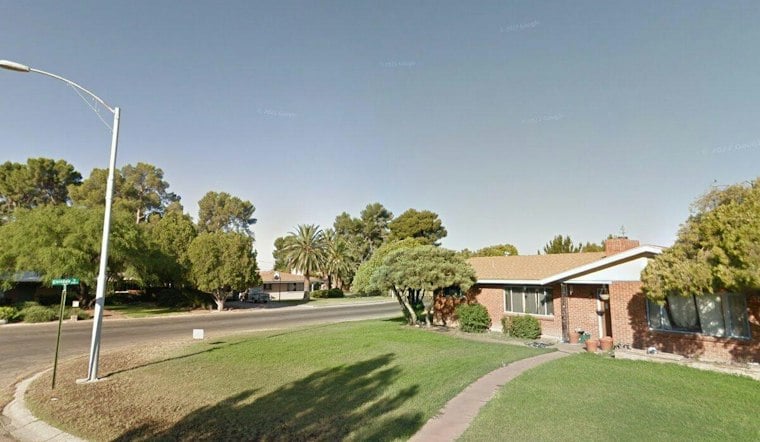
A Tucson evangelist who says police threatened to arrest him for talking about Jesus at a neighborhood Christmas light festival has filed a federal lawsuit against the city, arguing officers unconstitutionally banned him from religious speech on public streets. David Hoffman claims he was excluded from the Winterhaven Festival of Lights multiple times in 2025 after nearly a decade of evangelizing there without incident.
Hoffman's lawsuit, Hoffman v. City of Tucson et al., was filed October 2 in the U.S. District Court for the District of Arizona, according to The Arizona Republic. The suit names the City of Tucson along with police officers Matt Alexander and William Leonard, according to PacerMonitor. Hoffman says he attended and evangelized at the festival for almost a decade without issue before officers began turning him away in 2025.
According to the Republic's reporting, Hoffman founded Kingdom Enterprises, a Christian ministry focused on evangelizing, and began proselytizing in 2015. He says he attends busy public events to have one-on-one conversations and hand out Christian literature, and that at Winterhaven he carried two LED light-up crosses. Hoffman has said he preaches without intending to antagonize anyone and tries not to interfere with other attendees.
What the Festival's Signs Said
Festival signage prohibited political, religious or commercial materials or messaging and directed anyone wishing to exercise First Amendment activity to a designated free expression zone, the Republic reported. Hoffman says that zone sat far from the festival's entrance and exit, forcing him to raise his voice to be heard, and that being funneled there demeaned him and interfered with his ability to engage people walking by.
Hoffman attempted to attend the festival multiple times in 2025 with a small group, and police excluded and threatened him with arrest each time, according to the lawsuit as reported by the Republic. One officer told him he could be arrested for responding to someone who asked about Jesus, even at a low voice level, and described answering such a question as prohibited communicating and sermonizing. Separately, Fox News reported that officers told Hoffman in December 2025 that even answering a festivalgoer's question about salvation would count as sermonizing and had to happen outside the event perimeter altogether.
A Letter Ten Months Before the Lawsuit
Before suing, Hoffman's legal team tried to resolve the dispute without a courtroom. First Liberty Institute and co-counsel firms Gibson, Dunn & Crutcher LLP and Holtzman Vogel PLLC sent Tucson officials a formal demand letter on December 16, 2025, according to Just the News. Hoffman has said his attorneys wrote to the city seeking resolution and received no response, a gap of roughly ten months before the October filing.
Court filings highlight what the plaintiff's team calls selective enforcement: while Hoffman's religious speech was barred, the outlet reported that Tucson permitted commercial food vendors, horse-drawn and motorized hayrides, and party bikes blasting music throughout the festival grounds. The lawsuit also raises a 14th Amendment due process claim, arguing that Tucson's special event permitting rules unconstitutionally hand private permit holders authority over public streets, opening the door to arbitrary police enforcement, per the same outlet's report.
The Legal Theory Behind the Suit
Hoffman argues that public streets are a traditional public forum protected from government speech restrictions, and that officers' threats to arrest him violated both his speech and religious exercise rights. His attorney, Garrett Bell, said the government should not dictate which messages are acceptable and that a city cannot make a public event private merely by issuing a permit, according to the Republic. Hoffman is also represented by former Arizona Supreme Court Justice Andrew Gould and First Liberty Institute, the same organization that represented football coach Joe Kennedy in his successful U.S. Supreme Court case upholding his right to pray on a public high school football field with players after games in 2022.
The lawsuit leans on precedent from outside Arizona as well. In the 2006 case Gathright v. City of Portland, the Ninth Circuit Court of Appeals ruled that Portland could not let a private event organizer exclude unwanted speakers or restrict protected speech on open, un-ticketed public streets and parks. Edward Gathright had been threatened with arrest at least six times after provocative preaching, and the appeals court found those threats violated his First Amendment rights, citing a 2005 Sixth Circuit ruling in Parks v. City of Columbus holding that a special event permit does not convert public sidewalks into private space where speech can be restricted, according to FindLaw.
Festival's Charitable Role and a City Staying Quiet
The Winterhaven Festival of Lights, founded in 1949 by neighborhood founder C.B. Richards, is one of the Southwest's longest-running holiday light displays, running two weeks each December in midtown Tucson, according to Tucson Foodie. The event also serves as the second-largest annual fundraiser for the Community Food Bank of Southern Arizona, collecting $50,459.24 in donations and 27,813 pounds of food during the December 2025 event alone, per the Winterhaven Festival of Lights' own figures. Festival organizers had permits for the area and opposed religious speech at the event, and the festival described itself as a private event, though Hoffman argues it functions as public because it is open without tickets or admission fees and draws thousands of attendees.
A city spokesperson, Andrew Squires, declined to comment, citing city policy amid pending litigation, the Republic reported. The paper also said it was unable to reach representatives of the Winterhaven Festival of Lights for comment. Attorneys for Tucson are expected to file responses to Hoffman's lawsuit and request for an injunction within the next few weeks.
What Hoffman Wants From the Court
Hoffman is asking the court to bar Tucson from enforcing the policy against him in December 2026 and to declare the restrictions unconstitutional, along with a symbolic monetary award and attorney's fees. He has said he wants to attend and speak at the festival again this December but fears arrest if he does. No allegations of harassment have been made against Hoffman in this case, even as the Republic noted that event attendees have no right to avoid hearing others' expression and that Arizona residents retain a right not to be harassed.
Hoffman's street ministry has drawn friction elsewhere before. In August 2026, an evangelist connected to his organization, His Kingdom Enterprises, was physically assaulted on a West Hollywood sidewalk while preaching, according to Answered Faith. With Winterhaven's 2026 run approaching in December, the Tucson case now sits before a federal judge who must weigh whether the city's permit rules can keep a street preacher off public pavement he says he walked peacefully for nearly ten years.




