

























































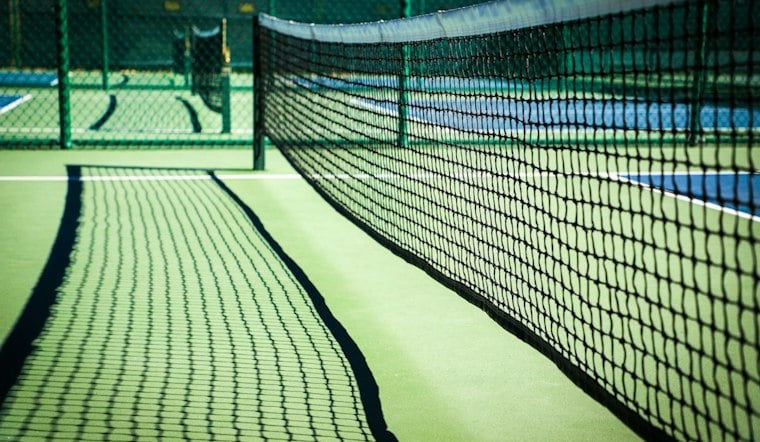
At Udall Park in Tucson, a group of pickleball players became an emergency response team when Charlie Corle collapsed. Their actions included CPR and the use of an automated external defibrillator (AED), equipment that can deliver a shock in some cardiac emergencies.
Corle told KOLD he first felt unwell as he stood up for his second turn to play. “I stood and leaned forward, and I was able to say to myself, ‘Why do you feel dizzy?’ and that was it,” he recalled. He then lost consciousness and had no pulse or breath.
Dr. Ron Widman, a retired emergency-room physician who was playing at the park, found Corle unconscious and without a pulse and began chest compressions, according to KOLD.
A Team of Strangers Steps In
Other people nearby joined the response: an off-duty Tucson paramedic helped with CPR, two retired nurses worked to open Corle's airways, and two bystanders went to retrieve an AED, KOLD reported.
The group used the AED to deliver two shocks, after which Corle was alive and responding. KGUN 9 separately identified the player as 72-year-old Charlie Corley and reported that he woke after being shocked “a couple of times.” The accounts differ on the spelling of his name.
Corle survived and has since returned to playing pickleball, KOLD reported. He calls the people who helped him his “Charlie's Angels.”
Rescuers and Survivor Reunite
Corle and his rescuers reunited at a Carondelet honor ceremony held Friday. The event also highlighted CPR: registered nurse and trauma clinical coordinator Manuel Montano said survival odds fall roughly 10 percent for every minute without intervention and that chances become negligible after about 10 minutes without CPR. Dr. Ron Widman said about 10 percent of people who receive bystander CPR recover well enough to leave the hospital, according to KOLD.
National data backs up the urgency behind that message. The American Heart Association says immediate CPR can double or triple a person's chance of surviving cardiac arrest, and more than 350,000 cardiac arrests occur outside hospitals in the United States every year. A 2024 study covering nearly 200,000 witnessed out-of-hospital cardiac arrests between 2013 and 2022 found that bystander CPR started within two minutes was linked to an 81 percent greater chance of surviving to hospital discharge, and a 95 percent higher chance of surviving without significant brain damage, according to a report from Heart.org. That same study found CPR started up to 10 minutes after collapse was still associated with a 19 percent higher survival rate than no CPR at all — but beyond 10 minutes, bystander CPR showed no survival benefit over doing nothing.
How Often Do Bystanders Step Up?
The American Red Cross reported that 42.5 percent of out-of-hospital cardiac-arrest patients nationwide received bystander CPR in 2025, the highest share since 2016, and up from 41.7 percent the year before, according to the organization's published statistics. The same source found that just 13.9 percent of people who went into cardiac arrest in a public place had a bystander apply an AED. Earlier AHA figures put the 2023 bystander-CPR rate at 40.2 percent, with survival to hospital discharge for EMS-treated cardiac arrests at 9.1 percent in 2021 — underscoring how rare it is for a collapse like Corle's to end with the victim walking, or in his case playing pickleball, again.
Arizona law offers legal protection to people who step in during emergencies like Corle's. Under Arizona Revised Statutes § 36-2263, a Good Samaritan who uses an AED to render emergency care in good faith and without compensation at the scene of a life-threatening emergency is defined and protected under state law — a framework that likely covered the bystanders who acted at Udall Park.
Corle's case echoes a similar scare documented elsewhere: as reported by Local 3 News, bystanders used an AED after finding no pulse on a man who had collapsed on a pickleball court there, a reminder that sudden cardiac events on the court are not unheard of in a sport whose players skew older. Udall Park pickleball players will reportedly have the chance to receive CPR training and certification going forward, as noted by 13 News, and the American Red Cross and other organizations offer local CPR classes, some of them free, for anyone hoping to be ready if the moment ever arrives on their own court.
AEDs and CPR training in Arizona
The Arizona Department of Health Services says its Bureau of Emergency Medical Services & Trauma System established the Save Hearts in Arizona Registry and Education (SHARE) Program to promote a standardized system of out-of-hospital cardiac-arrest care statewide. The department’s material also lists conditions for AED registration. For residents seeking training, the American Red Cross offers First Aid/CPR/AED courses in Tucson online, in person or in a blended format. Its in-person and blended courses include a two-year certification.
The Red Cross recommends calling 911 first, performing chest compressions at 100 to 120 per minute in the center of the chest, and using an AED as soon as one becomes available — but only once it's confirmed the person is unresponsive and not breathing normally. For Charlie Corle, CPR and AED use by the people who came to his aid made all the difference.





