

























































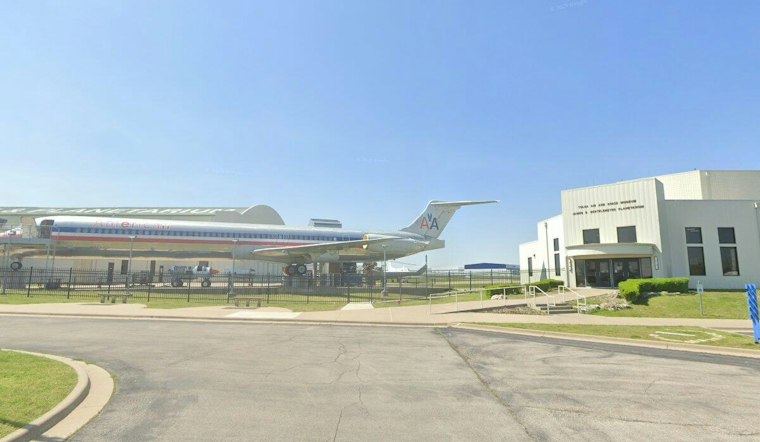
The Tulsa Air & Space Museum wants to put a retired U.S. Air Force Thunderbirds jet right at its front door, and it is asking the public to help foot the bill. The museum has launched a campaign seeking $60,000 to bring F-16C Fighting Falcon serial number 86-0281 to Tulsa, a plane that once led the elite demonstration squadron as Thunderbird No. 1.
A Jet With a Thunderbirds Pedigree
According to The Journal Record, the aircraft served as the Thunderbirds' lead aircraft during the 2006 season. The jet was transferred from the Arkansas Air National Guard and converted into the team's signature red, white and blue paint scheme, according to NewsOn6. Separately, an airframe database maintained by f-16.net lists the plane as a Thunderbird single-seater from 2004 through 2008, with 2006 marking its turn as the No. 1 jet.
The museum's effort, dubbed Operation: Thunderbird, carries a straightforward pitch: give $16 for the F-16. The campaign aims to raise its $60,000 goal through 3,750 individual donations of $16 each, which, if fully realized, would add up to the full amount needed. Tonya Blansett, the museum's executive director, said the structure was intentional. “We wanted to create a challenge that everyone could be part of,” Blansett said, adding, “there's something special about giving $16 to bring an F-16 home!”
Where the Money Would Go
Half of the fundraising goal, $30,000, is earmarked for transport and reassembly — covering disassembly of the aircraft, specialized truck transportation from Texas to Tulsa, and putting it back together once it arrives at the museum. The other $30,000 would fund engineering, construction and installation of an arched pedestal at the museum's entrance, where the jet would eventually stand on permanent display.
Individuals, families and businesses can donate any amount through the museum's Operation: Thunderbird page. The museum plans to position the F-16 near its entrance, visible to visitors arriving at both the museum and Tulsa International Airport, and it would become part of a permanent display highlighting Oklahoma's aviation and military history, per the same NewsOn6 report.
Honoring Local Air Force History
The planned display is meant to honor generations of airmen with Tulsa's 138th Fighter Wing, which has flown and maintained the F-16 for more than three decades. It will also recognize Oklahoma astronaut William R. “Bill” Pogue, who served as a Thunderbird pilot before flying aboard NASA's Skylab 4 mission, a detail highlighted in the museum's own fundraising materials as reported by FinancialContent.
The acquisition was made possible with assistance from the Oklahoma Office of Management and Enterprise Services, along with support from the offices of Congressman Kevin Hern and Senator Alan Armstrong, the museum told NewsOn6.
A Timeline Still Taking Shape
Exactly when the jet will touch down in Tulsa remains unsettled across accounts. The museum hopes to transport the aircraft from November 8 through November 10, with an eye toward having it in place for Veterans Day on November 11, according to the FinancialContent report on the campaign launch. NewsOn6, however, reported that the aircraft is expected to arrive at the museum within the next three to six months once preparation, transportation and installation work are complete — a longer window than the Veterans Day target described elsewhere.
Other retired Thunderbirds aircraft have found similar second lives as static exhibits around the country. The Museum of Aviation opened a permanent Thunderbirds F-16 exhibit in 2009, and a former Thunderbird F-16 became a static-display monument at Nellis Air Force Base in 2011. The Hill Aerospace Museum displays a Thunderbird F-16A flown by the team from 1983 to 1992, and once repositioned three F-16s into a missing-man formation to honor airmen's sacrifices, according to a report from DVIDS.





