

























































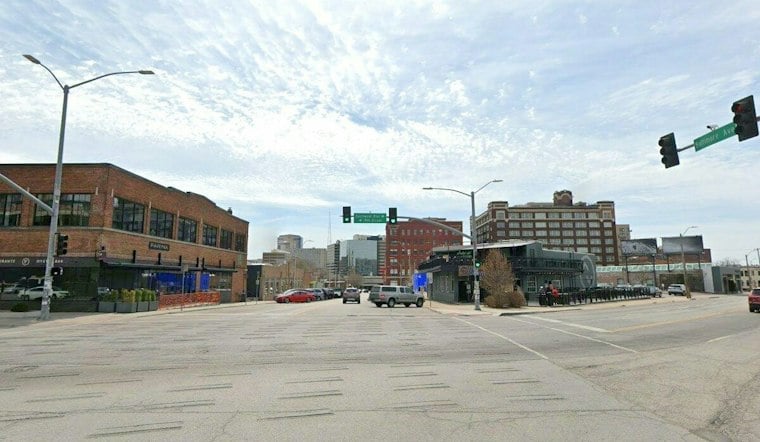
Tulsa is considering a proposed redevelopment of northwest downtown that would include a new stadium for FC Tulsa and connect downtown districts.
The Kansas City Star reported that it organized Tulsa leaders’ visit to Kansas City, the largest delegation yet for the paper’s annual intercity trip. The visit provides context for Tulsa officials’ interest in downtown development, but does not establish that Kansas City’s approach is a blueprint for Project Nexus.
A Stadium Built Purely for a Women's Team
CPKC Stadium, an 11,500-seat venue at Berkley Riverfront Park, opened in March 2024 as the world's first stadium purpose-built specifically for a women's professional sports team, the NWSL's Kansas City Current, according to The Independent. The outlet reported that the stadium cost $117 million. The March 16, 2024 season opener drew a sold-out crowd.
A new FC Tulsa stadium would anchor the broader northwest downtown redevelopment proposed as Project Nexus.
Williams Has a Role in a $700 Million Proposal
Project Nexus is a proposed $700 million-plus public-private redevelopment of northwest downtown Tulsa, anchored by a new FC Tulsa stadium. Tulsa-based Williams has been a lead player in discussions, and the proposal aims to connect downtown districts, according to Tulsa World.
A Separate Tulsa Stadium Precedent
Tulsa’s ONEOK Field baseball stadium was a separate project from Project Nexus. In a January 13, 2009, report, The Journal Record described a $30 million fundraising effort that included the Drillers lease and fees to the downtown property assessment district.
That account establishes a financing effort for a baseball venue, not the location or stated redevelopment goals of Project Nexus, and does not show that the two projects share a financing model.
Williams has shaped Tulsa's skyline before. The company built the 52-story tower that helped define downtown Tulsa in the 1970s — a half-scale replica of New York's World Trade Center Twin Towers designed by architect Minoru Yamasaki, according to Atlas Obscura. Dana Weber, CEO of Tulsa-based manufacturer Webco, said Tulsa needs more people living downtown and argued that Kansas City's actions mirror Tulsa's own aspirations, urging the city to make major vision investments. Weber said what Tulsa officials heard in Kansas City would help them figure out Tulsa's downtown transformation.
Kansas City's Population Boom, By the Numbers
The presentations Tulsa leaders sat through leaned heavily on numbers. Greater downtown Kansas City's population increased nearly 147% since 2000 to more than 33,000 people, a figure the Downtown Council of Kansas City has tied to decades of converting more than 50 former office buildings into apartments. The Downtown Council defines greater downtown as the urban core bounded by the Missouri River, 31st Street, State Line Road and Brooklyn Avenue — encompassing the Crossroads, Union Hill, 18th & Vine, Berkley Riverfront and Columbus Park.
That growth has come through both conversions of older buildings and new construction, with more apartment towers already planned, per the same Downtown Council reporting. A future Royals stadium is also planned in Crown Center.
St. Louis and San Francisco Are Watching Too
Tulsa isn't the only city taking notes. St. Louis Mayor Cara Spencer visited Kansas City in September and toured downtown with Mayor Quinton Lucas by bicycle. Spencer said downtown Kansas City struck her as clean and vibrant, citing its walkability, bike infrastructure, coffee shops and pastry shops, and said she intends to apply those lessons in St. Louis.
Lucas, for his part, said interest in Kansas City's model extends well beyond the Midwest. He met San Francisco Mayor Daniel Lurie while visiting San Francisco a few weeks before the Kansas City Star's report, and Lurie asked him how Kansas City performed during the World Cup. Lucas said Kansas City draws attention for high-profile events and projects, including the World Cup and the future Royals stadium, and that the city is known for collaboration, policy progress and affordable housing. He added that a strong city core benefits the whole region and that people want to learn from what Kansas City has built.




