

























































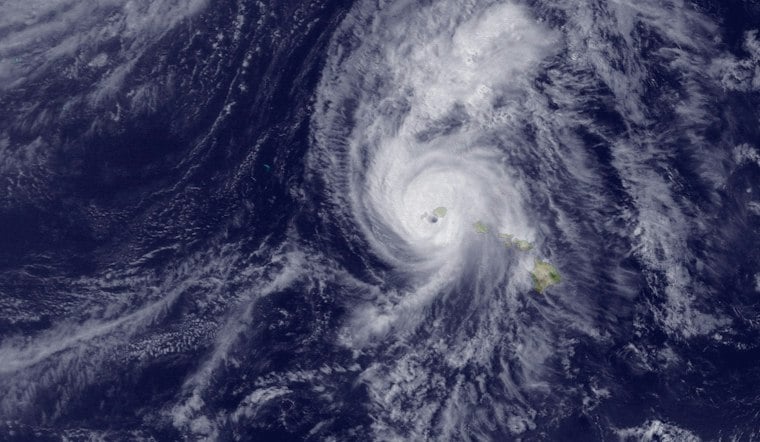
Nearly two months after Hurricane Lowell tore through Kaua‘i, tenants at the Kekaha Ha‘aheo public housing complex say they are still waiting on the Hawai‘i Public Housing Authority to fix leaky roofs and storm-damaged buildings, even as another round of heavy rain raises fears the problem will get worse. Joseph Naka‘ahiki, who has lived at the 78-unit, 9-acre complex for five years, says he has complained repeatedly about his leaking roof and damage to other buildings, but repairs have been slow to materialize.
According to Honolulu Civil Beat, Hurricane Lowell dislodged a circular metal vent cap on Naka‘ahiki's building, letting rainwater pour into his living room and kitchen. “We're paying rent, and they're not stepping up,” Naka‘ahiki said, according to the outlet's report. A maintenance worker finally repaired the vent cap on a recent Tuesday afternoon, but Naka‘ahiki says the housing authority only reached out to him the day after he began contacting news media.
The housing authority told the outlet in an emailed statement that it takes residents' concerns seriously and believes every resident deserves a safe, well-maintained home. Agency staff inspected Naka‘ahiki's unit on September 21 and September 29, finding no leaks, interior water damage, mold or mildew during those visits, the authority said. A later inspection, after heavy rainfall and further reports of rain entering his unit, identified a roof vent that needed repair, the same report notes.
Other Units Still Show Storm Damage
Naka‘ahiki isn't alone. Mila Mangayayan, who has lived at Kekaha Ha‘aheo for a little over a year and a half, said Hurricane Lowell tore off shingles above her kitchen and living room, and she has not heard back after reporting the damage to the housing authority. Naka‘ahiki estimated that a handful of other units on the western side of the complex still have unresolved hurricane damage, and tenants have reported broken windows, leaky roofs, and frustration with the agency's slow response, the outlet's report states.
Buildings at the complex have also shown missing shingles, a displaced metal vent cap, and windows missing louvers, per the same account. Residents cleared broken and cut branches after the storm, though piles reportedly still remain on the property. The housing authority distributed a brochure asking tenants to report hurricane damage, but it has not confirmed the total number of affected roofs, the agency said.
The housing authority offered Naka‘ahiki a temporary move to the closest available family unit at ‘Ele‘ele Homes, which he declined because he wanted to stay in Kekaha. Agency staff said they are coordinating with a contractor to assess the damage, determine needed repairs, and evaluate whether he can safely remain in his unit during the work. The authority has identified minor leaks affecting two units, including Naka‘ahiki's, and said staff will continue inspecting and evaluating additional reports of water intrusion.
Fear Of Retaliation Looms Over Complaints
Naka‘ahiki said most tenants he knows fear retaliation if they speak out about conditions, though he said he would not stay quiet despite that fear himself. His account echoes concerns raised in a separate Civil Beat report, which found that residents of the Kawailehua public housing complex said they were tired of the housing authority ignoring their complaints and were organizing to push for improvements, according to Honolulu Civil Beat.
Under Hawai‘i law, landlords must begin repairs within 12 business days after a tenant provides written notice of a defective condition that materially violates statutory standards or the rental agreement, according to Hawaiʻi Revised Statutes, §521-64. The housing authority said it must assess conditions, arrange qualified contractors, and ensure storm repairs are performed safely, and that it must inspect and document affected areas, prepare cost estimates, confirm funding, and secure a licensed roofing contractor before work can begin, all while following the state procurement process.
Volunteers Fill Gaps As Requests Pile Up
Nonprofit groups have stepped in where public repairs have lagged. Mālama Kaua‘i, part of the Voluntary Organizations Active in Disaster network, has helped coordinate emergency roof tarping since the storm, and the group's executive director, Megan Fox, said tarping rental units is especially difficult because volunteers need the homeowner's permission before they can act, as reported by Kauaʻi Now. Emergency tarps require screws and nails driven into buildings, along with a signed owner waiver, which can slow the process further.
Voluntary Organizations Active in Disaster received nearly 800 requests for cleanup and recovery assistance after Hurricane Lowell, including almost 200 related to roofs. Separate counts of the group's assistance requests have varied in local reporting, with one early-October figure citing more than 550 total requests, including 109 tied to roof damage, and a later report putting the total above 600 — a discrepancy that may reflect different reporting periods. The housing authority has said it does not allow residents or volunteers to tarp its own roofs, citing risks of injury, improper installation, and liability, and that a qualified roofing contractor must determine whether tarping is appropriate and how it can be installed safely.
Recovery Stretches Beyond One Complex
The slow pace of repairs at Kekaha Ha‘aheo fits into a broader pattern across Kaua‘i, where cleanup, repairs and reconstruction were still underway nearly two months after Hurricane Lowell struck on Labor Day, September 7, according to Kauaʻi Now's coverage of ongoing recovery efforts. Outside disaster assistance had thinned out by the storm's third week, leaving fewer crews available for tree removal, debris clearing, roof tarping and flood cleanup, as reported by thegardenisland.com.
Storm damage has also hit renters beyond public housing, with some receiving eviction notices amid a worsening housing crisis, according to the same Kauaʻi Now report. Local organizations say they are now shifting from immediate relief toward longer-term recovery work, including housing connections, rebuilding, case management, cleanup and repairs. Hurricane Lowell initially knocked out power to 33,000 of Kaua‘i's 36,000 KIUC customers overnight, Civil Beat reported at the time, underscoring the scale of the storm that is still shaping daily life in Kekaha two months later.




