

























































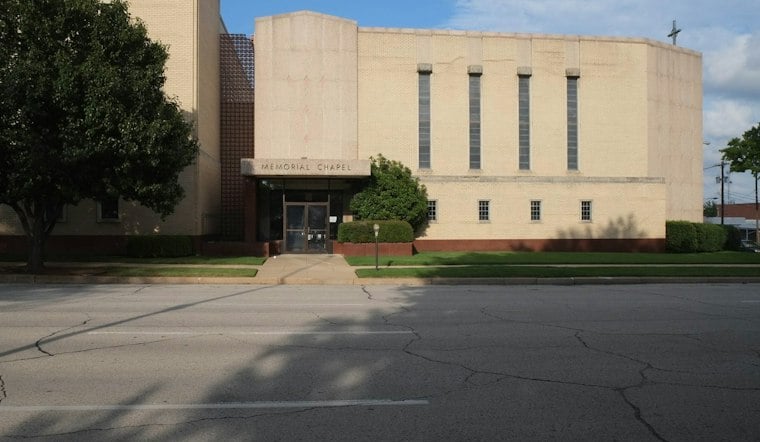
Two long-standing Tulsa buildings have officially joined the National Register of Historic Places: the Hawk Dairies building at 2415 E. 11th St. and First Christian Church at 913 S. Boulder Ave. The designations arrive as both properties are already tied up in redevelopment efforts that could reshape their futures while preserving pieces of their past.
According to News On 6, Hawk Dairies at 2415 E. 11th St. and First Christian Church at 913 S. Boulder Ave. have been added to the National Register of Historic Places, and the station reported that both buildings are now eligible for historic-preservation tax incentives to support rehabilitation. Those incentives, the station noted, stem from Oklahoma state and federal tax law written to encourage the restoration of historic and older buildings.
A Mid-Century Dairy Building With a New Chapter
Hawk Dairies was constructed in 1947-48, per News On 6's reporting. Route 66 News adds further detail, reporting that the building was designed by Kansas City architect Gerard W. Wolf and opened in 1948 at the same 11th Street address. The outlet also reports that the designation became effective on Oct. 5.
The building's redevelopment path has shifted over time. Route 66 News reports that a local developer's earlier plan to convert the Hawk Dairies building into a boutique hotel, retail space and a restaurant fell through a few months after it was proposed. Separately, Tulsa World has reported that the Hawk Dairies building is being redeveloped as part of a new 100-room boutique hotel named the Avery Hotel, in honor of Cyrus Avery, dubbed the Father of Route 66 — with that project expected to be completed in the summer of 2027. News On 6, meanwhile, has reported that Hawk Dairies will be renovated into apartment-style living. The dossier of reporting leaves these differing accounts of the building's ultimate use unreconciled.
A Century-Old Church Finds New Purpose
First Christian Church sits at 913 South Boulder Avenue, according to the Tulsa Preservation Commission, which notes that National Register listing is the federal government's official recognition of properties worthy of preservation. The building's construction dates are also described differently across sources: Tulsa World has reported that the First Christian Church building was built in 1917-1920, while News On 6 has reported the church was established in 1918. Tulsa World has separately reported that the congregation was established in 1902 and that its sanctuary was dedicated in 1920. Those accounts are presented here as reported, without resolution.
Tulsa World has also reported that the downtown property features 85,000 square feet of facilities on more than 3 acres of land. The site's next life is already taking shape — per the same account from News On 6, First Christian Church is being converted into a mixed-use building that will include apartments, a live music venue and a restaurant. The station also reports that Wildflower Cafe has relocated to the former church building, adding an expanded dining room, an outdoor patio and a coffee lounge to its new home.
What the Listing Means for Both Properties
Beyond the recognition itself, the National Register designation carries practical weight for owners pursuing restoration work. The Oklahoma State Historic Preservation Office serves as the initial point of contact for state tax-incentive applicants and takes part in reviewing proposed rehabilitation projects, according to the Oklahoma Historical Society. Federal incentives carry their own requirements, the historical society notes, requiring applicants to meet standards set by the IRS and the U.S. Department of the Interior through the National Park Service.
For now, both Hawk Dairies and First Christian Church stand as fresh entries on a growing list of Tulsa properties earning formal historic recognition — one anchoring plans for new housing or hospitality near Route 66, the other already welcoming a relocated local café inside its walls. As originally reported by KTUL, the designations mark a new chapter for two buildings that have anchored their respective corners of the city for generations.





