

























































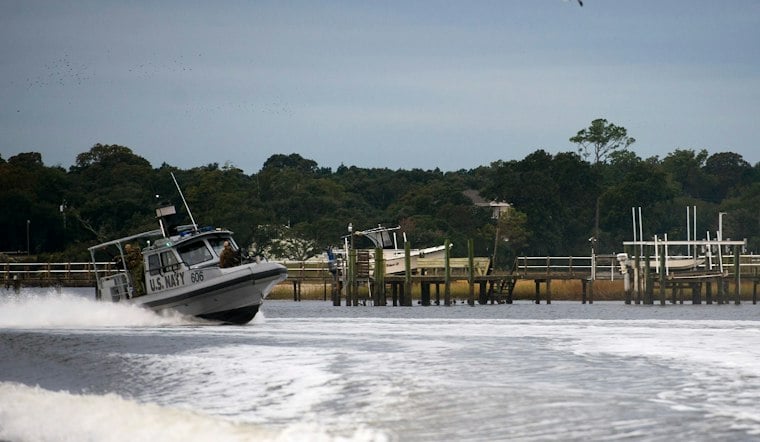
The U.S. military carried out a strike on a boat in the Eastern Pacific on Tuesday, killing five people aboard, officials said. U.S. Southern Command said the vessel was a go-fast boat operating along established narco-trafficking routes, but the military did not provide evidence that it was actually carrying drugs.
According to Stars and Stripes, Southern Command said it had intelligence indicating the vessel was actively involved in trafficking illicit substances. The strike follows a separate Oct. 23 incident in which the Coast Guard interdicted a suspected narco-terrorist vessel and detained the people aboard, a development SOUTHCOM shared in a post on X, the outlet reported. As with that case and others before it, the military has not released the kind of evidence — photos of drugs, lab tests, or documentation — that would independently confirm what the targeted boats were carrying.
As ClickOnDetroit reported, Tuesday's strike pushed the death toll from the monthslong campaign to at least 240 people across more than 70 strikes. The Trump administration began targeting people it calls narcoterrorists in September 2025, and President Trump has described the U.S. posture as an armed conflict with cartels operating across Latin America.
Conflicting Tallies on the Campaign's Toll
Exactly how many strikes have occurred and how many people have died depends on which count you read. Stars and Stripes put the figure at least 230 killed after more than 70 strikes, while vinnews.com cited a toll of at least 240 in more than 70 strikes. Earlier in October, CBS News reported a count of at least 235 killed in 70 strikes, and the Guardian put the number at more than 70 attacks and over 240 deaths since the start of Trump's second term. None of the available reporting reconciles these differing figures.
Not every strike in the campaign has been fatal. In some previous encounters with alleged traffickers, the military instead removed boat crews before sinking the vessels, resulting in no casualties, per the same Stars and Stripes account. That approach stands in contrast to the pattern of lethal strikes that have defined most of the campaign, including an Oct. 4 attack in the Caribbean Sea that CBS News reported killed four people when Joint Task Force Western Hemisphere struck a go-fast vessel along established trafficking routes.
A Disputed Follow-Up Strike
Scrutiny of the campaign has intensified over a separate incident in which two men initially survived an attack that killed nine others, according to vinnews.com. The two survivors were clinging to the wreckage of the boat when the military struck again, killing them both, the outlet reported. The White House confirmed the follow-up strike and said it was conducted in self-defense to ensure the boat was destroyed and in accordance with the laws of armed conflict.
Some legal scholars have said a second strike that kills survivors clinging to wreckage would be illegal under any circumstance, per the same vinnews.com report. The broader campaign of boat strikes has drawn scrutiny from some Democratic lawmakers and military legal scholars, with critics questioning both the legality and the effectiveness of the strikes. A Pentagon watchdog has said it plans to examine whether the military followed its established targeting framework — which includes a commander's intent, target development and execution — though that evaluation will not examine the legality of the strikes themselves.
How the Drugs Actually Move
The administration has not offered substantial evidence supporting its broader claims of killing narcoterrorists across the campaign, vinnews.com reported. That gap is notable given how fentanyl, which is behind many fatal overdoses in the U.S., typically reaches the country: over land from Mexico rather than by sea, according to the same report. Fentanyl is produced using chemicals imported from China and India, and a Government Accountability Office review notes that Mexican transnational criminal organizations rely on their influence over Mexican transportation routes and U.S. distribution networks to move fentanyl and methamphetamine into the country.
The Drug Enforcement Administration has separately alleged that certain companies and individuals knowingly supplied traffickers in the United States and Mexico with the ingredients and scientific know-how needed to manufacture fentanyl. Meanwhile, CBS News reported that the Trump administration is pursuing agreements with allied nations to extend its offensive beyond the water and onto land across Latin America, a sign that the current campaign of maritime strikes may be only the opening phase of a larger effort.





