

























































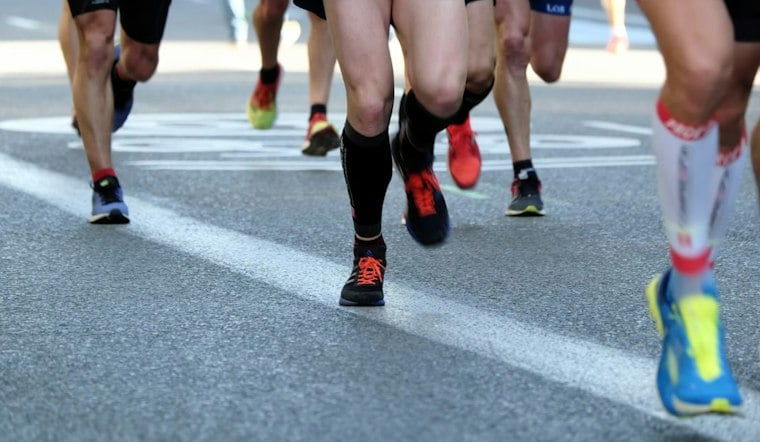
Thousands of walkers and runners are expected to converge on UCLA's Wilson Plaza Sunday morning for the 29th Annual LA Cancer Challenge 5K, an event that has quietly become one of the longest-running fundraising traditions in Los Angeles for a disease that remains brutally hard to treat. Survivors, patients and their families will line up for a 9 a.m. start in Westwood, with the course winding through campus before ending at a finish-line donut wall.
The run benefits the Hirshberg Foundation for Pancreatic Cancer Research, which has produced the event since 1998 and, according to event organizers, has raised more than $12.1 million over that span to fund research and support services for Angelenos facing the disease. Sponsors cover event costs so that, per the same organizers, 100% of money raised by participants goes directly to patient support and research. As ABC7 Los Angeles reports, Lisa Manheim, CEO and executive director of the Hirshberg Foundation, has described the gathering as uplifting and hopeful despite the severity of the disease it confronts.
A Day Built Around Community, Not Just a Race
Check-in and late registration open at 7:30 a.m., well ahead of the 9 a.m. start, giving families time to settle in before the morning's festivities. A kids costume parade and adult costume contest are set for 10:15 a.m., and organizers say the day includes a Fit Family Expo, activity tents and a Candyland Kids Zone, according to the Hirshberg Foundation's event page. Eyewitness News reporter Denise Dador is set to emcee the walk, ABC7 notes.
The course itself has become part of the event's identity. It starts in Wilson Plaza, winds throughout the UCLA campus, and finishes with what organizers, per UCLA Community, call the LACC Finish Line Donut Wall. The run also benefits the UCLA Agi Hirshberg Center for Pancreatic Diseases, tying the fundraiser directly to research happening on the same campus where participants will be walking.
An Honorary Starter Living With Stage IV Disease
This year's honorary starter is Peter Lau, who was diagnosed with stage IV pancreatic cancer in September 2023. Lau is undergoing ongoing chemotherapy while participating in a clinical trial at UCLA, according to the Hirshberg Foundation. His presence at the starting line underscores the event's dual identity as both celebration and fundraiser for a disease that still offers few easy answers.
Manheim has said that developments with drugs and vaccines, especially over the past year, are providing new hope, and that research is making a difference, per ABC7's reporting. She has urged people to join the community and help keep cancer research going, and has encouraged participants to hold onto hope rather than view themselves as statistics. She has also said the event itself can be healing for many who attend.
Why the Disease Remains So Hard to Beat
The stakes behind Sunday's run are grim by the numbers. Pancreatic cancer remains the third-leading cause of cancer-related deaths in the United States, and its five-year relative survival rate remains stalled at just 13%, even as survival for all cancers combined has climbed to 70%, according to the Pancreatic Cancer Action Network. The American Cancer Society notes that people diagnosed today may ultimately fare better than those published figures suggest, since treatments continue to improve over time.
Some of that improvement is coming from experimental approaches like individualized mRNA vaccines. In a small phase 1 trial, 16 patients received the vaccine known as autogene cevumeran after pancreatic cancer surgery, alongside chemotherapy and a checkpoint inhibitor immunotherapy drug, according to Memorial Sloan Kettering Cancer Center. Eight of those 16 patients developed tumor-specific immune responses, and seven of those eight were still alive four to six years after surgery, MSK reports — though researchers caution the findings come from a small early-stage study. A larger global phase 2 trial, sponsored by Genentech in collaboration with BioNTech, is now testing the same vaccine in a bigger patient group to see if those early results hold up.
That broader research landscape is part of what organizers hope Sunday's crowd at Wilson Plaza keeps in mind as they cross the finish line toward the donut wall: a disease that has resisted major survival gains for years, met by a community that keeps showing up anyway.


