

























































Deciding whether to move an endangered plant or animal far from the only home it has ever known is one of the toughest calls in conservation — and a newly published framework aims to make that decision less of a gamble. The guidance, designed to help managers figure out whether relocating a species outside its historical range could save it from extinction, was published in the journal Conservation Science and Practice.
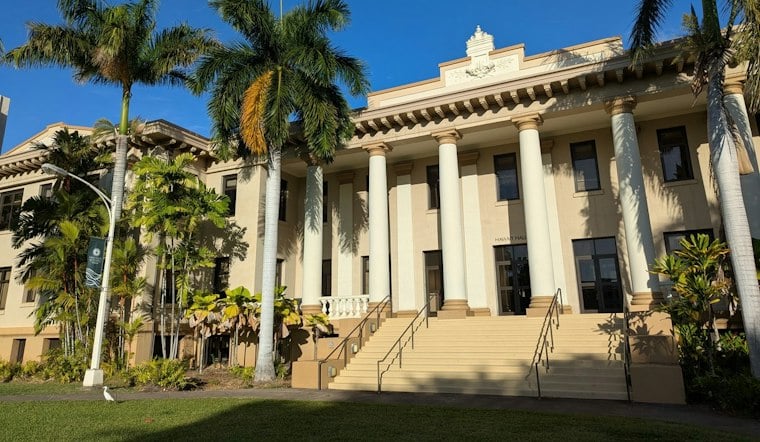
The framework walks managers through whether a so-called “conservation introduction” — moving a plant or animal beyond the boundaries where it has always lived — is the right call, and if so, how to carry it out responsibly, according to University of Hawaiʻi News. It caps a multi-year, Pacific-wide effort in which the University of Hawaiʻi at Mānoa played a central supporting role, per the same source. Lead investigator Mark W. Schwartz, who is affiliated with the University of California, Davis and the U.S. Fish and Wildlife Service Pacific Region, worked alongside co-principal investigator and co-author Melissa Price, a professor in the Department of Natural Resources and Environmental Management at UH Mānoa's College of Tropical Agriculture and Human Resilience.
Price, together with UH Mānoa graduate students and others, gathered input from more than 250 people throughout the Pacific region while building the framework, the university's report notes. That outreach shaped what the school describes as a place-based, relationship-first approach — one built around weighing cultural and community values alongside ecological risk. UH Mānoa facilitated the community engagement that underpins the tool, according to the university.
Why the Stakes Are So High for Hawaiian Species
Hawaiʻi's native wildlife has long served as the backdrop for exactly these kinds of hard calls. Officials have described increasing the population size and range of endemic species as critical to their survival and recovery, per KHON2. The outlet separately reports that the new framework considers ecological risks alongside cultural values and community concerns when evaluating conservation moves.
Hanna Mounce, coordinator of the Maui Nui Forest Bird Recovery Project, said decisions involving Hawaiian forest birds are often high-stakes and made under uncertainty. The framework, she said, helps work through decisions “thoughtfully and transparently” while ensuring the right people are part of the conversation.
Precedents From Kauaʻi, Laysan and Midway Atoll
Past translocation efforts in the islands offer a sense of what is possible — and what can go right. Researchers translocated 110 Hawaiian Petrel chicks and 86 Newell's Shearwater chicks over a six-year period from 2015 through 2020 to a 2.5-hectare predator-free enclosure on Kauaʻi, according to a study published in Frontiers in Conservation Science. All of the translocated Newell's Shearwaters and 96 percent of the Hawaiian Petrels survived to fledging, the study found. By 2023, eight Hawaiian Petrels — including three breeding pairs — and one Newell's Shearwater had returned to the site as adults, with petrels going on to breed there, establishing what researchers called the first predator-free breeding colony of the species. The same study reported apparent Kauaʻi population declines of 94 percent for Newell's Shearwaters and 78 percent for Hawaiian Petrels between 1993 and 2013.
Further out in the Pacific, scientists and conservationists translocated 50 Millerbirds from Nihoa to Laysan in 2011 and 2012, creating a second, self-sustaining population, according to American Bird Conservancy. Experts now estimate several hundred Millerbirds inhabit Laysan, a rebound that led the IUCN Red List to downlist the species from Critically Endangered to Endangered after it had held that status since 2000. U.S. Fish and Wildlife Service staff and partners also released 100 ʻekupuʻu at Kuaihelani, or Midway Atoll, after the birds had been absent there for about 80 years following their extirpation by invasive rats, KHON2 reported; the birds were moved from neighboring Manawai.
Public Panel Set for Late October in Honolulu
Hawaiʻi residents will get a chance to hear directly from some of the people wrestling with these questions. A panel discussion on conservation introductions and forest bird translocations in the Hawaiian Islands is set for October 28, from 3 to 4 p.m., as part of a Natural Resources and Environmental Management departmental research seminar hosted by UH Mānoa's College of Tropical Agriculture and Human Resilience. It will be held in the St. John Plant Science Laboratory, Room 011, at 3190 Maile Way in Honolulu.
The panel will feature Mounce alongside Megan Laut of the U.S. Fish and Wildlife Service and Lucas Fortini of the U.S. Geological Survey. Landscape-level mosquito control, captive care and conservation translocations are strategies for preventing forest-bird extinction from disease. The Fish and Wildlife Service notes that conservation translocation has worked successfully across the Pacific Islands, even as Hawaiian forest birds face mounting challenges from expanding invasive, non-native mosquito populations.




