

























































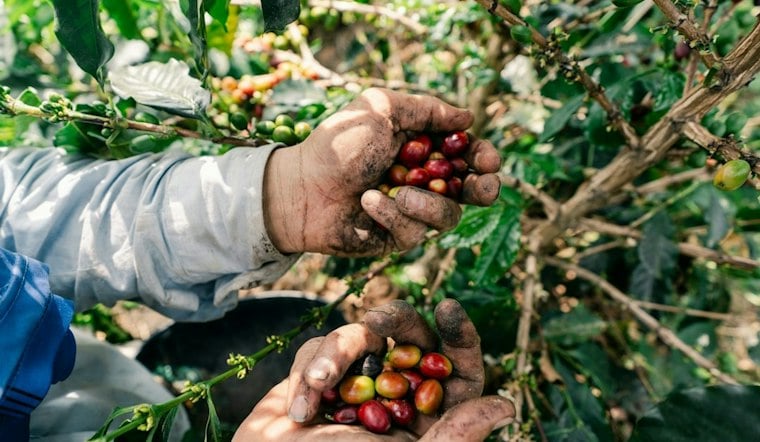
The University of Hawaiʻi at Mānoa is set to co-lead a new federal research effort worth up to $40 million over five years, aimed at helping coffee and cacao farmers in Hawaiʻi and beyond survive disease, drought, and shrinking harvests. U.S. Senator Brian Schatz announced the grant, which builds on an initial $8 million awarded for the first year of work.
The new Feed the Future Innovation Lab for Coffee and Cacao will be hosted and led by UH Mānoa's College of Tropical Agriculture and Human Resilience, according to Maui Now. Clemson University in South Carolina was selected to co-lead the project, as reported by Hawaii News Now. The lab will work with small farmers not just in Hawaiʻi but across the continental United States, Latin America, Africa and Asia, with goals that include breeding crop varieties able to withstand disease and drought, improving farm management and processing, and generating economic evidence to guide future government research investment.
A Federal Program Rebuilt From Scratch
This lab did not simply appear out of nowhere. It marks a structural restoration of federal agricultural research programs after the dismantling of USAID in February 2025, which abruptly terminated 16 long-standing university research initiatives, including a $5.485 million Cornell coffee research program, per Daily Coffee News. Congress appropriated $72 million in fiscal year 2026 to revive the Feed the Future Innovation Labs under the State Department, which allowed the agency to announce seven new labs hosted by land-grant universities on October 15, according to DTN Agriculture.
The economic case for that federal spending is substantial. The Association of Public and Land-grant Universities estimates that U.S. university-led international agricultural research through Feed the Future labs returns $8 in economic value for every $1 invested, generating more than $8 billion in total historical impact.
Why Hawaiʻi Is the Natural Hub
Hawaiʻi is the only state in the country that commercially grows both coffee and cacao outdoors, making its farms a unique domestic testing ground for tropical crop resilience research, the same Daily Coffee News report notes. Hoodline covered Hawaiʻi's commercial outdoor cacao production earlier this month while reporting on the Kauaʻi Chocolate and Coffee Festival, which also highlighted the toll that coffee leaf rust and coffee berry borer have taken on local crops.
That toll shows up in the numbers. The USDA's National Agricultural Statistics Service forecast Hawaiʻi's 2025–2026 utilized coffee production at 17.8 million pounds on a cherry basis, as bearing acreage fell to 6,500 acres. Coffee leaf rust, a fungal disease capable of causing yield losses of 70 percent or more, was first detected in Hawaiʻi in October 2020 on Maui and Hawaiʻi Island before spreading across all of the state's major coffee-producing islands, according to the same Daily Coffee News account.
Building on Past Local Research
This is not the first time federal money has targeted the disease. The USDA in 2021 awarded more than $6 million to the Synergistic Hawaiʻi Agriculture Council — now a partner in the new lab — to lead a coordinated research program combating coffee leaf rust across universities and federal facilities in Hawaiʻi and Puerto Rico, per the same outlet's reporting.
Clemson will bring its own specialized expertise to the partnership, contributing work in plant breeding, phenomics, soil fertility and plant nutrition to field-test disease-resistant varieties both internationally and on domestic farms, according to Clemson University News. The project's broader roster includes the University of California, Davis, Michigan State University, Ohio State University, Pennsylvania State University, Mars, World Coffee Research, the Synergistic Hawaiʻi Agriculture Council, the Coffee Quality Institute and PlantVillage+, Hawaii News Now reported.
A Network, Not a Building
Despite the name, the Coffee and Cacao Innovation Lab is not a single physical facility. It functions as a multi-institution research network directed by Principal Investigator Parwinder Grewal, dean of CTAHR, working alongside industry partners including Mars, World Coffee Research and PlantVillage+, Daily Coffee News reported.
Industry leaders framed the stakes in national economic terms. William Murray, president and CEO of the National Coffee Association, said agricultural research and innovation are critical to keeping coffee supplies resilient, according to an NCA news release cited by Hawaii News Now. Coffee is enjoyed daily by two-thirds of American adults, and the industry supports more than 2.2 million U.S. jobs while adding more than $343 billion annually to the economy, per that release. Chocolate carries its own economic weight: the typical U.S. resident eats up to eight pounds of it a year, according to UH Mānoa's College of Tropical Agriculture and Human Resilience, and studies cited by Hawaii News Now found the industry generates $28.4 billion in sales and supports 700,000 U.S. jobs.
For now, the central question is timing. The dossier of federal and university sources tied to the project notes that how quickly newly bred disease-resistant crop varieties can actually be propagated and distributed to small-scale farmers in Hawaiʻi, Latin America, Africa and Asia remains an open question tied to the lab's long-term success.





