

























































A University of Michigan astronomer with more than a million social media followers is spending the week in Jackson, leading a free series of public talks, a telescope viewing night, and a STEM banquet at Jackson College. Teresa Paneque-Carreño, selected as a Shapley Visiting Lecturer, kicked off the programming Monday evening and wraps up Thursday with events that are free and open to the entire community.
According to MLive, Jackson College was chosen by the American Astronomical Society to host a stop on its Shapley Visiting Lecturers Series, a program the society describes as connecting communities with astronomers and the latest discoveries. Steven Tuckey, the George and Barbara Raven Endowed Chair for Mathematics at Jackson College, said the school was excited and honored to be selected as a 2026 Shapley Visiting Lecture Series site and was thrilled to host Paneque-Carreño for a week, per the same report. The visit falls under the banner Cosmic Conversation: From Jackson to the Universe, which includes three public events and an educators' workshop, MLive reports.
A Week That Started With Planet Formation and Alien Life
The week opened Monday at 5 p.m. with a talk called Discovering the Universe at the Jackson District Library Carnegie Branch auditorium, covering solar system formation, potential alien life, and the universe's eventual fate, according to the outlet's report. Paneque-Carreño will return to the podium Wednesday for a lecture titled How to Form a Planet — Gas, Dust and a Bit of Luck, held at the Bert Walker Hall community rooms on the Jackson College campus. That talk will trace planet formation from the birth of stars to the origins of our own solar system, tracking processes astronomers say unfold over millions of years, the report notes.
Attendees at Wednesday's lecture will get a question-and-answer session and light refreshments afterward, and if weather cooperates, they can head to the Jackson College Astronomical Observatory for free public viewing once the talk wraps. The observatory features an 18.6-foot rotating Ash dome described as ADA-accessible, according to Sea West Observatories. Its primary CDK700 telescope was built by PlaneWave Instruments, based in Adrian, Michigan, about a 30-minute drive away, per Jackson College.
The Observatory Welcomes Public Viewing Events
This visiting lecture builds on a facility that already opens its doors to the public. Jackson College also hosts public viewing events, where visitors can look at planets, star clusters, and nebulae. The campus also partnered on a daytime event called A Stellar Day in Jackson in August 2026, teaming with local venues to run free astronomy activities alongside late-night telescope sessions, reflecting what the college describes as its ongoing role as a regional science outreach hub in Jackson County.
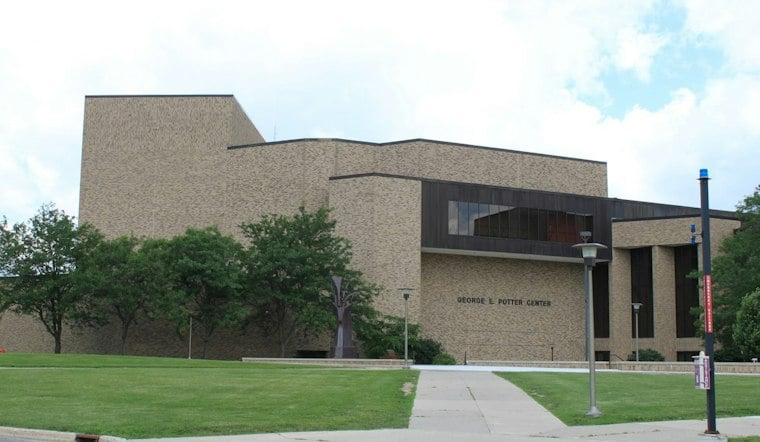
Thursday brings the series to a close with a STEM banquet from 5:30 to 7:30 p.m. at the Robert Snyder Dining Commons in Potter Center, featuring dinner, opening remarks, networking, and activities for invited high school science teachers, their nominated students, and Jackson College STEM faculty and students, MLive reports. At the banquet, Paneque-Carreño is expected to share her own journey as an immigrant child who navigated impostor syndrome while pursuing astronomy in a male-dominated field, according to the outlet.
A Scientist Known for More Than Her Research
Paneque-Carreño is an assistant professor in the University of Michigan's astronomy department and has authored five astronomy books for young people, drawing on the popularity of her illustrated children's series El Universo Según Carlota, written for young readers and noted for inspiring curiosity. She also collaborates with UNICEF Chile to promote science and education for children, a role she has held as a UNICEF Chile National Goodwill Ambassador since being appointed in 2023, per the same entry.
Her academic credentials run deep: she earned her Ph.D. in astronomy in September 2024 through a joint program between Leiden University in the Netherlands and the European Southern Observatory in Germany, with doctoral research focused on how gas and dust in protoplanetary disks around young stars condense into planets, according to the Heising-Simons Foundation. In November 2025, the National Academies of Sciences, Engineering, and Medicine named her a top recipient of the Eric and Wendy Schmidt Award for Excellence in Science Communication, recognizing researchers who translate complex science into accessible public storytelling, according to the University of Michigan.
Why a Community College Landed a National Astronomy Program
The Shapley Visiting Lectureship Program, run by the American Astronomical Society, connects communities with astronomers and the latest discoveries. The Jackson College visit brings an astronomer directly to students and residents who might otherwise never meet a working astronomer.




