

























































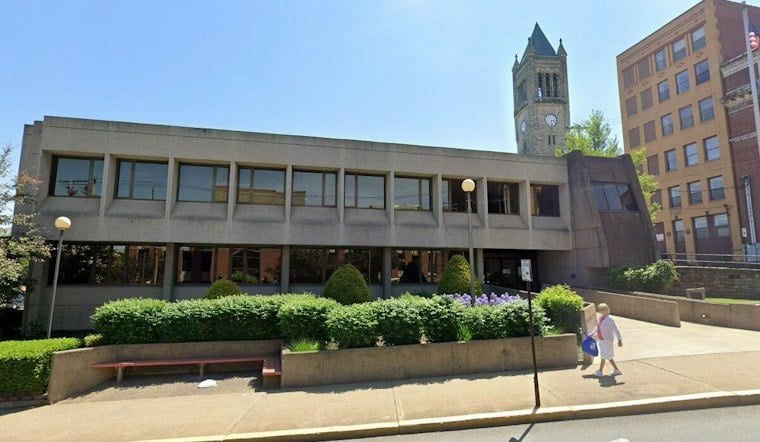
Uniontown City Council removed a proposed agreement with U.S. Immigration and Customs Enforcement from its agenda before a scheduled vote. The proposal would have authorized local police to perform certain federal immigration duties, and residents had objected to the plan. Mayor Bill Gerke announced the removal before the meeting began, pausing weeks of exploratory talks between the police department and ICE.
The proposed memorandum of understanding would have joined the 287(g) Task Force Model, according to CBS Pittsburgh. The outlet reported that council members met in a closed-door executive session at 4 p.m., an hour before the regular meeting, for an information session about the police chief’s discussions with federal immigration officials. Councilman Trace Thomas described those discussions as preliminary. Gerke told the station that possible financial benefits did not outweigh concerns he said he did not yet fully understand, and that he saw no need or problem requiring the program.
Residents Raise Fears Over Voting Rights and Thin Police Staffing
Fayette County residents expressed differing views on the proposal, according to CBS Pittsburgh’s account of the meeting. Linda Martin opposed expanding local immigration enforcement and warned that the program could intimidate voters; Tracy Wilson questioned whether deputized officers might be diverted from routine calls in a department she described as short-staffed and underfunded. Mary Collins, by contrast, said she would not want a noncitizen voting illegally. CBS Pittsburgh reported that Uniontown police declined to comment before the meeting and that the Fayette County Republican Committee did not respond to the outlet’s request for comment.
The 287(g) program lets ICE partner with local law enforcement agencies to carry out certain federal immigration duties, and the Task Force Model Uniontown was weighing is the most expansive of the three agreement types ICE offers, according to the National Immigration Forum. Unlike jail-based models limited to booking facilities, the Task Force Model allows deputized officers to question people about immigration status and make civil arrests during routine policing, and the model was reinstated in January 2025 after being shelved in 2012. Training requirements have also shrunk: ICE cut what had been a four-week in-person course down to a 40-hour online program, a condensed format internal agency communications confirmed in early 2025, as reported by the Tampa Free Press.
Federal Oversight Raised Training Questions
A 2018 Department of Homeland Security Office of Inspector General report said ICE may not have been training 287(g) officers efficiently or monitoring whether they completed required training. The finding concerns the 287(g) program at that time; the cited finding does not identify a specific model or establish anything about Uniontown, according to the Department of Homeland Security Office of Inspector General.
A Statewide Surge in Local-ICE Partnerships
Uniontown's brief consideration of the program came amid broader interest in 287(g) agreements among Pennsylvania law enforcement agencies. Part of the draw, according to a report from FWD.us, is financial: federal policy updates this year promised reimbursement for startup equipment, vehicles, officer salaries, overtime, and arrest performance bonuses, incentives that researchers say could appeal to departments stretched thin on staffing.
In August, council approved lower municipal trash rates, the Herald-Standard reported. Gerke discussed the new charges, the Herald-Standard reported.
Not the First Pennsylvania Agency to Back Away
Uniontown is far from alone in walking back ICE cooperation. In June, the neighboring Westmoreland County Sheriff's Office pulled out of its own 287(g) deal following community pushback and questions from county commissioners. In February, McCandless Township Council in the Pittsburgh region went further, voting 5-2 to bar local police from assisting ICE with civil immigration enforcement and to formally decline any 287(g) agreement, following a public meeting that drew roughly 100 residents. State lawmakers have also moved on the issue: in January, Pennsylvania House Democrats introduced legislation to prohibit law enforcement agencies from using state funds to enforce federal immigration law or execute 287(g) agreements.
The council removed the item before the scheduled vote. Resident Angela Brown told CBS Pittsburgh she believed the proposal had been pulled because residents spoke out against it. Gerke said discussion would not move forward, but residents still had questions about why the proposal reached the agenda after the police chief’s exploratory talks with ICE.



