

























































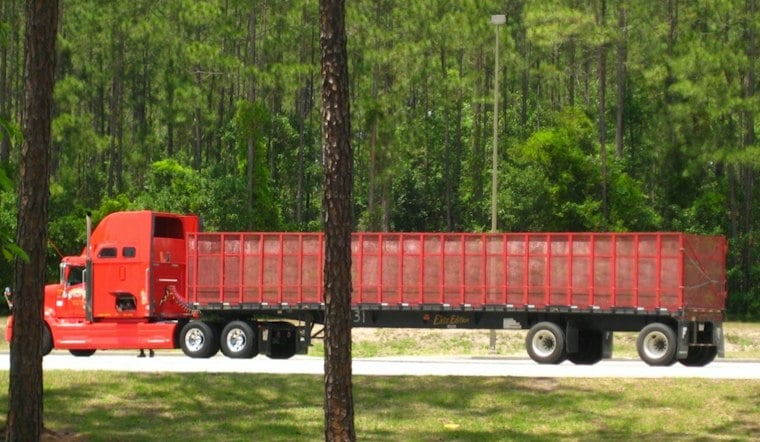
Forty percent of truck drivers spend more than an hour each day searching for a safe place to park, and the federal government says it is now spending $200 million to do something about it. The U.S. Department of Transportation announced funding this week for 14 truck parking expansion projects spread across 12 states, part of an effort to address what officials describe as a nationwide shortage of safe overnight rest spots for commercial drivers.
The money comes through the DOT's Nationally Significant Multimodal Freight and Highway Projects program, known as INFRA, according to thetrucker.com. The shortage can reduce productivity, increase fuel consumption and delay freight movement.
A Shortage Costing Billions in Wasted Time
TheTrucker reported that 40% of truck drivers spend more than an hour each day searching for parking, a shortage that can reduce productivity, increase fuel consumption and delay freight movement. A federal study titled Commercial Driver Rest and Parking Requirements — Making Space for Safety found that current demand for truck parking spaces on interstate highways appears to exceed the number available, according to the Federal Motor Carrier Safety Administration.
Federal highway officials separately describe truck parking shortages as a national safety concern. The new spaces are intended to reduce dangerous roadside parking, improve supply-chain efficiency, deliver savings and reduce fatigue-related accidents.
Minnesota and Arkansas Among the Winners
Minnesota is set to receive $27.7 million to design and build a new rest area along I-94 near Fergus Falls, according to valleynewslive.com. The planned facility is expected to include approximately 63 commercial vehicle parking spaces and roughly 60 passenger vehicle spaces serving both directions of the interstate. The station reports that officials see the project as a way to reduce fatigue-related accidents and improve supply-chain efficiency along the corridor.
In Arkansas, the state's transportation department was awarded a $23 million federal grant for a new rest area and truck parking facility in Crawford County, per arkansasbusiness.com. The planned site is designed to accommodate more than 130 trucks and about 50 passenger vehicles, the outlet notes.
More Projects Stretch From Georgia to Texas
The DOT's social media post highlighted Texas, Georgia, Iowa, North Carolina and Wisconsin as among the critical freight corridors receiving new parking capacity. Georgia is expected to get approximately $11.95 million for a Savannah project projected to provide an estimated 275 spaces near a major freight port, the trucking news outlet reports. Iowa is in line for about $24.5 million to improve parking at six rest areas along Interstate 80.
North Carolina received a $6 million award covering approximately 140 truck parking spaces and 50 container staging positions in Wilmington. The North Carolina State Ports Authority will use that funding to build the spaces at the Port of Wilmington, according to portcitydaily.com, which reports the project is meant to provide secure overnight parking, hours-of-service compliance opportunities, driver rest facilities, controlled access and continuous security monitoring for port drayage and long-haul carriers alike.
Texas is getting two separate awards: roughly $5 million for a Fort Worth project adding 100 truck parking spaces, and about $9 million for access-road improvements tied to a planned 305-space facility in Los Indios, the same trucking outlet reports. Wisconsin, meanwhile, is set to receive approximately $15 million for a project along Interstate 41 in Dodge County expected to add 106 parking spaces.
Don't Expect New Spaces Right Away
Despite the scale of the announcement, the newly funded parking spaces are not immediately available. The projects still must complete planning, satisfy federal grant requirements and go through construction before truckers can use them, the trucking news site reports. Federal hours-of-service regulations govern how long commercial drivers may operate before taking required rest, according to the Federal Motor Carrier Safety Administration.





