

























































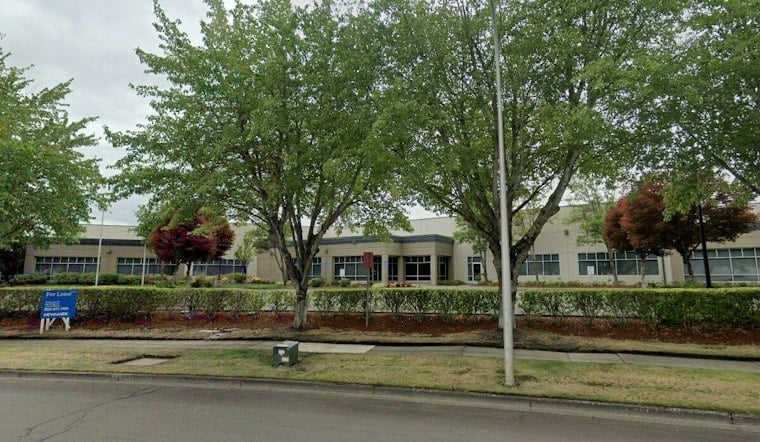
A Michigan-based data center operator is preparing to raise as much as $525 million by bundling together 10 of its facilities into an asset-backed securities deal, a bet that investors will embrace digital infrastructure built far from the industry's usual strongholds. The properties run from Michigan to Oregon, a geographic spread that sidesteps the traditional hubs of Northern Virginia, Dallas and Silicon Valley entirely.
The company, US Signal, is looking to raise up to $525 million through three tranches of notes, according to CoStar News. The deal is backed by 10 existing, company-owned data centers, and credit rating agency KBRA has assigned the notes a preliminary A- rating, according to Data Center Dynamics. It marks the first asset-backed securities issuance for the newly formed US Signal Issuer LLC and US Signal Co-Issuer LLC, according to a KBRA presale report carried by FinancialContent.
The numbers behind the collateral are substantial for a portfolio built largely around secondary and tertiary markets. The 10 facilities generate approximately $111.8 million in annualized recurring revenue and $63.8 million in annualized adjusted net operating income, the Data Center Dynamics report notes, while serving 839 unique customers with a weighted average remaining contract term of 2.1 years, excluding renewals.
Square Footage and Power Figures Don't Quite Match
Just how big is the portfolio? The figures depend on which filing you read. Data Center Dynamics reported the 10 data centers total 427,990 square feet and support around 22.5 megawatts of critical load, while a separate transaction description carried by FinancialContent put the figure at approximately 427,992 square feet with roughly the same 22.5 megawatts of critical-load power. The discrepancy is minor, but it underscores how fresh and lightly scrutinized this type of filing still is.
The note structure itself is broken into three pieces. A $75 million slice of variable funding notes carries an anticipated repayment date of November 2031 and a final maturity of November 2056, per the same Data Center Dynamics account. A $250 million tranche follows the same repayment timeline with a fixed rate still to be determined, while the remaining $200 million tranche has an anticipated repayment date starting in November 2033 and the same 2056 final maturity.
Expansion Keeps Pace With the Financing Push
The securitization lands just as US Signal has been on an acquisition tear in exactly the kind of overlooked markets the deal is designed to monetize. The company announced Tuesday it had acquired a 63,000-square-foot data center in Hillsboro, Oregon, according to a GlobeNewswire release, with roughly 14,000 square feet of data hall space and 4.5 megawatts of power currently available on site. A separate report from Your Oregon News put the purchase price at $20 million.
In Iowa, the company is investing $29.8 million to expand its data center in Waukee, according to the Business Record. And outside Chicago, US Signal acquired a 70,000-square-foot facility in Aurora, Illinois, with plans to grow its capacity to 4 megawatts critical, or 6 megawatts commercial, the Data Center Dynamics report states; the Aurora site currently runs at 1.35 megawatts across 33,000 square feet of white space.
Exactly how many facilities US Signal now operates is itself unsettled. Around the time of the Aurora deal, the company was described as operating roughly 16 data centers across seven states: Michigan, Illinois, Indiana, Iowa, Oregon, Colorado and Wisconsin, per Data Center Dynamics. Following the Hillsboro acquisition, the GlobeNewswire release instead described a network of 17 data centers nationwide.
Why Lenders Are Watching Secondary Markets Closely
KBRA's presale materials describe the collateral portfolio as consisting of older assets in secondary and tertiary data center markets, warning that such properties can carry smaller tenant bases, fewer re-leasing opportunities and lower liquidity than facilities in primary hubs, according to Data Center Dynamics. That caution arrives amid a broader financing boom: bank lenders committed an estimated $121.91 billion in credit for data center properties in 2025, with an average loan size of $1.2 billion, according to Commercial Observer. Data-center CMBS issuance alone reached $11 billion in 2025, up 266 percent from the year before, the same report found.
Commercial Observer also notes that lenders are growing more selective, weighing exposure limits tied to specific sponsors or tenants, and that construction lending in the sector remains almost entirely dependent on pre-leasing to major tenants like Amazon, Google, Microsoft or Meta. Despite record new supply, data-center vacancy across North America fell to around 1.4 percent in the first half of 2026, Commercial Observer reported.
The broader market backdrop helps explain why a deal built on smaller markets might still find buyers. Frontier markets accounted for 77 percent of all data-center capacity under construction in North America in 2026, with more than 66 gigawatts in the construction pipeline, according to a JLL midyear report. Combined CMBS and asset-backed securities financing volume for data centers hit $17 billion in the first half of 2026 alone, up 29 percent from a year earlier, per the same JLL analysis.
The CRE Finance Council has described data centers evolving from a niche property type into a fully scaled, securitized market, with roughly $57 billion in U.S. issuance since 2021, according to its ePrimer report. The council has pointed to markets like Columbus and Reno as examples of secondary locations that have already proven viable, while cautioning that geographic diversification beyond the top five markets requires careful analysis of local power grids and fiber infrastructure, since power availability — not traditional real estate fundamentals — increasingly separates winning markets from losing ones.
The US Signal collateral pool isn't entirely obscure real estate, either: three of the properties sit in Texas, representing 13.6 percent of the pool's appraised value, with two more in the Chicago market and one in New York, Data Center Dynamics reported. That mix of big-metro adjacency and small-city bets is, in many ways, the thesis of the entire deal — and whether investors buy into it may say a lot about where the data center boom goes next.





