

























































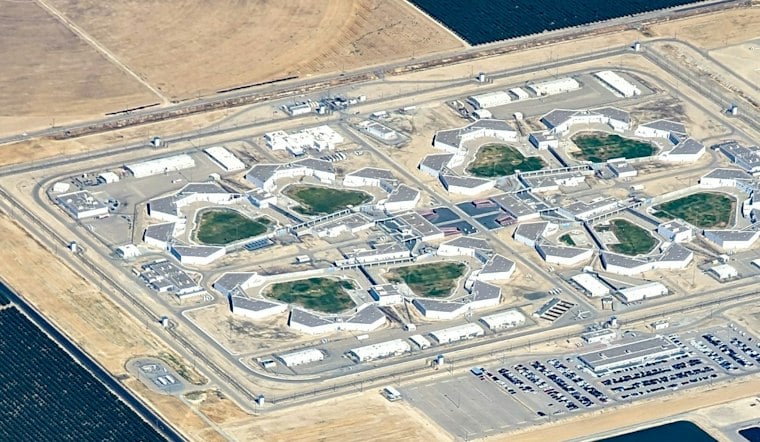
Richard Buchanan, a 72-year-old man described by authorities as a reputed Mexican Mafia member from the San Diego area, was found unresponsive in his cell at Kern Valley State Prison and died Tuesday morning. He had been locked up since 2004, serving a life sentence for kidnapping a fellow convict who had been harassing a corrupt prison guard.
The Kern County Coroner's Office will determine Buchanan's cause of death, according to the Los Angeles Times. Court records and law enforcement officials told the paper that Buchanan directed drug sales, illicit gambling, shakedowns and murder plots across San Diego County and beyond, painting a picture of a man whose influence stretched far past the walls that eventually held him for more than two decades.
A Violent Path Into the Mexican Mafia
Buchanan grew up in San Ysidro and Otay Mesa, just north of the U.S.-Mexico border, before authorities say he earned his way into the Mexican Mafia's ranks. Investigators believed he gained admission by stabbing inmate Manuel Rebeles, a former Nuestra Familia member and rival gang affiliate, inside a San Diego County jail in 1987, striking him three times in the chest. Rebeles survived, and the LA Times reports Buchanan was never convicted for that attack.
A prison official later testified that Buchanan was deemed a Mexican Mafia member in 1989, a determination echoed in court filings reviewed by fearnotlaw.com, which state that the California Department of Corrections and Rehabilitation formally validated him as a member that same year. Buchanan himself denied any affiliation with the gang, the paper's report notes, even as his case wound through the courts.
The Kidnapping That Sent Him Away for Life
The offense that ultimately put Buchanan behind bars stemmed from a kidnapping-for-extortion scheme. A jury convicted Buchanan, tried under the name Richard Garcia, along with Steve Domingo Parraz, of kidnapping for extortion, assault with a semiautomatic firearm and making a criminal threat, with gang enhancements attached, according to the fearnotlaw.com court record. The underlying conduct involved Steve “Spanky” Parraz threatening Ernesto Torres at Torres's own home, and Buchanan was later arrested alongside Parraz and Torres after police stopped their car in Chula Vista.
The trial court sentenced Buchanan under California's Three Strikes law to 45 years to life for the kidnapping, plus a consecutive 10-year firearm enhancement, per the same court filing. That sentence kept him inside the system until his death this week, having been incarcerated since 2004 for kidnapping a convict who had been harassing a corrupt prison guard, as the LA Times reported.
Wiretaps and a Recent Conviction Kept His Name in Court Files
Buchanan's alleged gang activity did not stay confined to the distant past. In 2024, he was captured on a wiretapped call discussing gang matters with Ronaldo Ayala, who had been sentenced to death for a 1985 triple-murder, and Frank “Chino” Madriaga, according to the LA Times account. Madriaga was convicted of conspiring to commit murder last month, keeping Buchanan's associates — and by extension his own alleged role — in the public record right up until his death.
Buchanan's reach allegedly extended into Imperial County as well. A release dated August 30, 2007, from the California Department of Justice, Office of the Attorney General stated that an indictment indicated Buchanan, identified there as a Mexican Mafia member from San Diego, transferred authority over criminal activities in Imperial County to Patrick Ponce back in November 2005 — a handoff that prosecutors say illustrated how gang leadership structures persisted even as members cycled through incarceration.
Kern Valley State Prison, where Buchanan spent his final years, has seen its share of scrutiny over incarcerated-person deaths in recent years, with the California Department of Corrections and Rehabilitation having publicly investigated at least one prior case there as a homicide. No determination of that kind has been made in Buchanan's death, and the coroner's review remains pending.



