

























































Kern County’s bid to attract industrial investment depends on more than available land: summit speakers also pointed to labor, transportation and electrical power as factors in site decisions. Those questions were part of the discussion this week at the second annual Unbound Kern Capital Summit, where more than 200 investors, site selectors, local politicians and economic development officials gathered as organizers pitched the region for industrial growth.
The Ross Deal Nearly Didn't Happen
Mike Mullis described the Ross site-selection process at the summit, saying data analysis accounted for 80% of the reasons Bakersfield won the deal and qualitative factors, including regional feel and personality, made up the remaining 20%, according to The Bakersfield Californian. Ross Stores Inc. agreed to invest $500 million in a processing and distribution center. The Californian reported that it is expected to open in 2027 on 160 acres near East Belle Terrace and Mt. Vernon Avenue. Supply Chain Dive reported the facility would span 1.75 million square feet, with a 2027 groundbreaking and nearly 1,000 jobs. Ross called it the company’s 10th distribution center, according to Supply Chain Dive. Ross also announced plans this year to open 47 stores: 35 Ross Dress for Less locations and 12 DD’s Discounts locations.
Logistics, Aerospace and Manufacturing Take Center Stage
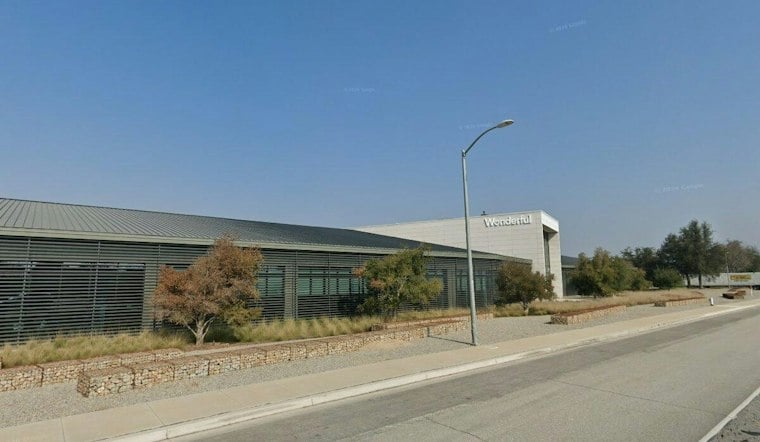
Shafter’s Wonderful Logistics Center is one example of the region’s industrial development pipeline. The Bakersfield Californian reported that construction is underway on 3.3 million square feet of industrial space there, with about two-thirds already spoken for.
At Mojave Air & Space Port, summit speakers described demand for industrial space as outpacing supply. Brandon Wood pointed to the aerospace valley’s distinctive community and skill sets, according to the Bakersfield Californian. David Smith, CEO and general manager of Mojave Air & Space Port, said more than 20 prospective tenants sought modest-sized space there, three sought a large location, and vacant land remained undeveloped at the port. The Bakersfield Californian also reported that undeveloped vacant land at Mojave Air & Space Port had been fully entitled under California’s environmental-quality act. The port says it spans more than 3,300 acres and hosts more than 60 companies working in areas from light industry to advanced aerospace design and flight research. Its infrastructure has been upgraded over the past three years to accommodate flight-line development and industrial manufacturing, according to Mojave Air and Space Port.
Kern's Economic Base and the Case for Investment
Energy, agriculture, goods movement and aerospace-defense are among Kern County’s established industries. At the summit, speakers made the case for building on that base to attract advanced manufacturing. Jim Damian said the county has a workforce and residents ready for new development, while Joe Vargas said project decisions depend on factors including entitlements, labor, transportation and electrical power. Bakersfield Mayor Karen Goh described city residents as hardworking and capable of getting things done, according to the summit coverage.
Electricity Capacity Is Part of the Site-Selection Equation
Electricity needs are also part of the planning context for new development. A California Independent System Operator (CAISO) local-capacity study says 2034 local capacity area resource requirements were up by about 1,344 megawatts compared with 2029, with Kern among the areas where requirements increased mainly because of load forecasts. That regional measure does not establish how much capacity is available at any particular development site. CAISO’s May 2026 revised draft transmission plan says projects identified over the next 10 years are driven primarily by load growth, including manufacturing and other large loads, and cites a state projection that the grid will need an additional 107 gigawatts of installed capacity by 2040. These are statewide and regional planning findings, not measures of power available at a specific Bakersfield site, according to CAISO’s local-capacity study and its revised draft transmission plan.
The county’s economic indicators formed part of the summit’s investment pitch. Kern County farmers produced more than $8.9 billion in gross value for agricultural commodities in 2025. The Unbound 2026 agenda also says visitors spent $1.865 billion there in 2025, citing Visit California figures. The gathering followed the inaugural Unbound summit, held Sept. 30, 2025, at Bakersfield’s Padre Hotel. B3K Prosperity’s recap says that event drew a sold-out room of 180 guests and featured a keynote from Tokamak Energy President Michael Ginsberg, alongside panels on aerospace, agtech and water, and AI and energy.
A Cautionary Tale From Oklahoma City
Mick Cornett, who served four terms as Oklahoma City’s mayor, recounted the city’s economic challenges at the summit. Oklahoma suffered more than 100 bank failures during the 1980s. United Airlines later considered investing $1 billion in an aircraft maintenance facility there. Voters approved a 1-percentage-point sales tax to help fund construction, but United ultimately chose Indianapolis, saying it could not imagine forcing its employees to live in Oklahoma City, the foundation’s account says.
After United chose Indianapolis, Oklahoma City went on to invest in upgrades to its inner-city school district, its warehouse district and a new baseball stadium, and restored water to the river running through downtown. The Chamber Foundation says the efforts, known as MAPS, have generated almost $1 billion in public-private investment. Cornett, who brought an NBA franchise to Oklahoma City after leaving office, also pointed to downtown amenities as a way to attract young people and economic development. The city’s ranking among the country’s most obese cities prompted investment in making it more walkable.





