

























































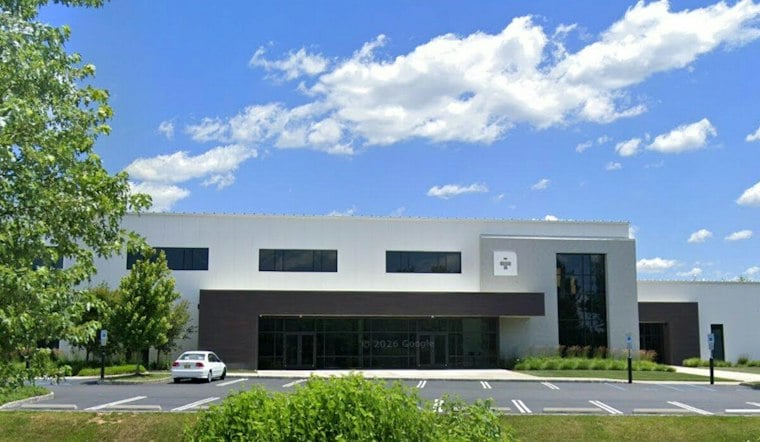
A Sears department store that sat empty on Landis Avenue in Vineland for years has reopened as a church campus seating roughly 950 people. True North Church, a nondenominational congregation based in Mullica Hill, held its first service at the Landis Avenue and Route 47 location on October 4, and the opening caps a renovation that began after the church bought the vacant building for $2.4 million in 2024.
The church chose Vineland after noticing that a large group of people, families, and leaders had been making the drive from the Vineland area to the Mullica Hill campus every week, according to 42 Freeway. Hundreds of Vineland residents had already been attending services at the Mullica Hill site, which overflows most weekends, and the new campus was built to bring worship closer to home for them. As The Philadelphia Inquirer reports, the Sears building totals nearly 70,000 square feet, of which the church retrofitted 40,000 square feet for its own use.
Before the renovation was finished, True North ran a temporary, mobile Vineland campus out of Lakeside Middle School, where services launched on April 6, 2025, according to the church's own True North Church website. That arrangement lasted roughly 18 months while construction continued at the former department store a few miles away.
A Big-Box Store Gets a Second Life
The Sears at Landis Avenue and Delsea Drive operated for more than six decades before closing in 2017, along with 65 other Sears and Kmart stores shuttered that year as the retailer's national footprint collapsed. Sears filed for bankruptcy the following year and now has only five remaining stores nationwide, none in New Jersey or Pennsylvania, per the Inquirer's reporting. True North purchased the property from the retailer that owns Sears, and nj.com reports the finished campus will include community space alongside a main auditorium built to hold more than 900 people.
Converting the old store was not simple. Vineland-based Fabbri Builders handled construction, and company representative Andrew Fabbri said the vacant building's condition, combined with decades of prior additions to the structure, created significant construction challenges, according to the Inquirer. Crews spent two years addressing asbestos, repairing the roof, and reworking storm drainage in the parking lot before the space was ready for worship. The project also involved rebuilding the parking lot and landscaping the grounds, while a separate Sears Auto building on the property is being used for storage, per 42 Freeway's reporting.
Design Firm Behind Three True North Campuses
South Carolina-based Equip Studio designed the Vineland building, the same firm behind True North's Mullica Hill campus and its former Haddon Township space, according to the Inquirer. Lead pastor Jesse Eisenhart described the building work as a multimillion-dollar investment but declined to disclose its exact cost. The church's own financial reporting, cited by the Inquirer, said True North spent more than $5.1 million in 2025 and that its revenue has grown 7% since 2024. As a religious entity, the church is not required to file public IRS Form 990 tax reports.
Eisenhart said the church is passionate about South Jersey and sees the region as its calling, per the Inquirer's reporting. True North was founded roughly two decades before the Vineland campus opened and now gathers thousands of people both in person and via livestream across its locations. Vineland itself has nearly 63,000 residents, a population base the church had been serving remotely for years before establishing a permanent address there.
A History of Moving and Growing
True North's path to Vineland followed a string of earlier moves. The church received its former Haddon Township building as a gift from Grace Baptist Church in 2015 for $1, then outgrew that location after seven years, according to the Inquirer. Once it sold the Haddon Township building for $850,000, the congregation held services at Collingswood Middle School before eventually shifting to its Mullica Hill facility after pandemic-era gathering restrictions eased, church representative Josh Sarracino told the Inquirer. True North currently has no footprint in Camden County. The church has also developed correctional campuses at SCI Chester and the Salem County Correctional Facility, offering worship services to more than 100 inmates, and it plans a 35,000-square-foot addition at Mullica Hill that would add a new auditorium with more seating and youth-program space.
Part of a Broader National Pattern
True North's move into a former department store echoes a wider trend. The 2020 U.S. Religion Census found that adherents in independent, nondenominational Christian churches grew by nearly nine million compared with 2010, and the U.S. Religion Census quoted researcher Scott Thumma noting that denominational brands have weakened, and divisions have increased, as possible reasons people are seeking out or starting nondenominational congregations. The Hartford Institute for Religion Research separately counted roughly 35,000 such churches nationwide in 2010 and about 60,000 by 2020, representing at least 12 million adherents.
Vacant big-box and mall anchor spaces have become increasingly attractive to congregations elsewhere, too. Crossroads Church converted 90,000 square feet of a former 162,000-square-foot Sears space at a Dayton, Ohio mall, and decided to keep the complex open seven days a week whenever the mall is open, as reported by CNBC. In Arizona, Echoes Church agreed to buy a vacant three-story Macy's building in Mesa for $5 million with the help of $2 million in financing from the Wesleyan Investment Foundation, according to The Mesa Tribune. Industry group ICSC has noted that church and school closures nationwide are creating redevelopment opportunities for retail, dining, entertainment, and mixed-use projects, though such adaptive reuse often requires navigating zoning changes, code upgrades, and high retrofit costs.




