

























































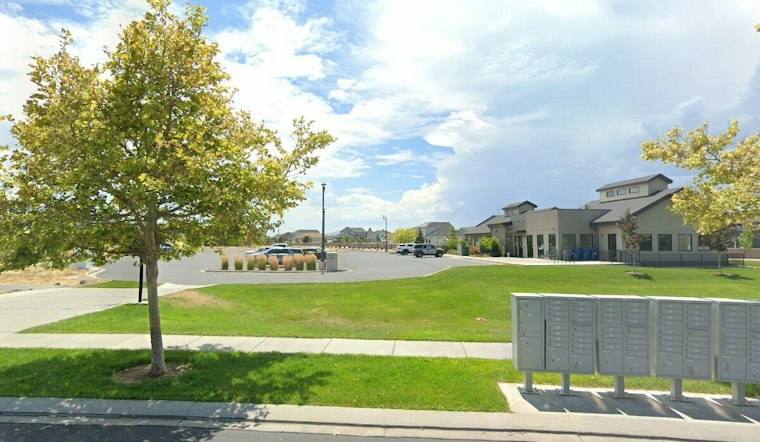
Vineyard's city council voted 4-0 Tuesday to take all possible steps toward removing five Flock automated license-plate-reader cameras from city property, a resolution pushed through by the small Utah County city's youngest council member. One member was absent for the vote.
The effort was led by 25-year-old Jacob Wood, who was elected to the Vineyard City Council in 2025 and is the council's first Black member. According to The Salt Lake Tribune, Wood said he had no idea Vineyard even had Flock cameras until a friend sent him a link from DeFlock, a site that lets users report surveillance cameras in their neighborhoods. Digging further, Wood found that a previous city council had entered into the arrangement with Flock before he ever took office.
Vineyard itself does not hold a direct contract with Flock. Instead, the cameras operate through an agreement between Flock and the Utah County Sheriff's Office, as confirmed by ABC4. The sheriff's office had reportedly planned to add five more plate readers in Vineyard this year, per the Tribune's reporting, before the city council's vote intervened.
A Work Session and a Growing Pile of Messages
The council held a work session on the cameras back on August 18, laying groundwork for Tuesday's vote. Wood told the Tribune that messages from Vineyard residents overwhelmingly opposed having Flock operating in their city, a sentiment echoed in his comments to Fox 13, where he said simply that the residents didn't want Flock in Vineyard.
Wood didn't mince words about the company itself, telling the Tribune that Flock is untrustworthy and that people don't want the brand operating in their cities regardless of what regulations exist. He said Vineyard's resolution targets Flock's system specifically and does not permanently bar the city from contracting with other license-plate-reader companies down the road.
Sheriff's Office Says It Will Comply
The Utah County Sheriff's Office said it will, in its own words, “of course” abide by the resolution, per ABC4's reporting. Lieutenant Holden Rockwell, who represents the sheriff's office, told the Tribune that Flock cameras have been valuable investigative tools in Vineyard, pointing to their role in solving a hit-and-run car crash and a $150,000 theft from a local business. Rockwell acknowledged, however, that the crimes solved with Flock cameras in Vineyard may be less serious than the child abductions and homicides the cameras have helped crack elsewhere in Utah County and across the state.
ABC4 reported separately that the sheriff's office has had cameras in Vineyard for the past two years and considers them instrumental in solving numerous crimes there. The office also told the outlet it has always required users to supply a case number and a reason code for any search of the system, and that it retains data for only 30 days.
Conflicting Reports on the Removal Timeline
Exactly how fast the cameras come down remains a bit murky. ABC4 reported that the resolution directs removal of all Flock cameras within Vineyard within 30 days, while Telemundo Utah described the timeline as 30 days or as soon as the existing contract allows — a distinction that matters since Vineyard isn't the party holding that contract. Jacob Wood, per the Tribune, said the sheriff's office plans to fully comply with the resolution and remove the cameras.
Telemundo Utah also reported that the resolution cites concerns about privacy, information sharing and data retention tied to the automated readers, and that it leaves the door open for the council to revisit Flock after Utah's 2027 legislative session if members decide privacy and constitutional protections are adequate by then. Wood framed it to the Tribune as the council giving itself a chance to revisit the issue rather than closing it permanently.
Part of a Wider Utah Reckoning
Vineyard is at least the third Utah locality to walk away from Flock, following Tremonton-Garland police and Washington Terrace, according to Fox 13's reporting. The pullback comes as state lawmakers weigh tighter rules statewide. The Moab Times reported that DeFlock counted 1,059 surveillance cameras across Utah as of October 21, ranking the state 29th nationally in ALPR cameras per capita, with West Jordan and Cache County both seeing sharp jumps in registered cameras this year.
Utah's Law Enforcement and Criminal Justice Interim Committee discussed possible restrictions on October 21 but did not vote, per the same Moab Times report. Lawmakers are weighing proposals that would require warrants to query ALPR data, delete that data within 24 hours instead of the nine months currently allowed under state law, and let people sue agencies over data misuse. Wood told the Tribune he expects state lawmakers to take up license-plate readers during the 2027 legislative session and said he wants lawmakers in Utah and nationally to develop stronger privacy protections.
Flock has pointed to its own policy changes amid the scrutiny. The company has added an auditing tool to flag abnormal searches by law enforcement officers and announced that optional safety guardrails will become mandatory starting in 2027, according to the Tribune's reporting. Under Utah law, a governmental entity authorized to use an ALPR system may not sell captured plate data for any purpose, according to the Utah Legislature's statutory code.
Vineyard, a small city in Utah County with roughly 16,000 residents, has no contract with Flock under the terms of the resolution itself. But with the Utah County Sheriff's Office holding the actual agreement, the practical question of how quickly the cameras disappear from city streets now rests on contractual terms that have not been made public.





