

























































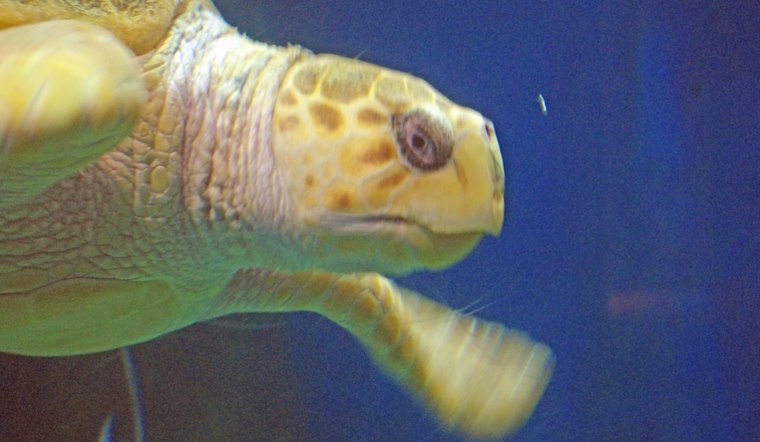
More than 130 animals, from sea turtles to fish, were pulled out of a smoke-filled building at the Virginia Aquarium in Virginia Beach after a marine tank overheated and sparked a fire, aquarium officials said this week. One turtle weighing about 100 pounds had to be sedated before staff could move it into a new tank. Days later, one of the rescued sea turtles died — but not from the fire itself.
The blaze broke out at the aquarium's Darden Marine Animal Conservation Center, according to 13News Now, which reported that the fire department traced the cause to an overheated marine tank. The facility's sprinkler system knocked down the flames, but extensive smoke kept aquarium staff from immediately getting inside. Dr. Allyson McNaughton said the smoke was the biggest concern, and firefighters wearing respirators worked alongside her and other staff to retrieve turtles from inside the building since respirator access was required to enter.
In total, about 130 animals and fish were relocated from the conservation center to other buildings on the aquarium's main campus, per the station's report. The Darden center is home to the aquarium's sea turtle stranding team, which rehabilitates injured and sick turtles, and it also houses the aquarium's quarantine and acquisitions programs that prepare new animals for their eventual homes on the main campus.
A $21 Million Facility Built for This Exact Mission
The Darden Marine Animal Conservation Center opened in May 2021 as a $21 million, purpose-built headquarters for the aquarium's Stranding Response Program and quarantine operations, according to the Virginia Aquarium & Marine Science Center. The center houses the aquarium's Stranding Response Program.
That caseload can run heavy. The aquarium's team can have more than 30 animals in its care at once during the busy spring and summer stranding season, the station notes. The early May 2026 fire displaced animals and halted operations at the facility; its busy stranding season is spring and summer.
Staff Divide Workflows to Keep Populations Separate
With the conservation center's treatment spaces knocked offline, aquarium staff set up a temporary system to accommodate the displaced animals, dividing space, entryways and supplies into separate workflows. McNaughton said the separation is meant to prevent cross-population contact among the different groups of animals now sharing space on the main campus. Displaced sea turtles and ongoing rehabilitation patients were moved into temporary holding setups at the aquarium's main veterinary center, according to The Virginian Review, while restoration of the primary treatment spaces is prioritized.
Aquarium officials said they are not concerned about structural damage to the building itself, but remediation crews are still working to determine how long it will take to clear smoke and chemical contamination. If that process stretches on, the aquarium may need to move some turtles to other facilities within the regional stranding response network. Aquarium leadership has said separately that virtually every room and life-support system in the building suffered smoke damage or contamination, a scope that is expected to take months to fully assess.
One Turtle's Death Traced to a Pre-Existing Injury
One sea turtle died two days after the fire, but a necropsy found the cause was unrelated to the blaze: the turtle had severe, non-survivable injuries from a fishing hook along with a systemic infection. The animal has been identified elsewhere as a critically endangered Kemp's ridley that was already in severely compromised condition before the fire, according to 13News Now, with necropsy findings pointing to pre-existing illness while separate tests for smoke exposure remained pending.
Elsewhere in the building, invertebrates housed in quarantine and holding areas also died on the night of the fire, according to the Virginia Aquarium & Marine Science Center.
Two Turtles Could Be Headed Back to the Ocean Soon
Not every update from the recovery has been grim. Two of the relocated turtles were scheduled for tests this week to determine whether they're healthy enough to be released into the ocean, and veterinarians say they're hopeful the pair can return to the wild soon.




