

























































Virginia Beach School Board members got some long-awaited answers this week about a proposed cross-country trail the city wants help paying for — but the new details didn’t end the disagreement over whether $3 million in leftover school funds should go toward it. The board is now expected to vote on competing funding proposals at its Nov. 10 meeting, with members still split over whether the trail serves students or mostly benefits the city’s tourism ambitions.
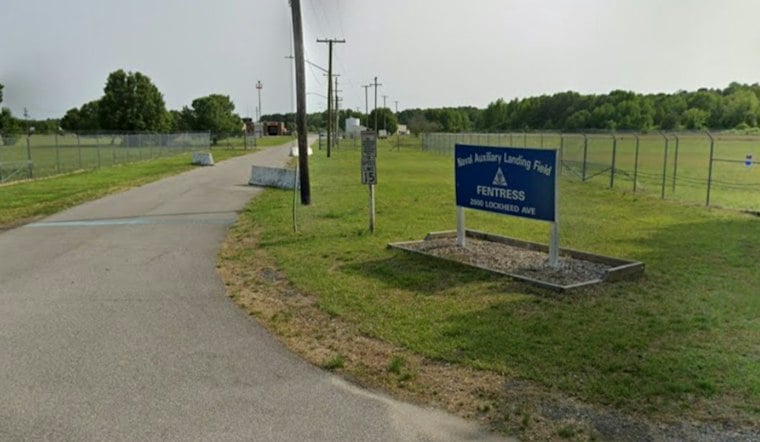
The trail, planned for the Interfacility Traffic Area between Naval Air Station Oceana and Naval Auxiliary Landing Field Fentress in Chesapeake, is estimated to cost $6 million to design and build, according to WHRO. The City Council has offered to cover half that cost and is asking the School Board to fund the remainder. If built to the plan presented to the board, the trail would meet collegiate competition standards and be open to the public, Virginia Beach City Public Schools and colleges alike.
Roughly 300 VBCPS students currently compete in high school cross-country programs across the division, per WHRO’s reporting. If the School Board agrees to help pay for construction, the city has said it would cover the trail’s ongoing maintenance and let the school system use it at no cost. One detail that has frustrated some board members: the schools would not receive any share of fees the city collects from the trail.
Where the $3 Million Would Come From
The proposed school contribution traces back to $5.8 million in revenue left over from the 2024-2025 fiscal year, according to WMRA. The city had already set aside nearly $1.4 million of its own for the trail’s design and construction, and a city spokesperson told the station that the $3 million from schools would be added on top of that existing allocation, not a replacement for it.
The School Board had initially hoped to redirect that reversion money toward its own health insurance fund instead, but the same report notes that request was denied unless the fund is first depleted. Staff separately recommended at a Sept. 22 board meeting that $2.8 million go toward a new human resources system, with the remaining balance potentially flowing to the trail — one of several competing uses for the money that Superintendent Donald Robertson has said he will lay out in a memo for the board.
A Divided Board Weighs Need Versus Opportunity
Board sentiment has been far from unanimous. At a September 22, 2026, meeting, member Melinda Rogers drew a sharp line between wants and needs, telling colleagues, as reported by the Daily Press, “A track is a want. It’s not a need. And we have lots of needs.” Many board members at that same meeting said the City Council’s request seemed to offer more benefit to the business sector than to the school system itself.
Other board members pressed Superintendent Robertson on how the trail would directly benefit students and educators beyond the possibility of drawing tourism dollars, the Daily Press reported. Robertson has pointed to the trail’s potential to attract regional, state or national competitions that could generate city revenue through the municipal revenue-sharing formula — though that benefit would flow to city coffers rather than directly to the schools.
According to The Virginian-Pilot, city staffer Jason Stroud presented the proposed facility to the board and asked members to consider covering half of construction. Stroud described the project as a potential world-class amenity that could benefit the city, schools, community and other stakeholders, per the Pilot’s account, while also acknowledging the facility was unlikely to directly generate revenue for the district, with any benefits expected to trickle down to schools over time. The Pilot reported the plan calls for multiple running courses along with auxiliary buildings and restroom and changing space, located near the Virginia Beach Sportsplex in the vicinity of Landstown and North Landing roads, with design and construction expected to take about three years. No comparable facility currently exists in the city, according to the presentation described by the Pilot.
Board Members Weigh Cooperation Against Caution
Some board members have urged a more conciliatory approach. Kimberly Melnyk said the board should work with City Council members, who hold authority to restrict how the reversion funds are used, and warned that the city could simply pull the money from next year’s school operating budget if board leaders proved too adversarial, the Pilot reported. Board member Kathleen Brown said the board needed to work toward a consensus on the issue, according to the same report.
Others remain wary. Matt Cummings told the board he had not heard enthusiasm for the project from his constituents and argued that public education dollars should be prioritized for education and school buildings rather than economic development, per the Pilot’s reporting. Mark Bohenstiel raised concern that construction costs could rise before the project is finished, potentially requiring schools to contribute even more than the initial $3 million.
State law does give local governments latitude here: under Virginia Code, a governing body may appropriate available funds to a school board for public-school operation, capital outlay and debt service — the legal mechanism underlying the city’s offer. Under state law, reversion funds themselves are considered capital left over from the budget, and the School Board holds authority to direct how that money gets used, though any reversion-fund spending still requires City Council approval.
The Bigger Picture for Hampton Roads Sports Tourism
The debate in Virginia Beach echoes a broader regional pattern of localities betting on athletic facilities to draw visitors. Sports tourism generated $2.7 billion in direct spending statewide in 2022, a 12% increase from the prior year, and supported more than 28,000 jobs and $344 million in state and local tax revenue, according to data from Virginia Tourism Corporation. The Coastal Virginia region alone, including Virginia Beach and Williamsburg, generated $718 million in sports spending that year.
Virginia Beach has already made a large bet in this space: its Sports Center opened in 2020 at a cost of $68 million, and city officials now report visitors are booking well over 60,000 hotel nights annually, far surpassing the roughly 30,000 nights initially projected, WHRO has reported. Hampton spent $29.5 million on its Aquaplex swimming center for similar reasons, while Williamsburg, James City County and York County broke ground on an $80 million indoor sports facility expected to open this year.
Whether the cross-country trail follows that trajectory remains an open question for board members still weighing the tradeoffs. For now, the fate of the $3 million rests with the Nov. 10 vote, as the School Board decides whether a running trail belongs alongside health insurance funds and HR systems on its list of priorities.





