

























































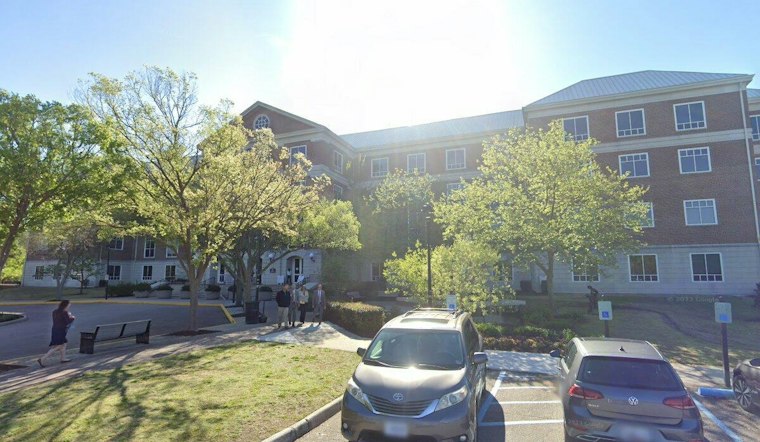
A Virginia Beach sewage plant that now mostly burns biogas off into the sky would significantly reduce flaring under a plan to pipe purified gas instead. Virginia Natural Gas and the Hampton Roads Sanitation District plan a purification facility at HRSD's Atlantic Treatment Plant that would turn the waste gas into renewable natural gas for local homes. The price tag is about $30 million, and Virginia Natural Gas customers will be the ones paying for it.
The project would produce more than 200,000 MMBtu of renewable natural gas a year, equivalent to heating about 5,000 homes, according to a Virginia Natural Gas factsheet. The company says the facility will convert biogas from the plant's anaerobic digester into pipeline-quality gas interchangeable with geologic natural gas. The company calls it its first renewable natural gas project.
Per the same factsheet, Johnson Controls Inc. will construct the facility while Virginia Natural Gas owns the production infrastructure. The company anticipates it entering service in early 2028, and expects 268 construction jobs and 18 permanent jobs to result.
From Flare Stack to Pipeline
Anaerobic digestion creates biogas when organisms break down biosolids without oxygen, as Virginia Mercury explains. A flare then burns off the methane, CO2 and other gases produced during treatment, and the new system would purify the gas for pipeline use while significantly reducing flaring. The facility will capture gas emitted during wastewater treatment and send it into Virginia Natural Gas lines through a 200-foot interconnection pipe.
HRSD already reuses some of its biogas to generate steam energy, but most of it is currently flared, WHRO reported last year. Canary Media notes the upgrade would take gas that is about 64% methane and 35% carbon dioxide and convert it to 99% methane.
Carl Garofalo said the project will “pretty much eliminate flared gas,” as relayed in the Virginia Mercury's reporting. The company's own factsheet is more measured, saying the project will significantly reduce on-site flaring.
Who Pays and What Comes Next
Customers cover the project, and the Virginia Mercury reports it is expected to raise the average residential bill by about 36 cents a month. WHRO's earlier figure was about 40 cents a month, assuming approval from state regulators. Virginia Natural Gas anticipates filing with the State Corporation Commission for cost recovery within four months, per the Virginia Mercury.
Garofalo said environmental attributes will be monetized to hold down the rate impact, and he forecast that customers may see bill credits in later years of the project. The project will also eventually let customers purchase less gas.
Jay Bernas said the collaboration converts a wastewater-treatment byproduct into renewable energy and supports environmental and regional energy goals. Virginia Natural Gas serves about 315,000 homes in the area.
A Roanoke Blueprint and Some Pushback
Western Virginia has already tried a smaller version of this idea. The Western Virginia Water Authority and Roanoke Gas Company broke ground in May 2022 on a project that treats Roanoke plant biogas, which is 63% methane and 37% carbon dioxide, into commercial-quality gas. The authority says the new supply can heat more than 500 homes on a cold winter day.
Roanoke Gas put the combined investment there at roughly $16.5 million. Landfills, the Virginia Mercury notes, produce five times as much gas as wastewater facilities like the planned Virginia Beach plant.
Not everyone is sold on the approach. WHRO reports that environmental groups have criticized renewable natural gas projects as expensive, short-term solutions that require continued investment in fossil-fuel-linked infrastructure. Virginia Natural Gas, for its part, told WHRO it is seeing a surge in energy demand driven largely by AI-powered data centers.





