

























































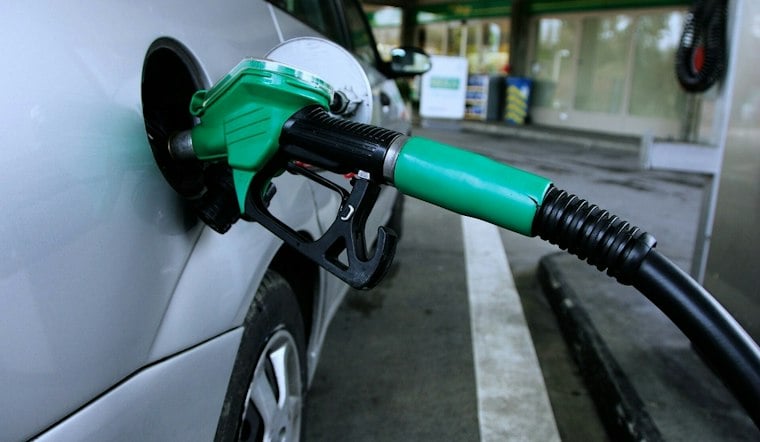
Virginia Republican leaders gathered at a truck plaza in Bedford County this week to demand Governor Abigail Spanberger call a special legislative session and suspend the state's gasoline and diesel taxes for 90 days, arguing families, farmers and trucking companies need relief from fuel prices that have climbed amid the war with Iran. The lawmakers want action before the General Assembly reconvenes for its regular 2027 session in January, saying stronger-than-expected state revenues could cover the gap left by paused fuel taxes.
The gathering took place at Owens Market Deli and Truck Plaza, according to Virginia Mercury, where diesel was selling for $5.99 per gallon. Republican Sen. Terry Kilgore said the fuel-tax holiday should be a bipartisan issue, telling reporters a temporary pause would make life more affordable for Virginians. “Virginia cannot control events in Washington or Iran,” Kilgore said, arguing the state should instead focus on actions within its own reach, per the same report.
Virginia currently taxes gasoline at 32.6 cents per gallon and diesel at 33.6 cents per gallon. If the full tax cut were passed on to consumers, 15 gallons of gasoline would save a driver $4.89, while diesel at the Bedford County truck plaza would drop to roughly $5.65 per gallon once the excise tax was removed — assuming all of the savings reached customers. Del. Scott Wyatt estimated the 90-day suspension would cost the state about $410 million, but said revenue collections running ahead of projections give Virginia room to absorb the loss. Del. Wendell Walker added that lawmakers could replace the lost transportation money when they return to Richmond in 2027.
A Trucker's Bottom Line
Christian Snead, who owns a Bedford County trucking company with 28 vehicles, said fuel is a necessary operating expense that eats directly into his margins. He said higher fuel costs force him to raise the prices he charges for hauling goods, a cost that ultimately gets passed down the supply chain.
Fuel taxes in Virginia fund road construction and maintenance statewide. The 2020 General Assembly tied the state's fuel tax rates to annual inflation adjustments rather than requiring a fresh legislative vote each year, a mechanism that pushed the gasoline tax from 31.7 cents to its current 32.6 cents per gallon on July 1, according to Bacon's Rebellion. Virginia's Commonwealth Transportation Fund projects $10.65 billion in statewide motor fuels tax revenue over its six-year financial plan running through fiscal 2032, with state fuel revenues expected to grow from $1.64 billion in fiscal 2027 to $1.88 billion by fiscal 2032, according to the Virginia Association of Counties.
Spanberger Weighs Her Options
A spokesman for Spanberger blamed President Donald Trump's war with Iran for the run-up in fuel prices. The governor is assessing all available options to address the extra costs families face and working on longer-term solutions to make Virginia more affordable, her office said, according to the same Virginia Mercury report. Spanberger herself has blamed Trump's decision to launch the war with Iran for the fuel-price increases.
This is not the first time Virginia Republicans have pushed this idea in 2026. General Assembly Republicans called for an identical 90-day motor fuels tax suspension back in March, at the time estimating the cost at roughly $375 million and arguing budget surpluses could cover the backfill without touching highway projects. The current push echoes an even older fight: then-Governor Glenn Youngkin proposed a 90-day gas tax holiday in 2022 to wipe out the state's then-26-cent fuel tax using $437 million in surplus transportation revenue, only to see Senate Democrats block it from the final budget.
Why Some Economists Are Skeptical
State gas taxes are levied on wholesale fuel distributors rather than directly at the retail pump, meaning distributors or out-of-state drivers can end up absorbing a portion of the intended savings rather than passing them fully to local motorists, according to research from The Commonwealth Institute. That dynamic is part of why policy analysts have found that less than a third of savings from past gas-tax holidays historically reached lower-income in-state households.
Virginia already ranks ninth highest nationwide in combined state motor fuel tax burden, with state excise taxes and regional transportation levies adding between 41.6 and 42.4 cents per gallon at the pump, according to the Tax Foundation. Those rates adjust every July 1 and are layered atop additional wholesale taxes in regions like Northern Virginia and Hampton Roads.
Federal Action and a Looming Election
The state debate is unfolding alongside federal moves. Trump signed an executive order on October 5 temporarily allowing broader highway use of red-dyed diesel, which is normally reserved for off-road uses like agricultural equipment. The order also directed federal officials to determine whether applicable federal excise-tax payments could be deferred through December 31 without interest or penalties, and to explore ways to forgive those deferred taxes — though a deferred tax does not eliminate the underlying obligation to eventually pay it. The federal excise tax itself has sat fixed at 18.4 cents per gallon for gasoline and 24.4 cents for diesel since October 1993, losing more than half its real purchasing power to inflation, per the Tax Foundation. The nonpartisan Committee for a Responsible Federal Budget has projected that even a one-month nationwide suspension of federal fuel taxes would cost roughly $3.5 billion, accelerating the Highway Trust Fund's path toward insolvency, which is already projected by 2028 under current spending.
The fuel-tax push is also colliding with a competitive congressional race. Rep. John McGuire, who defended Trump's energy policies and argued that keeping more American refineries operating would have reduced the country's vulnerability to overseas disruptions, is being challenged by Democrat Tom Perriello in Virginia's 5th Congressional District — a seat Republicans have held since Perriello lost reelection in 2010. A Washington Post-Schar School poll released October 1 found McGuire leading Perriello 51% to 45% among likely voters, even though Trump carried the district by 12 points in 2024. McGuire has criticized Perriello's past support for cap-and-trade legislation and Spanberger's climate policies, while Perriello has said ending the Iran war would be among his priorities if elected.
Virginia is far from alone in weighing this kind of relief. Georgia suspended its motor-fuel excise taxes from September 29 through October 29, and North Carolina lawmakers planned to return for a special session to consider fuel-tax relief. Hoodline has reported on Connecticut's push for a similar holiday amid record diesel prices, while Ohio Republicans pressed for their own 90-day pause as pump prices hit $4.52 and a Massachusetts gubernatorial candidate called for suspending that state's gas tax too. For now, whether Spanberger calls a special session — or instead floats a different form of relief — remains an open question in Richmond.



