

























































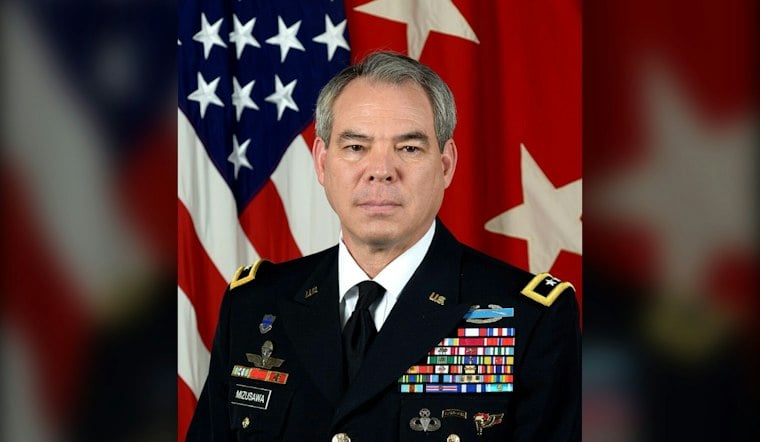
The financial records in Virginia’s Senate race show a wide gap between three-term Democratic Sen. Mark Warner and his Republican challenger, retired Army Maj. Gen. Bert Mizusawa. Warner has aired television ads this fall; Mizusawa has not, according to WAVY.com. Mizusawa, a Hampton native who has never held public office, is seeking to unseat Warner.
A Lopsided Money Race
Federal filings show the scale of the campaigns’ financial divide. As of the July 15, 2026, reporting deadline, Warner had raised more than $25 million and held $16.1 million in cash on hand, according to Federal Election Commission records. Mizusawa had raised just north of $376,000 and reported $52,964 in cash on hand, according to the same filings. Both campaigns must file their next disclosure on October 15, 2026.
WAVY.com reported that Warner began airing television ads September 1. The spots focus on what he would do in a fourth term and do not mention Mizusawa, the station reported. Benjamin Melusky, a politics instructor at Old Dominion University, told WAVY that candidates in U.S. elections generally need to make the case for themselves; he also said that a candidate who neither advertises nor raises much money faces a significant disadvantage.
A Veteran's Resume, But No Air Cover
Mizusawa graduated first in his class from West Point in 1979, earned a law degree and a Master in Public Policy from Harvard, and received the Silver Star for combat bravery during a 1984 firefight in the Korean Demilitarized Zone, according to Wikipedia. He served 36 years in uniform and later worked as Deputy Under Secretary of the Army and as a CIA advisor. Wikipedia’s account of the 2026 Senate contest says he won the Republican nomination on August 4 with 51.5% of the vote, defeating David Williams and Kim Farington. The state’s Democratic-controlled General Assembly had moved the primary from June to August to accommodate a redistricting plan that ultimately failed. Warner faced no primary challenge.
Mizusawa’s campaign has not said whether it will run television ads before the midterms. According to WAVY’s report, the campaign said it was crisscrossing Virginia, described its fundraising as encouraging and said it had surprises planned for Warner. The campaign also accused Warner of avoiding debates and criticized his positions on Social Security taxes, data centers and rural hospital funding.
Debates Scrapped, Leaving No Shared Stage
Those accusations landed amid the collapse of the race's only scheduled face-offs. AARP Virginia canceled its planned October 7 debate in Richmond on September 8, and the League of Women Voters of Virginia followed on September 15, both citing Warner's campaign declining to lock in dates, according to The Washington Times. The cancellations erased what would have been free, high-visibility exposure for an underfunded challenger facing an opponent with a dominant ad budget.
Former Republican Virginia state delegate Tim Anderson told WAVY he did not expect Mizusawa to raise enough to compete, estimating that a contested statewide Virginia campaign costs roughly $20 million. Anderson pointed to Glenn Youngkin, who spent $20 million of largely his own fortune on his 2021 gubernatorial run, as an example of the resources needed to break through. He also said the Republican National Committee declined to fund Virginia campaigns last year, leaving the commonwealth in what he described as tier-three status in the national party’s view.
National GOP Dollars Flow Elsewhere
That pattern has repeated nationally this cycle. The Senate Leadership Fund, the main super PAC for Senate Republicans, pulled planned advertising spending supporting Michael Whatley, the GOP's Senate candidate in North Carolina, redirecting resources toward more competitive seats in states such as Ohio, Texas, and Kansas, the Associated Press reported in late September. Anderson called the absence of Republican megadonor support at the top of the ticket in both Virginia and North Carolina troubling, warning that voters may simply not know who Mizusawa is because too few resources are being spent to introduce him.
As of October 2, 2026, the Cook Political Report, Sabato’s Crystal Ball and Inside Elections all rated the race Solid Democratic or Safe Democratic, according to Wikipedia’s tracking of the contest. Those ratings help explain why national party money may bypass Virginia. The Federal Election Commission’s 2025–2026 contribution limit for a person giving to a candidate is $3,500 per election, per candidate—not $3,300. Super PACs face no such contribution limit.
What outside-spending data show
Wesleyan Media Project reported that outside groups accounted for 61 percent of U.S. Senate ad spending cycle-to-date through March 1, 2026. That national figure does not establish whether Virginia’s advertising contrast is unusual, or how spending breaks down between television and digital ads in the state. For an earlier Virginia comparison, ProPublica’s FEC Itemizer lists $228,499 in independent expenditures in the 2020 Senate race: $110,996 supporting candidates and $117,503 opposing them. Those are outside expenditures, not candidate committee finances, so they do not compare Mark Warner’s and Republican Daniel Gade’s campaign receipts, spending or cash on hand.
No Republican has won a U.S. Senate election in Virginia since 2002, when John Warner, no relation to the current senator, won a fifth term. Mark Warner, who served as Virginia's 67th governor from 2002 to 2006 before moving to the Senate in 2008, has built more than two decades of statewide name recognition. In 2020 he defeated Republican nominee and Army veteran Daniel Gade by nearly 56% to almost 44%, a margin that underscores the scale of the climb facing Mizusawa this November.




