

























































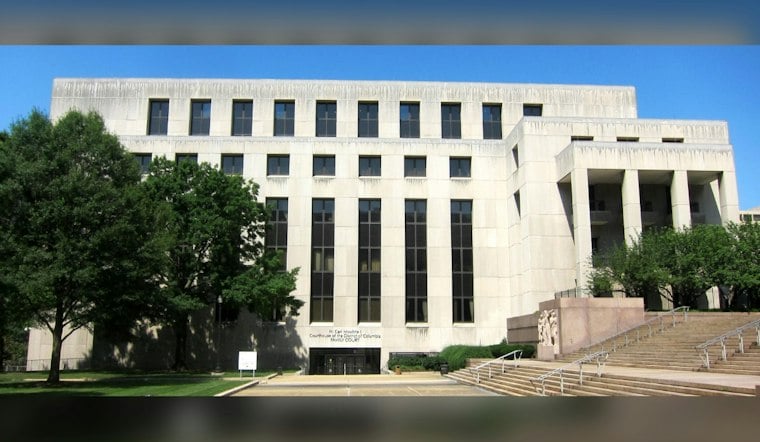
A woman has filed a $130 million medical negligence lawsuit against Cedar Hill Regional Medical Center, alleging that doctors removed part of her ovary instead of her appendix during a procedure in June 2025. Plaintiff Troyce Coles says the error forced her to undergo a second surgery five months later to finally remove her inflamed appendix. The hospital, located in Southeast D.C.’s Congress Heights neighborhood, has denied liability in court filings.
Coles filed the complaint in D.C. Superior Court on August 18, 2026, according to WJLA. As reported by the Washington Business Journal, the lawsuit states that doctors operating on Coles mistakenly removed ovarian tissue during what was supposed to be a laparoscopic appendectomy, leaving her appendix still inflamed and requiring a follow-up operation at Howard University Hospital five months later to finish the job.
The lawsuit names Cedar Hill Regional Medical Center, Universal Health Services Inc. and Medical Faculty Associates Inc. as defendants. The case is headed toward an initial conference scheduled for December 11, 2026.
A New Hospital’s Rocky First Year
The alleged surgical error occurred less than two months after Cedar Hill Regional Medical Center GW Health opened its doors. The $434 million facility debuted on April 15, 2025, as the first new full-service hospital built in Washington, D.C., in more than two decades, according to Axios D.C. United Medical Center closed the same week Cedar Hill opened and had been the only hospital east of the Anacostia River, per the same outlet’s earlier reporting. Cedar Hill’s opening restored labor and delivery services to Ward 8, where pregnant residents had gone without a local maternity ward since 2017.
That promise of equitable care has run up against a harder first year than city officials likely hoped for. The D.C. Department of Health hit Cedar Hill with an Immediate Jeopardy designation in February 2026 — the highest level of regulatory non-compliance — following investigations into staffing shortages, care delays, and patient safety lapses, according to reporting referenced by Brown & Barron. The designation came roughly eight months after the alleged surgical mix-up involving Coles.
Council Members Raised the Case in Hearings
The organ-removal allegation did not stay confined to the courtroom. During an April 2026 D.C. Council Committee on Health oversight hearing, District lawmakers publicly cited the error while questioning hospital executives about ambulance diversions and broader quality-of-care failures, the station reported.
Cedar Hill operates under a public-private partnership involving the District government, Universal Health Services, and George Washington University. Universal Health Services operates Cedar Hill, and Medical Faculty Associates physicians staff it — an arrangement the station’s report on the hospital’s first year laid out in detail.
Leadership Turnover Amid the Scrutiny
The hospital has also cycled through leadership during this stretch of regulatory and legal pressure. Founding CEO Tony Coleman stepped down in March 2026, and Kimberlee Daniels was promoted to permanent CEO in June 2026 after serving as interim chief since January, according to Becker’s Hospital Review.
The financial stakes for the hospital and its partners are considerable. D.C. law imposes no statutory caps on non-economic or total damages in medical malpractice cases, meaning juries can award unlimited compensation for personal injury and emotional distress, per the Law Offices of Dr. Michael M. Wilson M.D. J.D. & Associates. That absence of a cap helps explain why Coles is seeking $130 million in her complaint.
Part of a Broader Surgical Safety Trend
Surgical time-outs offer an opportunity to confirm details and address discrepancies, according to AORN Periop Today.
For Ward 8 residents, Cedar Hill’s opening was meant to close a long-standing gap in access to care in a part of the city historically underserved by hospitals. The Coles lawsuit now adds a high-dollar legal test to a first year already marked by regulatory citations, council scrutiny, and executive turnover.





