

























































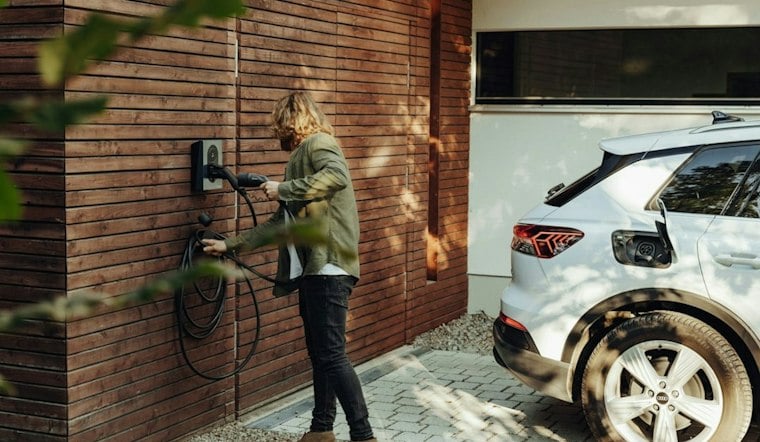
Nearly 9% of Washington households now own or lease an electric vehicle, making the state the second-highest in the country behind California, according to new Census Bureau figures. In King County, the share climbs even higher, with 13.4% of households reporting an EV in 2025 — well above both the state and national averages.
The numbers come from the American Community Survey, which asked households keeping at least one vehicle at home whether any of those vehicles were electric for the first time in 2025, as reported by The Seattle Times. Nationally, about 5.5% of U.S. households — roughly 7.3 million out of 134 million — had an electric vehicle, according to data reported by sacbee.com. The Census Bureau's count includes both all-electric cars and plug-in hybrids, per the same report.
California Still Leads, But Washington Isn't Far Behind
California topped every state with 13.8% of households owning an EV, the highest share in the nation, the Sacramento Bee report notes. Washington came in second at 8.9%, ahead of Hawaiʻi at 8.5% and Nevada at 8.2%.
A Census Bureau survey statistician pointed to a broader regional pattern, telling the Sacramento Bee that western states led the way in switching to electric vehicles. California, Hawaiʻi, Nevada and Washington also had the highest average gasoline prices among states, according to the same report — a detail that lines up with where EV adoption has taken hold fastest.
King County Outpaces the State Average
Within Washington, King County households owned EVs at a 13.4% clip in 2025, according to the Seattle Times' analysis of the census data.
At the top of the county rankings nationwide was Santa Clara County, California, where 24.1% of households — about 163,000 homes — had an EV, according to sacbee.com. Marin, San Mateo, Alameda and Orange counties were also among those with the most EV-possessing households, the outlet reported.
California Homeowners More Likely to Have an EV
In California, 17.7% of homeowner households had an EV compared with 8.9% of renter households, per sacbee.com. Research into the gap predates this year's census question. A 2019 study found homeowners were more than three times as likely as renters to own an electric vehicle, according to a paper from faculty.haas.berkeley.edu, and that gap held up even after researchers controlled for household income. The same research also addressed the landlord-tenant problem.
First-Ever Count Leaves Future Questions Open
Because the electric-vehicle question was added to the American Community Survey for the first time in 2025, the Census Bureau has no prior-year data to compare it against, the Seattle Times notes. That means this year's snapshot can't yet show whether EV ownership is rising or how fast.





