

























































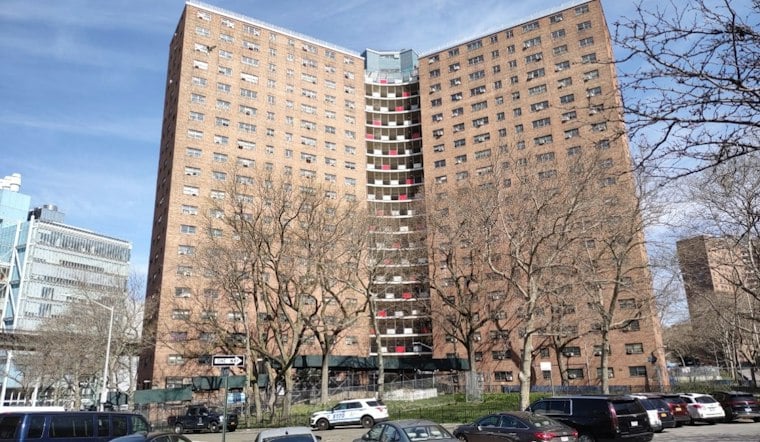
Property management at Manhattanville Houses changed hands, with Wavecrest Management stepping in to replace ELH Management across the six 20-story towers that make up the West Harlem public housing complex. The switch comes amid resident concerns about ongoing repairs, and as some openly worry the new manager could bring the kind of safety failures that have plagued other Wavecrest-run buildings.
The complex sits between West 129th and 133rd Streets and transitioned from traditional public housing to the city's PACT privatization model in December 2024; the project is rehabilitating over 1,272 apartments and impacts over 2,600 residents, according to Columbia Daily Spectator. The project is backed by $445 million in financing secured for renovations, including new energy-efficient heating and hot water systems, modernized elevators, and additional common areas — work that began that same month. Under the program, NYCHA converts Section 9 public housing into project-based Section 8 vouchers while retaining ownership of the land and buildings, a structure that applies to more than 38,000 apartments and 142,000 residents citywide, according to CityLand.
A Rocky First Chapter Under ELH
The most severe disruption came in October 2025, when hundreds of residents went without gas or clean water for nearly a month, per the Columbia Daily Spectator. The Columbia Spectator separately reported that NYCHA and ELH had to install emergency bypass piping and distribute bottled water, with the outage requiring intervention from the city's Department of Environmental Protection.
ELH Management served as Manhattanville's property manager under PACT's Rental Assistance Demonstration program.
Why Wavecrest's Name Alarms Tenants
Wavecrest was managing Boston Secor Houses in the Bronx when a gas explosion and fire killed one resident, injured 14, and displaced more than 100 families on January 24, 2026, after tenants had repeatedly reported gas smells, as Hoodline previously reported. Prosecutors later charged a man with murder, alleging he removed a gas stove before the blast.
Wavecrest properties have also been linked to a Legionnaires' disease outbreak, according to amNewYork, which reported that the city's Department of Health and Mental Hygiene ordered the company in May 2026 to evaluate and remediate the water system at Haven Plaza, a 371-unit East Village complex, after multiple residents contracted the illness.
NYCHA Retains Ownership Under PACT
A NYCHA representative said an experienced organization managing PACT sites is important at Manhattanville, and that the management turnover was informed by a performance test monitored by Gilbane Development. Gilbane Development, West Harlem Group Assistance, and Apex Building Group notified residents of the coming transition in a tenant letter dated September 21, with PACT partners planning to provide a transition package before October 1 that included a NYCHA letter and information about Wavecrest. The Manhattanville Resident Association board was notified of the change in September and met regularly with Wavecrest ahead of the switch, according to the NYCHA representative.
Under PACT, NYCHA retains ownership of Manhattanville Houses. The complex also carries architectural weight beyond its PACT status — the New York State Board for Historic Preservation nominated it to the State and National Registers of Historic Places in February 2024. Built between 1958 and 1961, it is a modernist development, per the New York Amsterdam News.
Families Caught in the Repair Shuffle
For residents like Ortiz, the renovation process has meant upheaval even before Wavecrest arrived. He relocated to another building at the end of September while repairs continued in his unit.
A Pattern Playing Out Across the City
Manhattanville's turbulence fits a broader pattern tenant advocates have flagged in NYCHA's privatization push. A 2022 Human Rights Watch study concluded that the PACT program led to reduced official oversight and weakened tenant rights, leaving residents in privatized developments more vulnerable to habitability issues and housing instability, according to The Indypendent. For now, Manhattanville's roughly 2,600 residents are left watching whether their new property manager can avoid repeating failures reported elsewhere in the city.


