

























































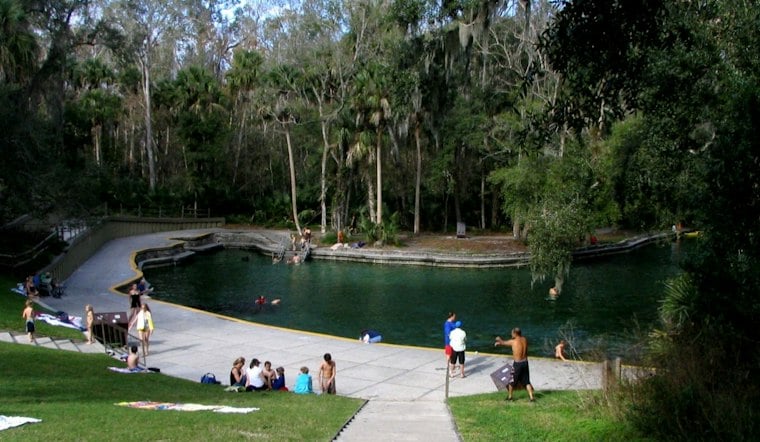
Wekiwa Springs State Park in Apopka has added four air-conditioned glamping tents to its campground, giving visitors a climate-controlled alternative to pitching their own gear beside the park's famous spring. Each tent sleeps up to three adults and comes furnished with a queen bed, a twin futon, bed linens, a four-cup coffee maker and an ice chest, along with air conditioning and heat for year-round comfort.
Overnight reservations run $119 per night from Sunday through Thursday and jump to $169 on Friday and Saturday, with a mandatory $7 nightly electric fee that also covers park admission, according to The Apopka Chief. Guests staying in the tents also get access to a picnic table, a fire pit with a grill ring and a freshwater spigot outside their canvas walls, as first detailed by WFTV. The tents are managed not by the state park directly but by Adventures Unbound by Guest Services, the concessionaire that handles glamping accommodations and outdoor rentals at the site.
Part of a Bigger Central Florida Push
The four tents at Wekiwa Springs aren't an isolated experiment. The Apopka Chief reported in July that Adventures Unbound is expanding eco-glamping across the region, pairing the new Wekiwa Springs units with five additional tents at Rainbow Springs State Park in Dunnellon. That rollout tracks with a broader statewide shift: per Hipcamp's 2026 Florida outdoor guide, glamping tents have also landed at Lake Louisa State Park near Orlando, Lake Kissimmee State Park in Central Florida and Topsail Hill Preserve State Park in the Panhandle.
Because the glamping units are run by a third-party vendor rather than the state, booking works differently than it does for a standard campsite. Florida Travel reported in September that glamping accommodations in Florida's state parks are booked through concessionaires' own websites rather than the state's central reservation portal, which means travelers can sometimes find glamping openings even when the regular campground shows full capacity.
A Spring With Deep Roots
The new tents sit within a park built around one of Central Florida's signature natural features. Official hydrologic data cited by the U.S. Geological Survey confirms Wekiwa Springs is a second-magnitude spring, discharging roughly 42 to 43 million gallons of freshwater daily at a constant 72 degrees year-round — a big part of why the spot draws visitors in every season. The spring feeds the Wekiva River system, which Congress designated a National Wild and Scenic River in 2000, according to U.S. Fish and Wildlife Service records; it's one of only two river systems in Florida carrying that federal distinction.
The park itself has a long history. Florida State Parks records show the state purchased the 7,000-acre property in Apopka from the Apopka Sportsmen's Club in 1969, opening it to the public the following year. Local Orlando travel guides trace the site's tourism roots even further back, noting that Wekiwa Springs is considered Orange County's longest-running attraction, with a hotel and bathhouse operating at the spring as far back as the late 1800s, long before Central Florida's theme parks existed.
Wildlife and Existing Camp Options
Beyond the water, Wekiwa Springs offers walking and biking trails, horseback riding, and canoe and kayak rentals, and visitors commonly spot white-tailed deer, wild turkeys and Sherman's fox squirrels around the grounds. The glamping tents join a campground that already includes 60 full-facility sites with water and electric hookups, plus a group youth camp with 13 cabins that can sleep up to 160 people, according to official state park facility inventories.
The park has also been managing a surge in day-use demand. Regional park administration records show that in September 2025, Wekiwa Springs became the first Florida state park to require advance online day-use reservations, a move aimed at taming the severe morning traffic queues that had built up along Wekiwa Springs Road.
The glamping expansion also arrives as local agencies work to protect the waterway that gives the park its name. Hoodline has reported on the Wekiwa Springs Septic Tank Retrofit Project, an Apopka sewer infrastructure push intended to shield the river ecosystem, as well as enforcement action tied to shoreline damage along the Wekiva basin. Hoodline also recently covered a water-safety incident at neighboring Wekiva Island, underscoring that the springs draw heavy recreational use even as officials balance new amenities against the sensitivity of the surrounding habitat.


